The Pulitzer Center has supported reporting on Venezuela for almost 20 years. After Venezuelan President Nicolás Maduro was captured and arrested by the United States last week, this reporting is more relevant than ever.
One of the Center’s earliest reporting projects, published in 2006, examined the rise of then-Venezuelan President Hugo Chávez and the Bolivarian movement at a moment when the country was reshaping power dynamics in Latin America.
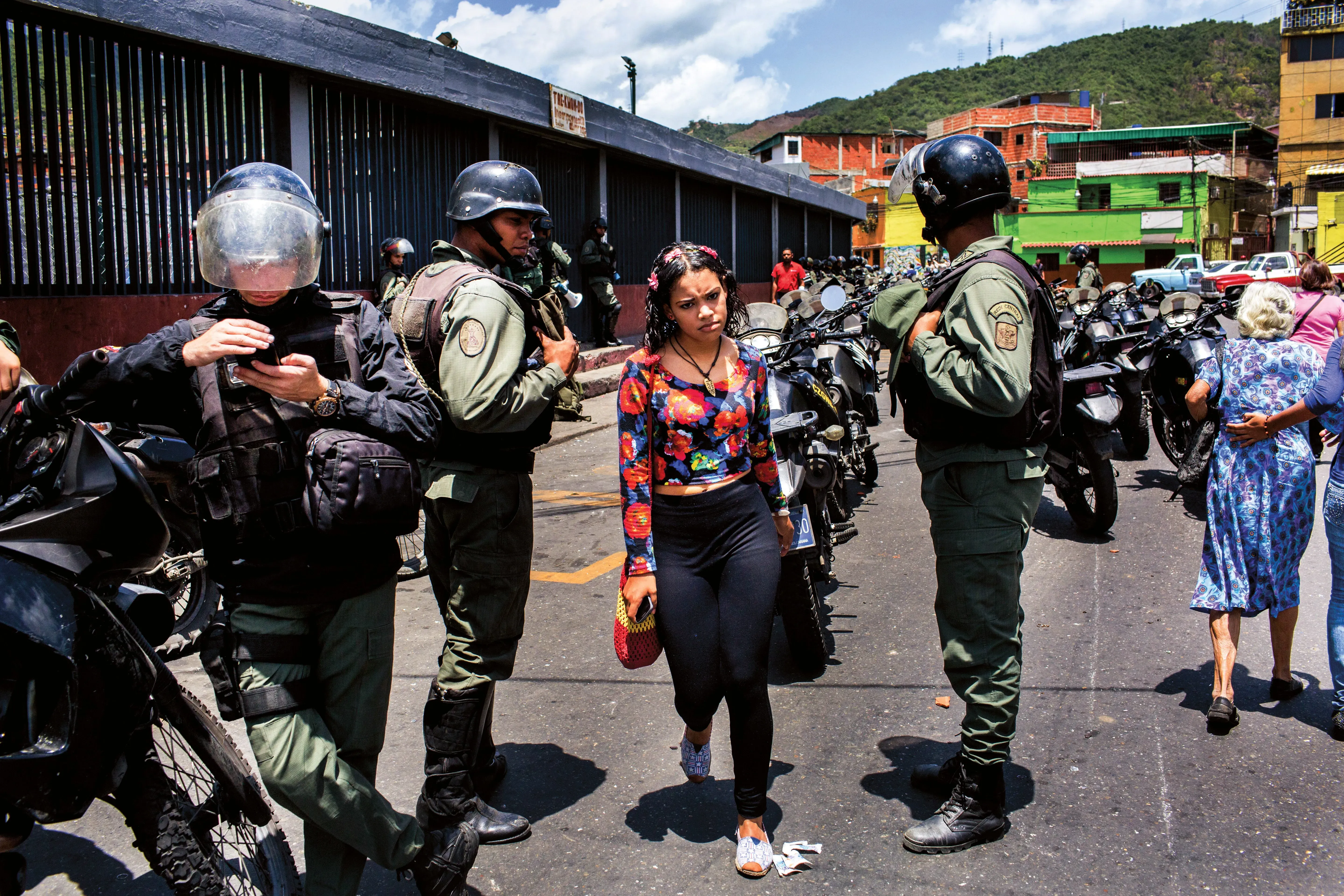
As Venezuela entered another turbulent era after Chávez’s death in 2013, subsequent reporting captured the unraveling. After a drop in oil prices, economic collapse and political repression, exacerbated by international sanctions, spurred a mass migration crisis. Photojournalist Natalie Keyssar’s The Office of Hope documented daily life amid shortages, inflation, and unrest. "This work is about inequality," Keyssar said in 2016, "and a level of tension and sometimes danger so powerful in daily life it's almost palpable."
In Venezuela on the Brink for PBS NewsHour, journalist Nadja Drost and filmmaker Bruno Federico traced the collapse of public services, including a once-robust health care system. Drost and Federico continued their reporting in Venezuela: The Endgame? in 2019, when opposition leader Juan Guaidó sought to oust Maduro.
Resource extraction and an overdependence on oil exports have been at the center of many challenges faced by the Venezuelan people. President Trump has alleged that Venezuela has "stolen" oil from U.S. oil companies, despite a complex history of negotiations; he now says the U.S. will control Venezuela’s oil sales “indefinitely.” Trump's aggressive action comes as he also threatens to take control of Greenland, which has valuable mineral deposits.
Today, Pulitzer Center–supported reporting on Venezuela is defined by collaboration, cross-border partnerships, and extraordinary personal risk. We’re highlighting some recent reporting by courageous Venezuelan journalists and media outlets determined to bring the truth to light:
- From Armando.info, the series The Looting of the Venezuelan Caribbean reveals how state-backed extractive policies have devastated fishing communities and marine ecosystems, contradicting official narratives of sustainability. Who's Who in the Venezuelan Amazon tracks deforestation for illegal mining and how Venezuelan gold has been smuggled to the U.S.
- The project Exposing Inequalities: How the Health Care System Failed in Venezuela, for Prodavinci, covers the collapse of Venezuela’s health care system, once touted as free and quality, but now deeply unequal and inaccessible to most.
- In a cross-border collaboration with our Rainforest Investigations Network, Amazon Underworld tracks criminal networks exploiting Venezuela’s porous borders to extract gold and other resources, and looks at the impacts on Venezuelan migrants in other Amazon countries.
In related reporting:
- From Panama, Daniel Gonzalez reports on one Venezuelan migrant who gave up on seeking asylum in the U.S. and sought to return to his home country.
- From Guatemala, Ana Arana analyzes how U.S. Secretary of State Marco Rubio pressured left-leaning president Bernardo Arévalo to accept migrant deportees from the U.S., including Venezuelans.
- From Brazil, Ana Luiza Albuquerque and Magê Flores explore the repression and exile of millions of Venezuelans under Maduro’s regime, as part of their podcast series Autoritários (in Portuguese).
Thank you to the many journalists on the ground doing this important work to bring information to the public under challenging conditions. We are eager to continue supporting your work. Journalists can submit a proposal or share questions at [email protected].
Best,
This message appeared in the January 9, 2026, edition of the Pulitzer Center's weekly newsletter. Subscribe today.