Pulitzer Center Update January 8, 2026
From Pastures to the Plate: A Call for Transparency in Colombia’s Meat Industry


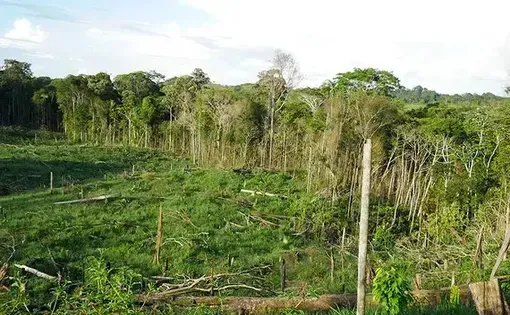
In Colombia, authorities have mostly focused on the small-scale actors behind illegal deforestation...

“It started with a simple question: Where does the meat consumed daily in our country come from?” says Daniel Gutiérrez Patiño, who with his team implemented the project, Echoes of Regeneration: Amazon and Deforestation.
Patiño is one of the 13 grantees awarded the Pulitzer Center's Civil Society Micro-Grant 2025, which is aimed at building projects that amplify the voices of affected communities, foster public debate, and drive meaningful audience engagement leading to impactful conversations at COP 30 (the United Nations Climate Change Conference) in Belém, Brazil, November 10-21, 2025.

For this project, Patiño, founder and CEO of Shambala Comunidades Ambientales, worked with his team to promote public dialogue and transparency about meat supply chains to combat Amazon deforestation. Through social media campaigns, debates, workshops, and a culminating conference, it engaged youth and citizens across Colombia.
“It is great to see how civil society initiatives like this one create open dialogue around complex issues such as deforestation and cattle, while inspiring bigger accountability and pathways toward public policies and regulations that engage both consumers and citizens. Shambala did an excellent job exploring these critically important connections throughout their project,” said Pulitzer Center Outreach Program Manager Jonatan Rodríguez.
Drawing inspiration from journalism
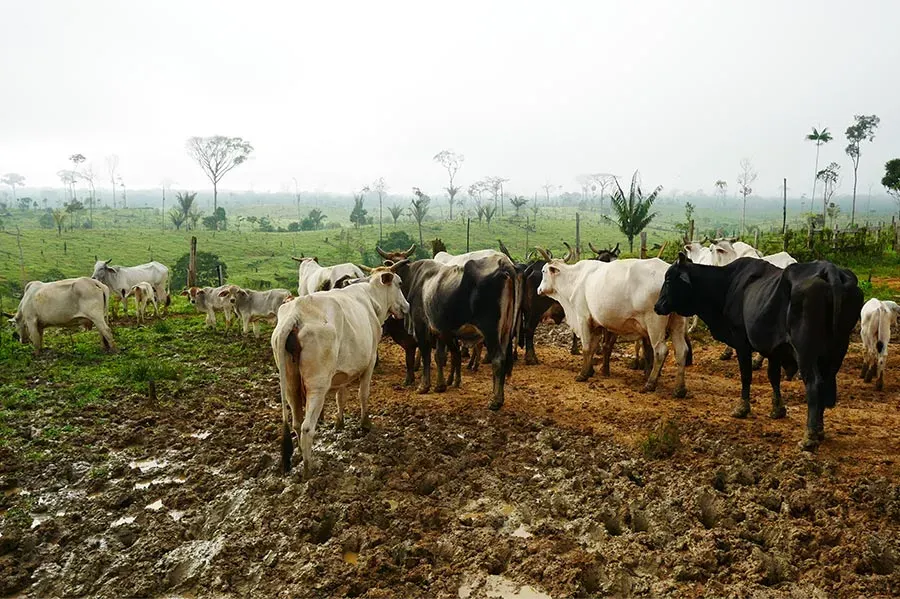
Echoes of Regeneration: Amazon and Deforestation was inspired by the Pulitzer Center-supported report "El Ganado Acorrala a la Amazonía" ("Cattle Are Cornering the Amazon"), by Rainforest Investigations Network (RIN) Fellow César Molinares.
“After reading the report and taking into account reports of deforestation in the Amazon rainforest to convert it into cattle ranching land, we ended up asking ourselves the question of meat traceability and this is how the project was born,” says Patiño.
Molinares’ investigation examined how cattle populations in Colombian national parks more than doubled between 2016 and 2020, threatening the Amazon rainforest. Later, he filed a petition requesting a local supermarket chain to disclose the origin of the meat it sells. When the supermarket refused, Molinares filed a writ of protection, and the Constitutional court ruled in his favor, arguing that the origin of meat products can be considered environmental information of general interest.
“By connecting citizens with decision-makers and leaders from the public and private sectors, we worked towards activating mechanisms for citizen participation on three core issues—meat traceability, its connection to deforestation across different regions in the country, and the lack of an adequate system to ensure traceability in the supply chain of these products,” states Patiño.
Leveraging social media for civic engagement
The project began with interviewing local cattle ranchers, journalists from the Amazon region, environmental activists, and members of organizations that promote sustainable livestock farming.
“This research phase allowed us to understand the perspectives of diverse actors involved and how the lack of traceability has negative impacts on both the environmental health and political stability of our country,” says Patiño.
Based on this research, the project created interactive content for audiences to facilitate a better understanding of the issue. Through various digital channels of Shambala Comunidades Ambientales, the project inspired collective action and ecocentric transformation by fostering informed narratives and active community participation.
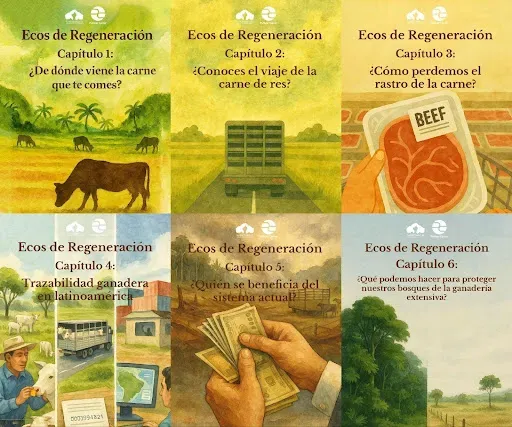
The team started with a visualization depicting different actors involved in the livestock value chain—from the farmer to the citizen who consumes meat—and the relationship between them. Further, testimonies collected during the research phase were used to construct narrative posts for social media divided across six posts and shared through Shambala’s social media accounts. These posts got over 913,314 views with generating over 20,941 interactions, including likes, comments, shares, and saves.
Through surveys, the project also tapped into Shambala’s WhatsApp community to raise awareness on the subject of meat traceability while also examining consumption habits.
“We also conducted two debates—first, if members are willing to pay more for meat products that certify their origin and guarantee that they do not come from deforested areas; and second, whether it is morally correct to stop supporting the livestock industry knowing that there are hundreds of families in rural areas who depend on it,” Patiño explains.
Additionally, the "No Meat No Problem" challenge was launched, inviting community members to not consume meat for 18 days.
Fostering dialogue through workshops
Two knowledge-sharing events were organized: a virtual workshop on the technical challenges of implementing livestock traceability in Colombia, and an in-person meeting on May 29 at a restaurant, where research results and digital campaign findings were presented.
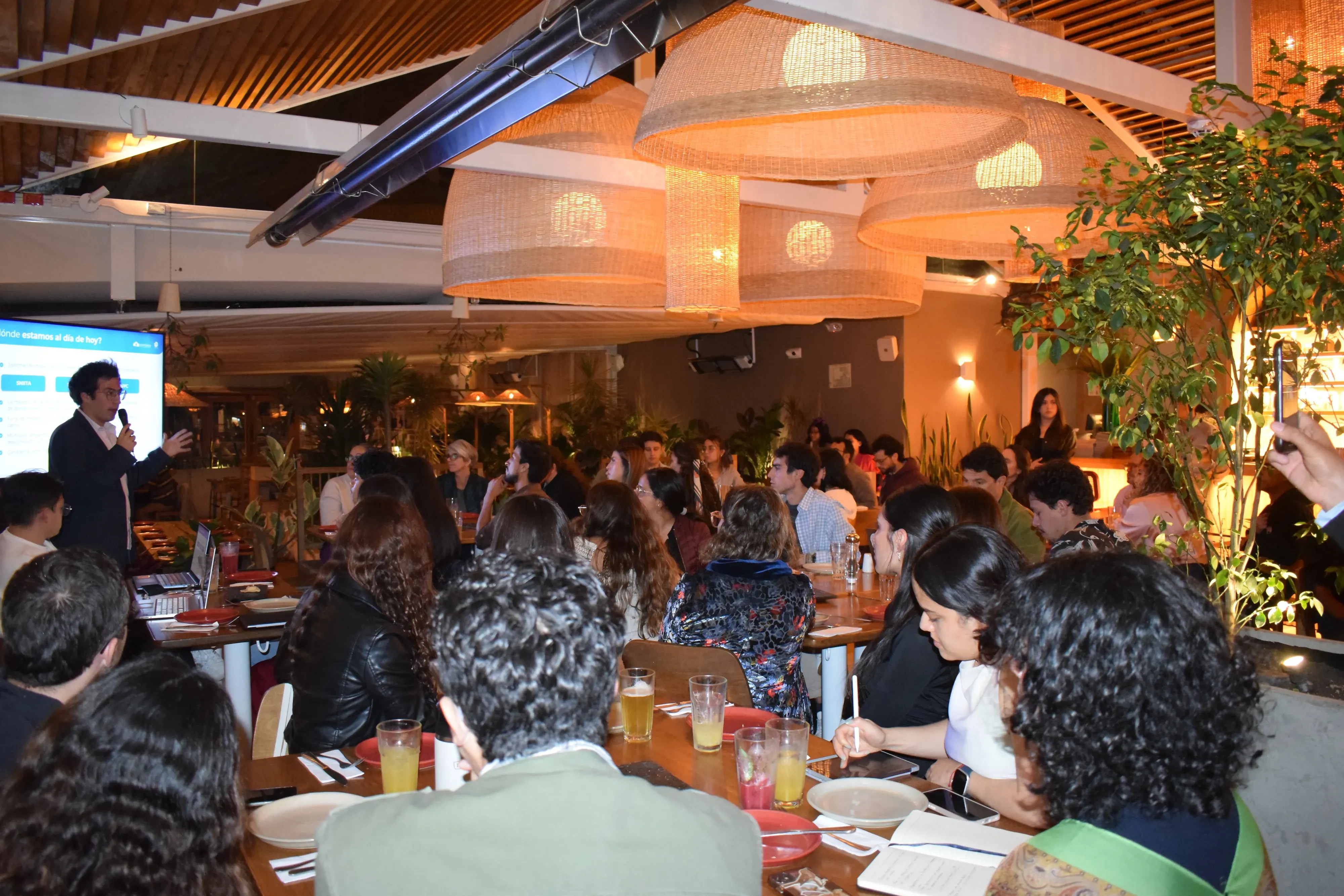
The in-person event featured presentations from Shambala, the Pulitzer Center, and FAO representatives, attracting over 50 attendees from more than 10 key organizations, including WWF Colombia, the Humboldt-Institut, and several universities.
While the digital campaign may have ended, Patiño and his team continue to be steadfast in their mission for real-world impact.
“After we connected with Congresswoman Angélica Lozano’s Legislative Work Unit at the in-person meeting, we worked on a corporate sustainability bill. On October 2, 2025, the livestock traceability bill was approved in the Senate plenary session—a milestone shaped by our work raising awareness of livestock and deforestation issues before the debate,” Patiño says.
Inspired by César Molinares' work, the team is now petitioning fast-food chains in Colombia to disclose their meat sources and will monitor their legal compliance through citizen oversight.