Story
 December 13, 2025
Beset by US-Highest Water Violation Rate, West Virginia Has Weaker Standards Than Other States
Country:

In West Virginia, water is a devastating stumbling block.
West Virginia lawmakers took a familiar stance Wednesday.
They backed weakening state water quality standards.
The West Virginia Legislative Rule-Making Review Committee — a panel of state delegates and senators that makes recommendations to the full Legislature on legislative rules proposed by state agencies — signed off on weakening a standard for how much selenium, an element with toxic effects for West Virginia’s aquatic life, is allowed in fish tissue.
Selenium is an essential mineral that is critical to human health in small amounts, helping prevent damage to cells and aiding heart and thyroid health. But excessive levels of selenium are linked to chronic health impacts that include lack of mental alertness and listlessness, skin discoloration, hair and nail loss, and acute health effects like pulmonary edema and bronchial pneumonia, according to the United States Environmental Protection Agency.
Toxic human exposure can happen when selenium levels build up in ecosystems via leaching from mining waste into aquatic systems and emissions from burning coal or other industrial activities.
The Legislative Rule-Making Review Committee approved a West Virginia Department of Environmental Protection-proposed rule that would raise allowable selenium in fish tissue in non-sturgeon waters from 8 to 9.5 micrograms per gram and sturgeon waters from 8 to 8.5 micrograms per gram — a move questioned by the EPA in comments the agency submitted during a DEP public comment period this year.
The EPA told the DEP it hadn’t detailed how it derived the proposed fish tissue level other than to note the change was based on EPA recalculation measures. The EPA indicated it didn’t understand how the DEP’s planned selenium water quality approach would protect freshwater fish reproductive effects.
That DEP-planned approach includes keeping a 5-microgram-per-liter water-column element of the state’s selenium water quality criterion that the DEP told state lawmakers is nearly twice a 3-microgram-per-liter level recommended by the EPA.
In its formal response to the EPA recommending it adopt its recommended water-column element or demonstrate that the continued 5-microgram-per-liter level protects aquatic life, the DEP asserted it was loosening the fish tissue standard but not the water-column protection because it could. The DEP cited a 2016 EPA approval of giving fish tissue precedence over the water-column element.
But the EPA said in its comment that since 2016, it has recommended the DEP adopt the water column elements of the EPA's recommended selenium criterion and indicated the DEP hadn’t provided “scientifically defensible data to demonstrate” that its 5-microgram-per-liter standard is sufficiently protective.
The EPA further recommended that the DEP adopt a performance-based approach for establishing site-specific water-column elements to help develop pollution limits to meet water quality standards for selenium water pollution control permits.
The DEP responded tersely to those EPA comments, thanking the federal agency and indicating it wasn’t going to change its proposals as recommended.
EPA spokesperson Kelly Offner told the Gazette-Mail Thursday the EPA looks forward to reviewing the final rule once it is submitted to the agency. The EPA will review the DEP standards and act to approve or disapprove them per the federal Clean Water Act.
“We’re not prepared to consider that right now,” DEP Division of Water and Waste Management Assistant Director Mindy Neil said of the EPA’s water-column criterion recommendation under questioning from Delegate Kayla Young, D-Kanawha, during the Legislative Rule-Making Review Committee meeting.
Neil said the DEP hadn’t “launched into a study” to examine water particulate and aquatic organism food chain levels that consideration of the EPA recommendation would require.

But Neil did say that the DEP proposal followed a request to change the rule from an unnamed coal company.
West Virginia Manufacturers Association President Bill Bissett, Metallurgical Coal Producers Association President Ben Beakes and West Virginia Coal Association Executive Vice President Jason Bostic each supported the DEP’s proposal in comments submitted to the agency.
Bissett wrote that the DEP’s proposed approach would “assist WVMA members to meet state requirements.”
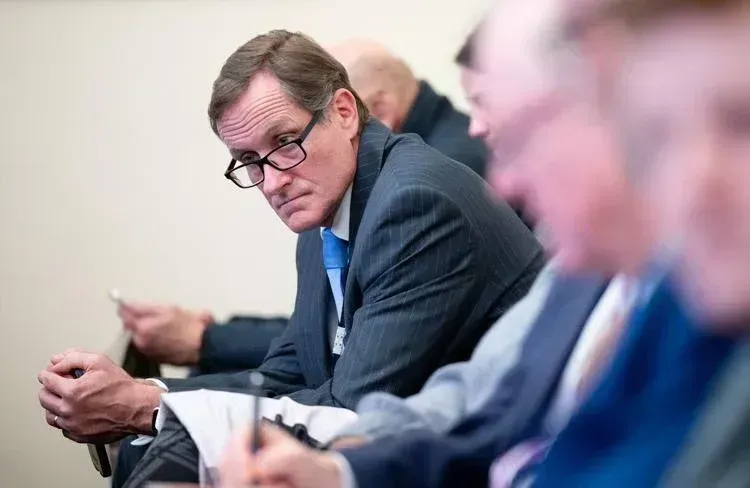
The committee green-lit the rule after former DEP Deputy Secretary Scott Mandirola, now at West Virginia Rivers Coalition, testified that the DEP was applying science inconsistently to its selenium water quality criterion by not adjusting its water-column standard.
“Science must be applied consistently,” West Virginia Rivers Coalition Executive Director Jennie Smith said after the meeting, “and selectively relaxing one standard while ignoring others undermines both scientific integrity and public trust.”
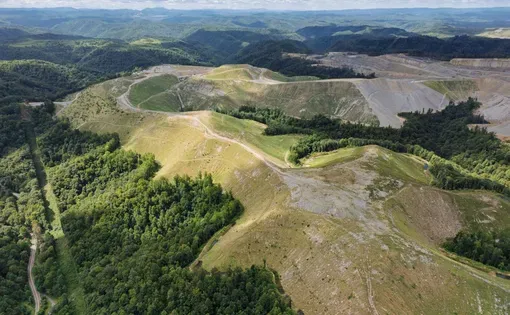
Heightening the importance of West Virginia selenium oversight is the state’s high prevalence of selenium pollution from mine sites.
Eight of the nation’s 10 highest selenium-discharging industrial point sources with pollution limit exceedances discharging into impaired waterbodies with pollutants potentially contributing to that impairment are in West Virginia, according to a new Gazette-Mail review of EPA data.
W.Va.'s nation-highest drinking water violation rate
Water quality standards loom large in West Virginia given that the state had the nation’s highest percentage of public water systems with health-based federal Safe Drinking Water Act violations — 29.2%, according to a Gazette-Mail analysis of EPA data.
West Virginia’s percentage of public water systems with any kind of violations has climbed sharply from 32.1% in 2015 to 79.1% in 2024.
West Virginia had the nation’s sixth-highest percentage of public water systems with acute health-based violations in 2024 — 2.1% (18 systems total) — over seven times more than the percentages in neighboring Maryland and Ohio and more than double that of fellow neighbor Kentucky.
Health-based violations represent the exceedance of maximum contaminant or residual disinfectant levels. Acute health-based violations represent significant short-term health risks that can cause immediate illness.
The West Virginia Department of Health said in an emailed response provided by Department of Environmental Protection Chief Communications Officer Terry Fletcher that the DOH attributes the state’s comparatively high violation rate to “increased oversight at the state and federal level along with small and disadvantaged public water systems that lack financial resources, have aging or failing infrastructure, lack of system maintenance and overall lack of technical, managerial, and financial capacity.”
Where W.Va. standards are weaker than other states
West Virginia’s water quality standards are weaker than other states when it comes to bacteria that may cause severe infections and other adverse health impacts.
West Virginia’s human health water quality standard for fecal coliform is higher for the main stem of the Ohio River — a drinking water source for over 5 million people — than the water quality standards for aquatic health and other sub-human health uses in most states that use comparable measurements, according to a Gazette-Mail review of state water quality standards.
Fecal coliform are bacteria found in human and animal waste that indicate fecal contamination, which can drive waterborne disease outbreaks.
West Virginia’s Ohio River main stem human health water quality standard for fecal coliform during the nonrecreational season (November through April) is 2,000 colony-forming units per 100 milliliters or the most probable number — an estimate of the concentration of a target microbe — per 100 milliliters.
That standard is a maximum based on a monthly average based on at least five samples per month.
Than Hitt, senior scientist with the West Virginia Rivers Coalition, noted the Ohio River is important not only as a municipal water source, but also because it can impact private well water via the movement of contaminants through the aquifer.
“Although municipal water providers may have the ability to monitor water quality and remove contaminants, this is much more difficult for homeowners on private well water,” Hitt observed.
West Virginia’s human health water quality standard for iron of 1,500 micrograms per liter is higher than that of most states, where standards typically range from 300 to 1,000 micrograms per liter.
A 300-microgram-per-liter standard has been in place for water quality human health criteria in states that include Kentucky, Virginia and Wyoming, and the Ohio River and Lake Erie basins in Ohio.
Leigh-Ann Krometis, an associate professor and public health researcher at Virginia Tech who has studied central Appalachian water access and quality, noted that those standards are for raw surface water.
“When it's processed for drinking water, it's going to be chlorinated, and chlorine is wonderful against coliform,” Krometis said.
Regional water testing results have shown levels of iron, manganese and aluminum well above reporting limits, particularly in West Virginia’s southern coalfield counties.
The EPA has assigned iron, manganese and aluminum secondary maximum contaminant levels — guidelines to help public water systems manage drinking water for aesthetic considerations, like taste, color and odor.
But although contaminants aren’t thought to pose a human health risk at the secondary maximum contaminant level, according to the EPA, their presence throughout southern West Virginia and other Mountain State communities makes for water that Krometis wouldn’t call potable.
“It looks terrible,” Krometis said. “And so nobody’s going to drink it.”
How Legislature weakened standards in 2025 session
The West Virginia Legislature has weakened other water quality standards in recent legislative sessions.
This year, the Legislature approved House Bill 2233, an environmental rules package that included weakening water quality standards for probable carcinogens in line with federal recommendations.
Through the rules bundle, state legislators surrendered their own power to review site-specific revisions to human health criteria.
During the 2025 regular legislative session, Mandirola, then DEP deputy secretary, said the rule change was designed to cut down on the length of time it takes for changes to site-specific permits – another move pushed by industry.
The rule strengthened water quality standards for most of the water quality criteria it includes updates for. But it weakened standards for:
- Benzo[k]fluoranthene, a suspected human carcinogen found in coal tar and coal and oil combustion emissions
- DDT, a possible human carcinogen and insecticide banned in the U.S. in 1972 whose chemicals persist for a long time in the environment and animal tissues
- Chrysene, a suspected human carcinogen and kind of hydrocarbon found in coal tar
- Gamma-Hexachlorocyclohexane, an insecticide whose technical-grade production was banned in 1976
- Methyl bromide, a highly toxic fumigant and pesticide,
The rules package — negotiated by the DEP with the West Virginia Manufacturers Association — allowed removal of a drinking water use designation for surface waters in certain circumstances. It also risks a less precise indication of Ohio River fecal contamination.
The removal, which must still be protective of downstream uses per the federal Clean Water Act, was crafted to be effective for permitting and compliance purposes.
Hitt says programs to protect source water are jeopardized by the Legislature’s move to remove the drinking water use designation.
Hitt noted that the DEP hasn’t developed water quality standards for all pollutants that are public health threats, like trichlorobenzene, which have been used as a solvent in chemical manufacturing and been linked to cancer but has no state-assigned water quality standard.
The Rev. Caitlin Ware, codirector of From Below: Rising Together for Coalfield Justice, a coalfield social justice initiative of the West Virginia Faith Collective that has advocated for greater water infrastructure investment in southern West Virginia, says that for the state to even entertain company exemptions for water pollution when some coalfield residents have gone generations without drinking water is “unconscionable.”
Ware pointed to the Hope Scholarship, the state’s nonpublic school vouchers program that provides families public money to have their children leave the public school system that the Morrisey administration has projected would cost roughly $300 million by fiscal year 2027.
Those expenses, Ware says, don’t make sense as southern coalfield residents attribute rashes and cancer to their water supply.
The DEP says there’s no evidence of public health or safety issues related to mine water discharges in the southern coalfields. The agency has said results show parameters associated with coal mining activity are meeting state water quality standard criteria for both aquatic life and human health.
“Overall for me, it’s the fact that we're willing to fund the Hope Scholarship and other useless things, when people are getting rashes and cancer from drinking water they're paying for,” Ware said.
'We should not be weakening any water quality standards'
Krometis says that West Virginia tightening its water quality standards doesn’t mean public water systems short on revenue that serve dwindling, low-income customer bases will meet them.
“What are you going to do? [You] can’t shut down,” Krometis said.
But Krometis credits tying federal funding to compliance for increased adherence to federal water quality standards for disinfection byproducts implemented in the 2000s, suggesting that government incentives — and standards — do matter.
“So it's not just setting a stringent standard,” Krometis said. “It's tying that to funding to do upgrades.”
But the standards, advocates say, must come first.
“For the health of our communities and our waterways,” Smith said, “we should not be weakening any water quality standards.”

