Pulitzer Center Update September 23, 2025
Behind the Story: How Journalists Protected Uncontacted Peoples in Reporting Project


Project
Uncontacted Peoples
The Amazon territories where they live, and people in the outside world who protect them
Para leer esto en español, haga clic aquí.
Pulitzer Center grantee John Reid said reporting on uncontacted peoples in the Amazon basin gives him hope for the future.
Reid and fellow grantee Daniel Biasetto reported on uncontacted groups of people living between Peru and Brazil who are being pushed off their land by loggers and climate change.
In addition, Reid and Biasetto spoke with members of recently contacted tribes adjusting to a range of lifestyle changes and reckoning with the loss of tradition.
The two journalists met in 2022 and connected over their relationship with their shared mentor, Indigenous expert and activist Bruno Pereira. Pereira dedicated his career to advocating for isolated Indigenous groups in Brazil. He and British journalist Dom Phillips were killed in 2022 while returning from a reporting trip in the Javari Valley, a remote Amazon area near the border with Peru and Colombia.
Reid and Biasetto conceived of a project together in the spirit of Pereira’s work and carefully planned their research and reporting process to ensure they wouldn’t risk contacting the isolated tribes nor enable bad actors to do so themselves.
They worked hard to go beyond the sensationalism that uncontacted tribes are often treated with and show, instead, a nuanced look at the reality of their lives.
To report this investigation, Biasetto and Reid worked extensively with agents from Fundação Nacional dos Povos Indígenas [National Foundation for Indigenous Peoples, FUNAI], a Brazilian organization dedicated to protecting and promoting the rights of Indigenous groups.
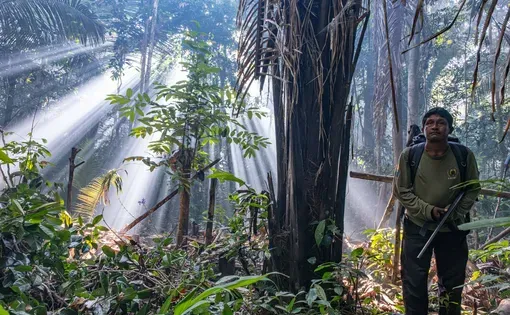
Together with the agents, the journalists trekked through the Kawahiva do Rio Pardo territory for days to reach a site where they could collect data on the well-being of the Kawahiva people without ever seeing or speaking with them.
Pulitzer Center Editorial Intern Ella Beiser spoke with Reid and Biasetto about building trust with wary sources, and the challenges and pitfalls to avoid when reporting on Indigenous peoples.
This interview has been edited for length and clarity. Biasetto’s comments were translated to English.
Ella Beiser speaks with journalist John Reid. Audio by Ella Beiser.
Ella Beiser: Describe the work you do and the project you completed for the Pulitzer Center.
John Reid: I'm a writer. Before that, I spent decades in forest conservation work. I got interested in the topic of isolated peoples when I was working on a book in the 2019-2021 period. The book's called Ever Green: Saving Big Forests to Save the Planet, and it's about the world's largest forests. In the book, my co-author, Tom Lovejoy, and I were making the case that there are forests that are so big that they do things for the planet and for our society that fragmented forests can't do. And as we started looking into biodiversity and climate, we also discovered there was a cultural dimension to this, that there were forests that, because of their size, were able to hold human cultures that have otherwise been absorbed and assimilated into the broader society. And if you put a map of where the isolated Indigenous tribes are still thriving, they’re usually in very large tropical forests in the Amazon basin. And so that's how I got interested in the topic.
I met Daniel in 2022. We had both known Bruno Pereira well, who was an advocate for isolated Indigenous tribes, and I wrote a piece for the O Globo newspaper, remembering Bruno and his work for protecting isolated peoples. So Daniel and I began to correspond, and over the period of a few months, came up with an idea for a series that would be published simultaneously in English and Portuguese. I pitched the series to Andrei Netto, a Brazilian editor at The Guardian, who loved the idea.
Daniel Biasetto: I worked as a political editor for almost 20 years here at Globo. In 2019, I started covering Indigenous issues because we had a change of government with [former Brazilian President] Jair Bolsonaro coming in, and I knew it would be disastrous for Indigenous issues. He had many views that Indigenous people did not like, and he did not want to share the land with them in the process we call demarcation here.
So I started covering Indigenous issues, and then I met Bruno Pereira because of something he was doing. So I approached him and we started a relationship as journalist and source, and in the end we became friends.
He has given me many avenues to pursue with Indigenous issues. Especially isolated Indigenous peoples. He was very concerned about isolated Indigenous peoples. He was concerned that there were no journalists who covered the issue in depth.
But then the pandemic hit, and Indigenous people began to die as well because of the vaccine issue. So I spent two or three years ... just doing that kind of coverage. We were ... doing what we call trench journalism, so that sanitary barriers would be put in place, so that infected people would not enter Indigenous land.
So I started to get space in the newspaper that wasn't there before. There was no space for Indigenous issues in the mainstream press. Only when there is misfortune or when there are many bad things.
But the beauty, history, and tradition of Indigenous peoples were overlooked by the press. So we opened a very important door there, and then other newspapers began to follow suit.
It's a shame that I was coordinating with Bruno to be there at the time when he and Dom [Phillips] were traveling [in 2022 in the Javari Valley]; I almost went there with them.
[I realized] that he and Dom were missing, and then I went there because I already knew about the threats that were there. And then I went there to Atalaia do Norte in the Javari Valley. And then I was almost certain that they had been murdered, that they had been killed.
So, I had to return under police escort because ... the Amazonian police themselves could not guarantee my safety, so they escorted me to the airport in Rio.
Well, that's when I met John. John was in Rio de Janeiro for the launch of his book. And that's when he invited me to work on the issue of isolated Indigenous peoples, and I was very interested because it was Bruno's dream.
Beiser: It seems reporting on uncontacted peoples would present a lot of ethical considerations and risks. Could you talk about some of that and how it impacted your reporting for this series?
Reid: When we started the project, there was a very clear ethical line that we weren't going to risk contact and that we were going to do all the field work with seasoned experts who have been doing this for decades, and know how to gather information on the well-being of the uncontacted people without contacting them. There now is a rich pool of experience in doing that.
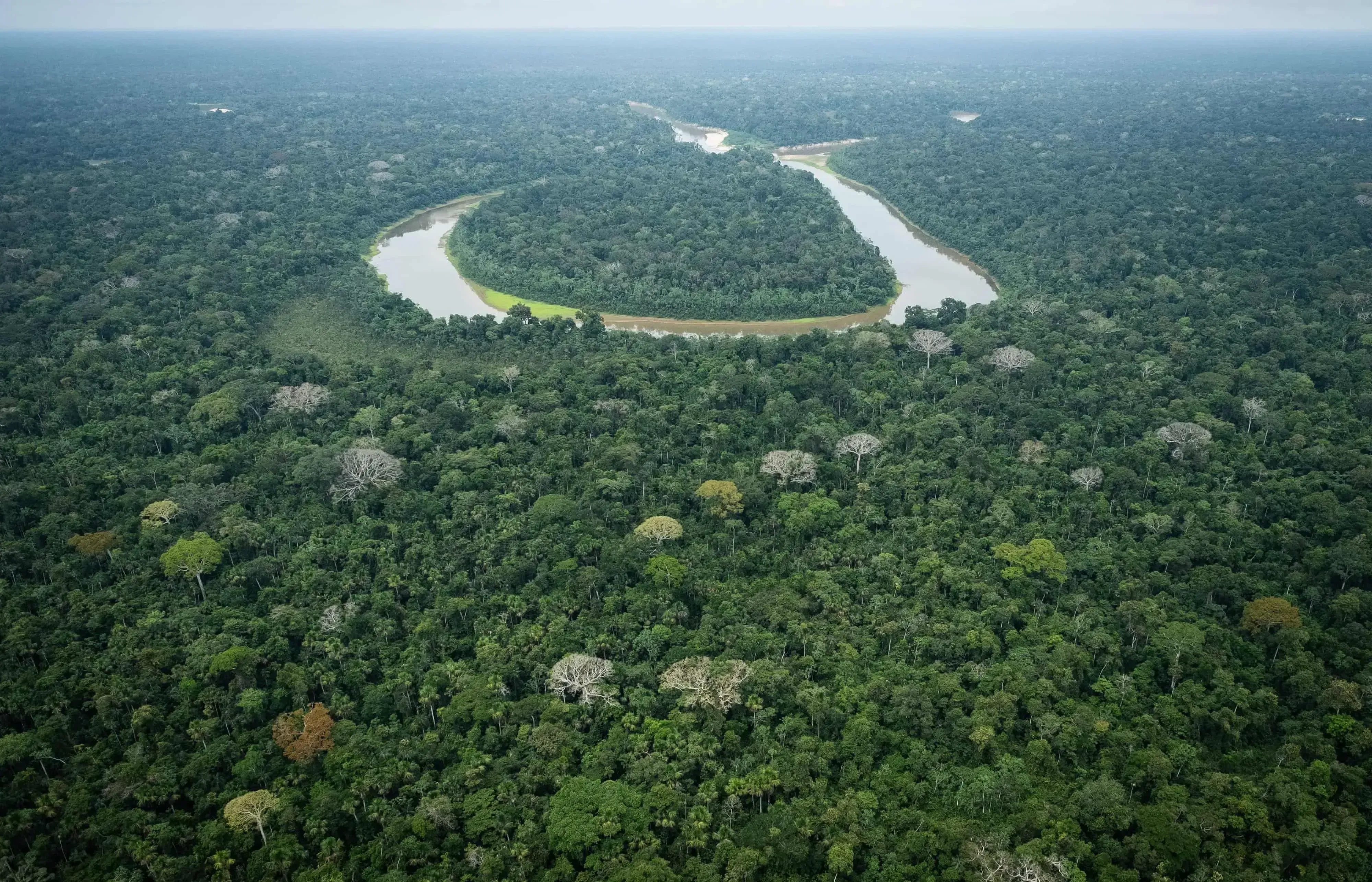
I would say the second ethical consideration for us really has to do with location. So, wherever there was the possibility of revealing the location of people, we didn't include the kind of information that would help people find them. Nowadays, with remote sensing technology and increasingly precise satellite mapping and increasingly frequent satellite mapping, there's a real issue of people knowing where these isolated groups are. But our ethical standard was just not to add to that public knowledge base. And really for the quality of the stories and reporting on the themes, we didn't need to. So we went to the Kawahiva do Rio Pardo forest in Brazil and it's a million acres of forest, and it doesn't matter where the people are in there, it doesn't matter where we found their baskets and their tools in terms of being able to report on the issues that were at play there.
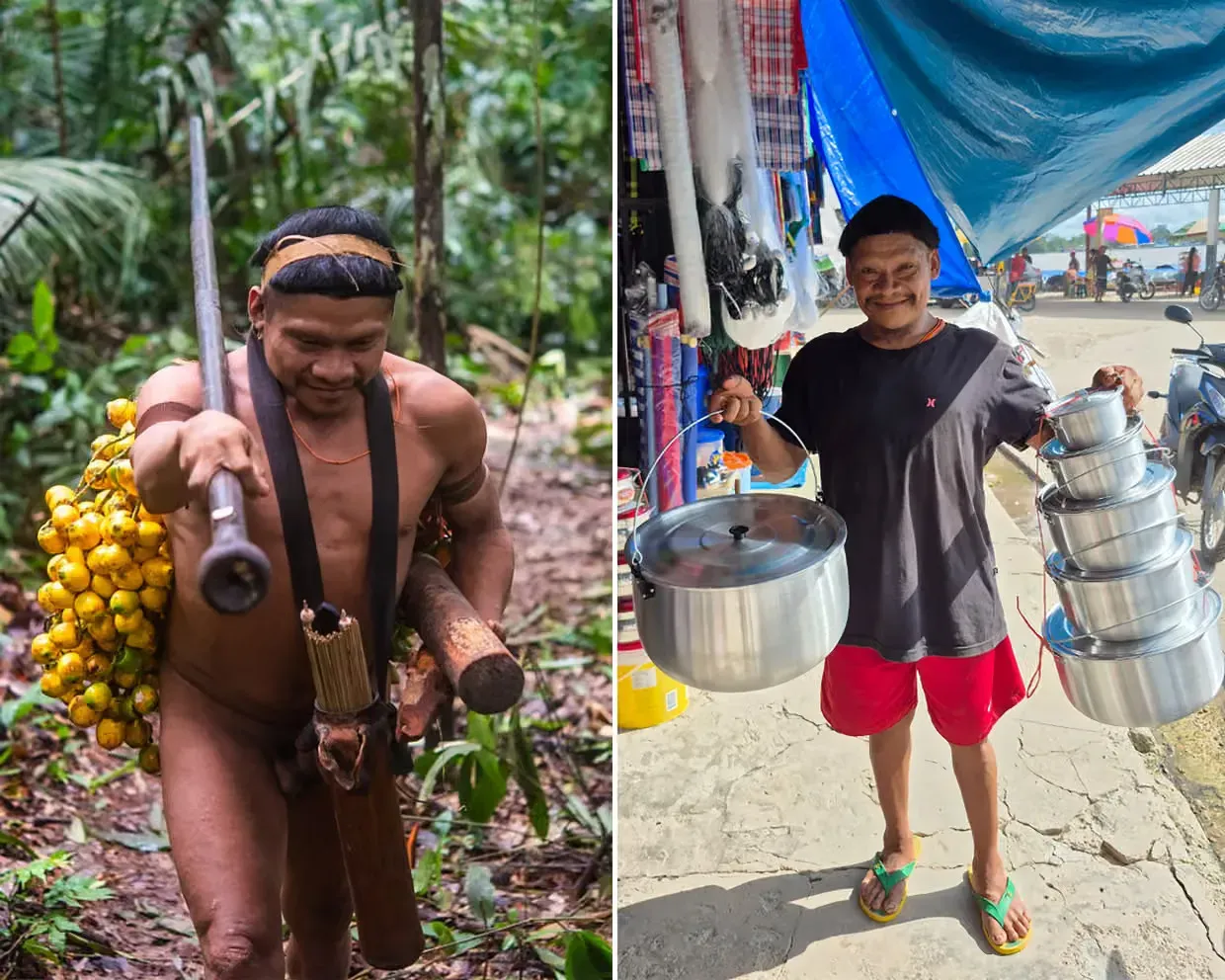
A third ethical principle was just to get beyond the sensationalism with which this topic has been treated in the past in journalism to show that these are real and diverse groups of humans. The people in the Massaco territory are different from the people in the Javari territory, and the people within the Javari territory are different from each other. So we wanted to bring to light that there's a kaleidoscope of communities out there. The most respectful thing that we can do is to try to portray those realities as best we can. And we thought, well, that's going to make for interesting reading.
Biasetto: It is a very complex job because it requires a request for authorization from the government so that we have permission to enter Indigenous territory. You have to be up to date with your vaccinations and you can't be sick, just in case there is accidental contact, which is possible when you are in the jungle.
For example, in Kawahiva, which is another trip, another state, we traveled more than 100 kilometers [62 miles] in the jungle ... we could encounter [isolated peoples] at any moment, and we got very close.
In the policy of no contact we get confirmation, “Here is a footprint of an Indigenous person,” “Here is a tree that has been cut down,” “Here is a system for drinking water.” We already have confirmation, we don't need to meet them, we don't need contact for that. Of course, we were very, very curious and sometimes very afraid, because we didn't know what the peoples' reaction would be.
Beiser: What was the process of getting permits to go into uncontacted peoples' areas? And how did you show that your reporting and your project was in good faith, and, maybe even more importantly, well researched?
Reid: I think it started with us having personal credibility with some key people who are veterans from FUNAI [Fundação Nacional dos Povos Indígenas, National Indigenous Peoples Foundation], people who've been working on this topic for a long time and have seen journalists come and go and do stories that caused the FUNAI agents to be suspicious of journalists in general. That's something that our contacts told us at the beginning, that these guys are not going to want to talk to you. You have to win their confidence. You have to explain your project and convince them that you're serious.
And both Daniel and I had a track record of things that we'd written before that we could run on, in a sense. And then as soon as we did the first couple of stories, and these guys opened up to us, trusted us, and we did a good job, then that opened more doors.
There’s an official side of permission, and then there's an informal side of trust, which is another kind of permission, and they're both completely linked. So there is an official process for applying for authorization to enter an Indigenous territory where there are isolated people, and it's a special process. We had to go through that permitting process, which was only successful because we had gained confidence on the personal side.
I remember we did little things to maintain it too, because when stories go into the editing process, the material is mostly out of our hands, in a sense. We got an opportunity to correct the edited versions. We had to overcome resistance at times, to make changes that to us were incredibly important. The editors were saying, “Well, look, this is a trivial difference to our readers.” But we would say, “No, there are some readers that may not be many people, but they're absolutely key to this project. We have to honor the trust that they've given us, and also we have to maintain our credibility for future stories."
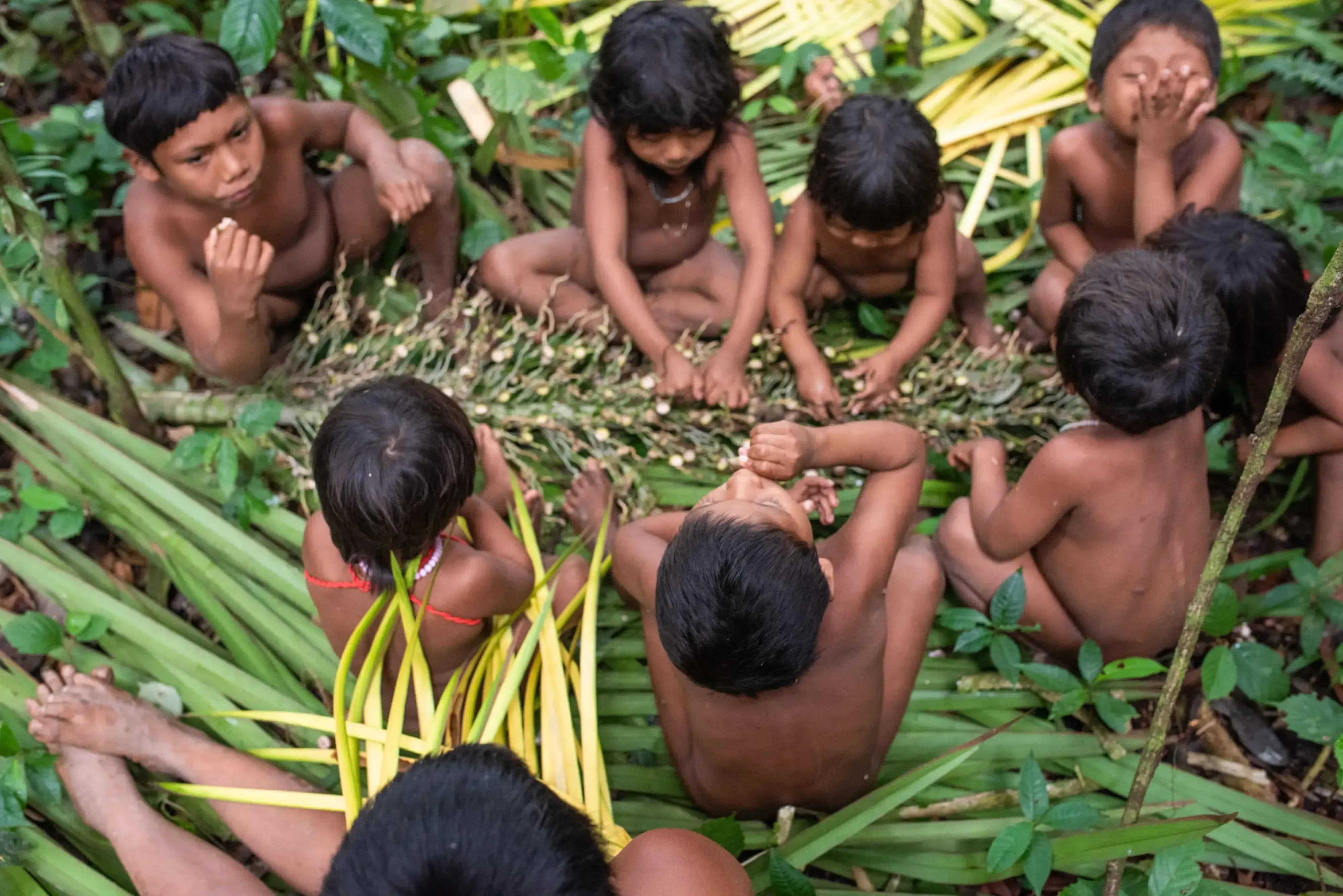
Biasetto: It takes a long time to build a story like this. Every time we went to the Amazon, we had to stay at least 10-15 days so that we could build a story.
We went to Brasília from Rio. John took a different route because he's from California. But I left Rio to Brasília, Brasília to Manaus, and Manaus to Tabatinga, which is a triple border with Colombia and Peru. This is a very dangerous place because there are many drug traffickers.
The drug traffickers are armed to the teeth. There are invaders from the logging companies who cut down wood. And the garimpeiros [illegal miners] go in there as well.
You have to be alert to what might happen at all times. Even on the river, you have to be in a boat and [take into account] the distance in case the boat runs out of gas. It's stressful because you have to stop and refuel, and while you're doing that, you have to be very alert because a boat with invaders could appear. If they realize we're journalists, they'll kill us. That's the risk. But none of that has happened, thankfully.
So we went to Javari and afterward to Tabatinga. We stayed there for a quarantine period, a period where you are isolated to do [tests] to see if we have malaria or COVID.
Reid: Daniel was talking about how the support from the Pulitzer Center helped us to undertake this logistically complicated, very long trip to get to the place where these things are actually happening. But the support from the Pulitzer Center did more than that. When the grant for this project was announced, it opened more doors for us because people know that for support like this, there are a lot of people competing, and there are a lot of incredible projects that are competing for that funding.
And so having the support, not just from the Pulitzer Center, but also from the Ford Foundation out of their Rio de Janeiro office, gives us that additional credibility to go in and get to start a conversation about this project.
Ultimately, we had to do good work and be trustworthy, but it's a huge door opener to have that kind of evaluation of our work.
Beiser: As you said, this project was published in two separate publications, and I'm curious if that impacted what you wrote or how you wrote it.
Reid: It was an explicit part of our approach in this project, to think about the international consciousness about this issue, and then to also be thinking about the policy decisions that directly affect the lives of the people who we're writing about. The people who we met and talked to who do advocacy on these issues were clear in saying it matters whether the international community is paying attention. It matters whether the international community cares. And what we really wanted to do is to talk to a global audience of readers who care about the environment, who care about rainforests, who care about human rights, who care about language, who care about culture, and see how all these issues were related in these territories of isolated peoples.
So in that sense, when we're writing for that audience, we spare them some of the gory details of Brazilian policy and judicial proceedings and which Supreme Court judge is in charge of the process that is forcing the government to take measures to protect isolated peoples.
But then, when we do the Portuguese versions for the Globo audience, those details are critical. And Daniel is great at knowing who's the public official that we need to ask the hard questions of, and what is the legal process by which either protection or removal of protection happens.
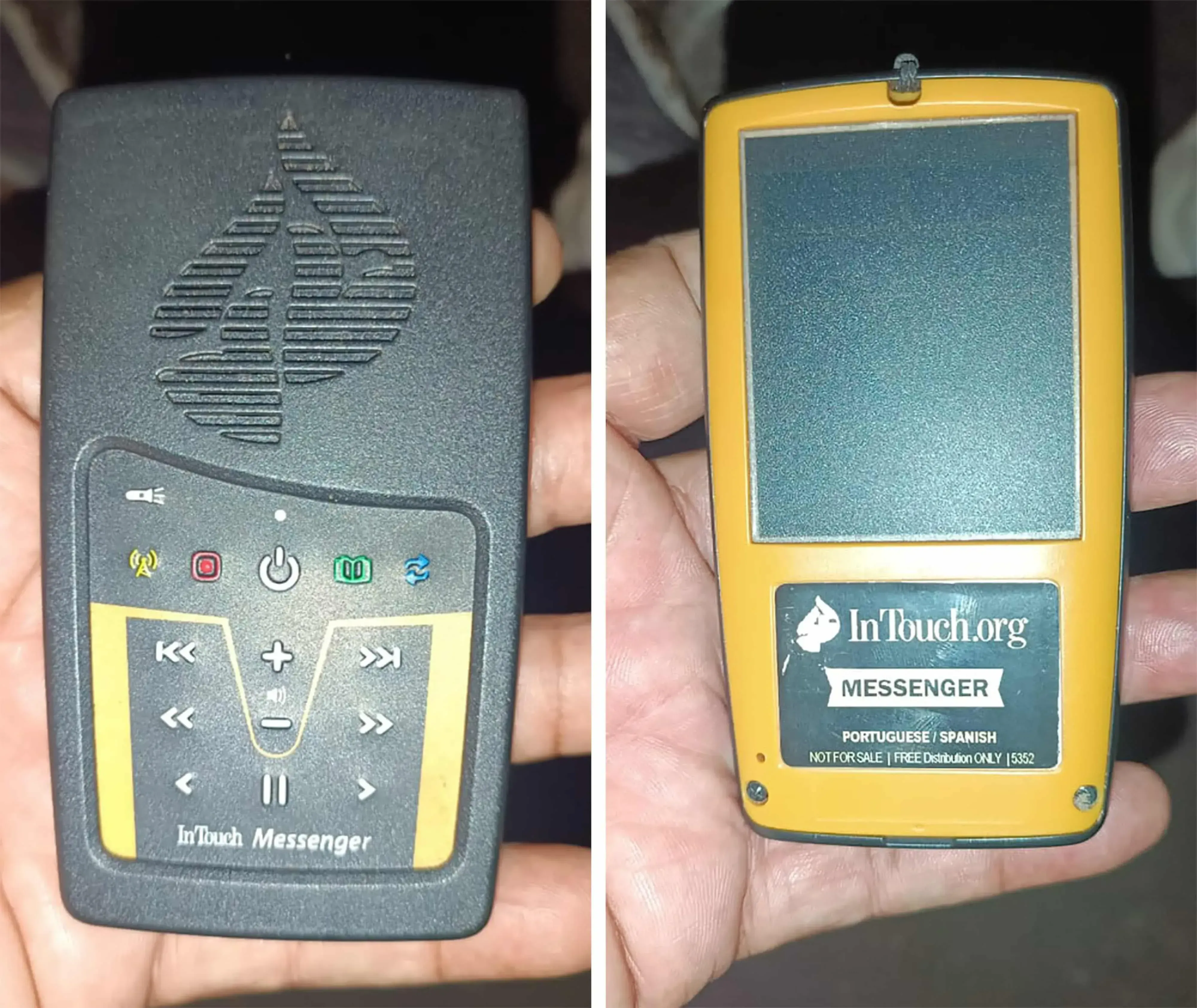
Biasetto: Now in Javari, we have found this silent invasion of missionaries with radios. Little by little, proselytizing with the use of technology. And no one knew that this was happening. It is very dangerous because in this territory, the Indigenous people are more protected than in any other part of Brazil, in the Amazon. They are one of the last bastions of hope that tomorrow we will have a more habitable planet. These Indigenous people are the guardians of the forest.
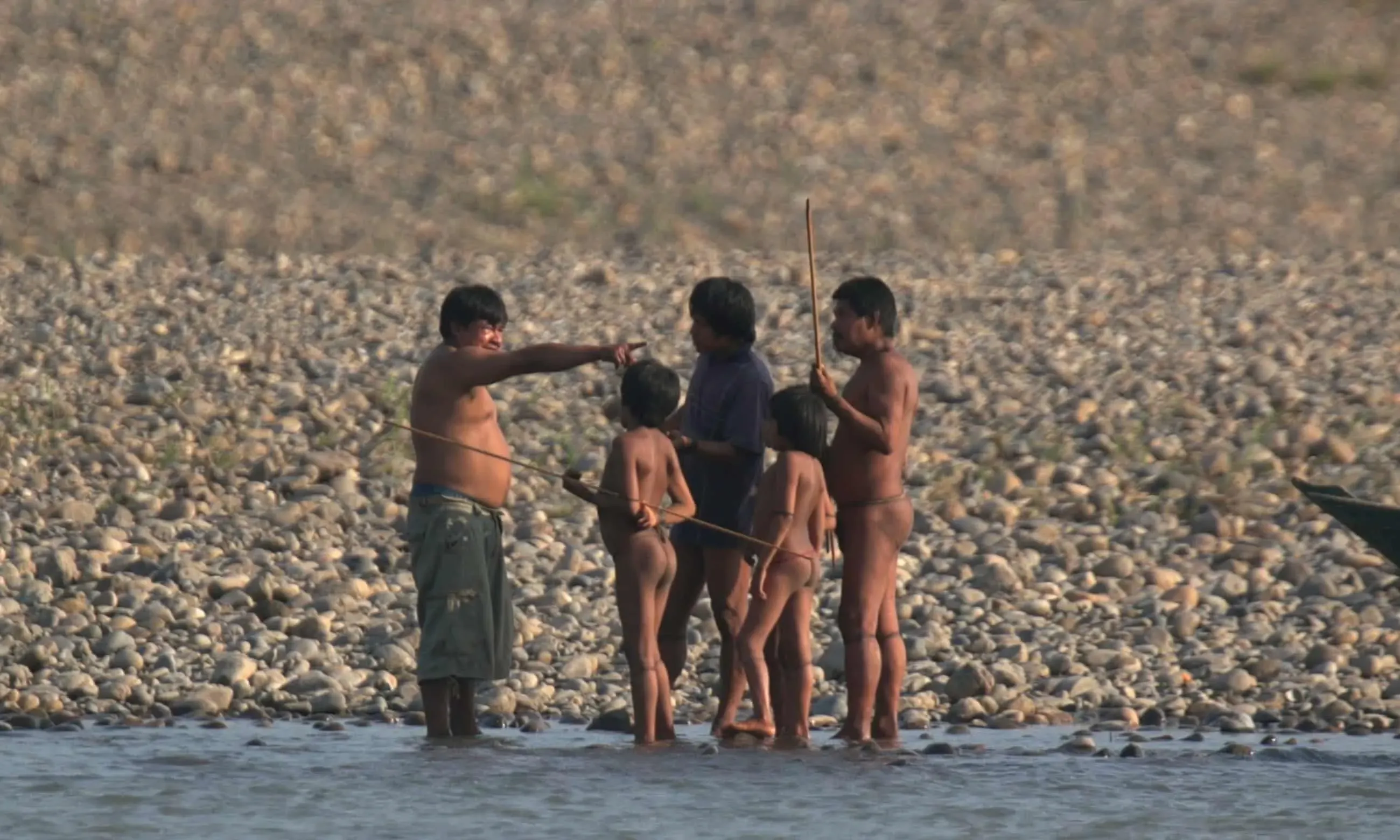
We have to have two ways of approaching reporting because what we write for The Guardian cannot be the same as what we write here for Brazil. We can make them very similar. For example, if I have here a very important issue of claiming a land demarcation that may not be very interesting for the international reader. [They, on the other hand, want to know] more details about the people who live in isolation and why. For us, it is an internal government policy, a protection policy. How does the demarcation affect others? It affects everyone involved in politics who owns land, who has farms, who has interests. So we were careful about this with the experienced editor Andrei Netto, who organizes the publication with The Guardian and is the editor for Latin America and the Caribbean.
And we always had that concern. I think, for example, in the [story] of the Mashco Piro, it was important to tell them, “Well, the loggers are sharing the same land as the isolated people. And the entity, the organization that issues the certificate, is not buying this from them.” And for Brazil, we didn't have that concern so much.
Reid: The Mashco Piro stories are an example of how cool it is for me to work with Daniel. I was hearing from sources in Peru that there's this critical situation with a Peruvian territory that should have been designated for isolated tribes, and a key vote is coming up, and so we started to pay attention to that. And at the same time, we are hearing from our Brazilian contacts, a guy named Lucas Manchineri. He calls us up and says, “Look, they just showed up in our village, the Mashco Piro, and they've never come this close. And it's a strange time of year for them to be traveling on the river."
And so we're able to put two and two together and say this is not just a Peruvian story, as the Mashco Piro have been covered as a Peruvian curiosity for years. But we're saying, “No, this is, this is a bigger story.” This is a Brazilian story too because the people are being pushed by logging activity to spend more time across the border in Brazil. And at a time of climate change, it becomes an international story because climate change is pushing people farther down in the watersheds, because the headwaters creeks are drying up. And it's also an international story, because the Forest Stewardship Council [FSC] has certified timber operations in the area that's slated for, and scientifically acknowledged to be important for, the isolated people in Peru.
We were able to write the stories in different ways to get at the Brazilian and Peruvian officials, but also the FSC, which appears to be responding and beginning to take an issue seriously that really they hadn’t paid attention to for years.
Biasetto: Peru and Brazil haven't discussed an issue like this in over 10 years. Meanwhile, Indigenous people are crossing the border due to climate change and the invasion of loggers. For 10 years, there has been no agreement between the two countries regarding these Indigenous people. Until today. It's incredible that there isn't one.
And returning to the other question of how we are handling reporting for the two countries. For the Javari Valley, we had another idea for how to do a report. We wanted to talk about the Korubos, but we were more focused on talking about post-contact. How are these people doing after they made contact for the first time?
But we were surprised, and that's the beauty of journalism. We didn't know those missionary radios existed. We were traveling to Indigenous land when the police and another anthropologist showed us a picture of a radio and then a video of a radio with Bible verses on it. I looked at John and said, “Wow, what's that?” So that's where we started our investigation.
Beiser: What are some of the takeaways that you have from this project?
Reid: One is that the fact that these isolated peoples are able to continue to make the choice to live in the way that they do is, for me, something that I don't know of any precedent for in human history. ... That's what you see happening in the Amazon, where there are people [FUNAI agents], with other options in life besides being in the forest, protecting territory and risking their lives and risking snake bites.
This makes me think of one of our camps in the Kawahiva territory. It was about the seventh day, so we were pretty tired and have walked a lot and are sore and all of our stuff's dirty. We came to the place that we were going to camp for the night, and we put our bags down and start putting up our hammocks, and we realized that the whole camp was infested with stinging ants. And they were stinging our feet and just making us dance around swearing. But it was late in the day and we really couldn't go anywhere else, so the guys from FUNAI, who were our hosts, started lighting little fires around the campsite to clear areas.
It was this kind of comic, but painful scene that they go through every day to do this work, to protect people whom they'll never meet, protect people whom they could actually take an arrow in the chest [from]. So the fact that there are human beings who are doing that work, and that there's a Brazilian, and to a degree Colombian and Peruvian and Bolivian legal structure that protects those people from being overrun.
The Americas were colonized over 525 years ago, and these last groups of people are being respected. And I think the ability of a society to show that kind of respect gives me some hope that we can get over some of the global social and environmental challenges that we're in the midst of.
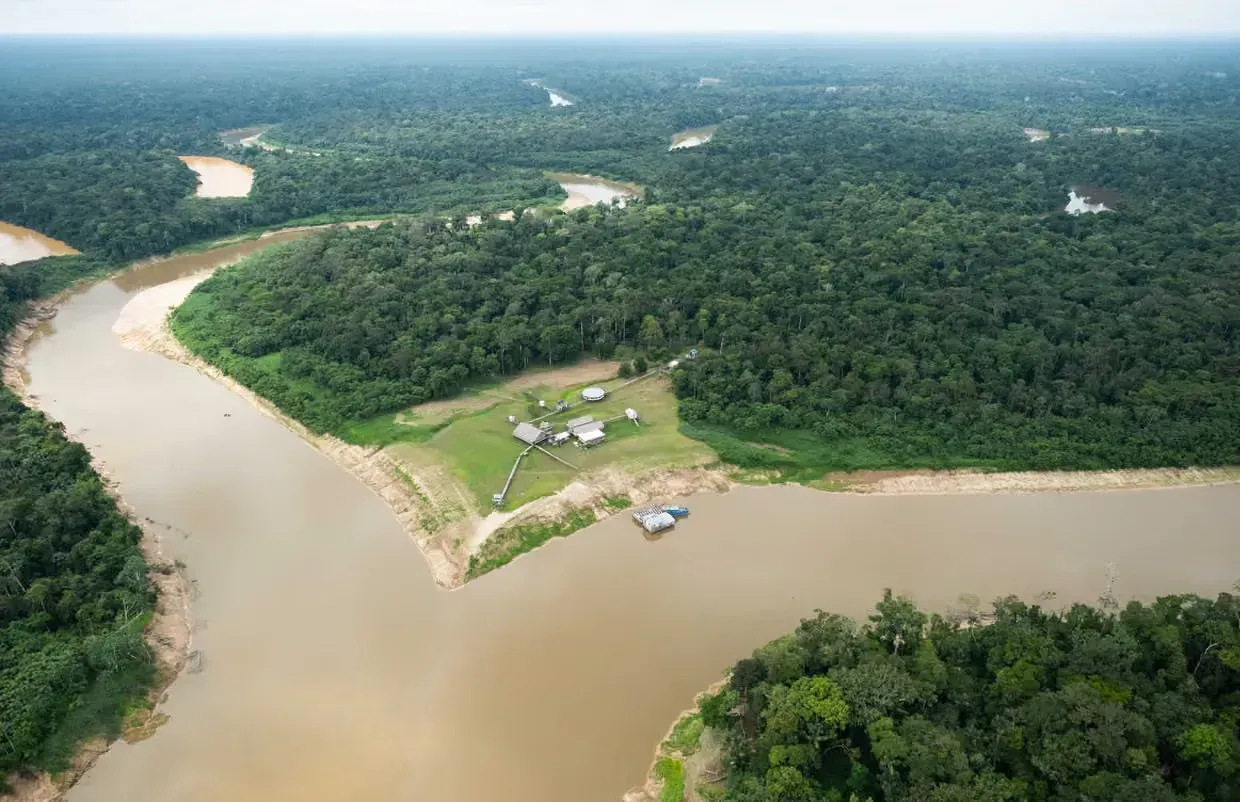
And I think the other thing that gives this story some attraction for readers, and definitely something that makes us want to dedicate ourselves to it, is the environmental importance of the territories where these [Indigenous] people are living.
And so you asked about advice. I would say, try to work on something important. And even if that importance is sort of behind the scenes and it's the background to the particulars of the story, I think it'll drive interest, and it'll certainly drive the journalists to be willing to make the sacrifices to get the story into print.
Biasetto: I think this work reinforces the importance of journalism, always, as a tool that still changes things in the world. That gives me a lot of hope, too. I agree with John, it's incredible work that these people [FUNAI agents] do in defense of the forest, of isolated peoples. We often said “these people are crazy! They're crazy” because they stay there for days and days in the forest. It's a very dangerous adventure. They are there because they believe in their work.
And so, journalism can be another helping hand for them to do their job. And also, this series, this project, changes once and for all the impression that if it weren't for [the foreign press] here in Brazil, in Latin America, especially in South America, there would not have been more ... coverage of Indigenous peoples, their territories, and their importance.
So with journalism, there is an opportunity to go in and tell readers what is happening inside the Amazon rainforest. And it explains why we need to create security for them. It is a very important mission, I think, that journalism does for all of humanity.
Reid: Bring extra batteries. That would be another piece of advice. And something to clean your camera.
