

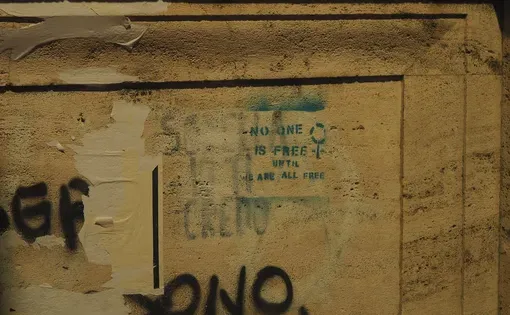
Solidarity is how the movement Non Una Di Meno survives.
On a clear day in early November 2023, 22-year-old Giulia Cecchettin was brutally murdered by her ex-boyfriend in the hills outside Venice. It was more than a week after her disappearance when her family and a horrified Italian public found out what happened to her.
In the intervening days of speculation and suspense, captivated Italians were confronted with a deep rooted culture of misogyny. Conversations about violence against women spread across the country.
According to the Italian National Institute of Statistics (ISTAT), Italy has one of the lowest female labor force participation rates in the European Union at 56.5% for women, compared to 76% for men, and is ranked 14th in the EU for gender equality—the worst of any major economy in the region.
The news of Cecchettin's death was tragic, but to some Italian feminists, it felt almost inevitable.
“We already knew what happened, we could feel it in our bones,” said Giulia Rizzello, a member of Non Una Di Meno (NUDM), a collective feminist movement that helped organize some of the protests after Cecchettin's death.
On November 25, 2023, the International Day for the Elimination of Violence Against Women, thousands of people poured into the streets in cities across Italy, enraged by Cecchettin’s death and galvanized by her sister Elena’s condemnation of a “patriarchal society steeped in rape culture” and her call to “burn it all down.”
Feminist organizations like NUDM gained thousands of followers and increased attention for a moment. But the burst of feminism did not translate into drastic changes in the day to day of Non Una Di Meno, Rizzello said—nor did she expect it to.
“I don't think it really changed the participation to the movement assemblies. It changed how many people follow us on social media. For example, it went up like 15,000 people in one day,” Rizzello said. “But then they don't come, they don't really follow the daily work.”
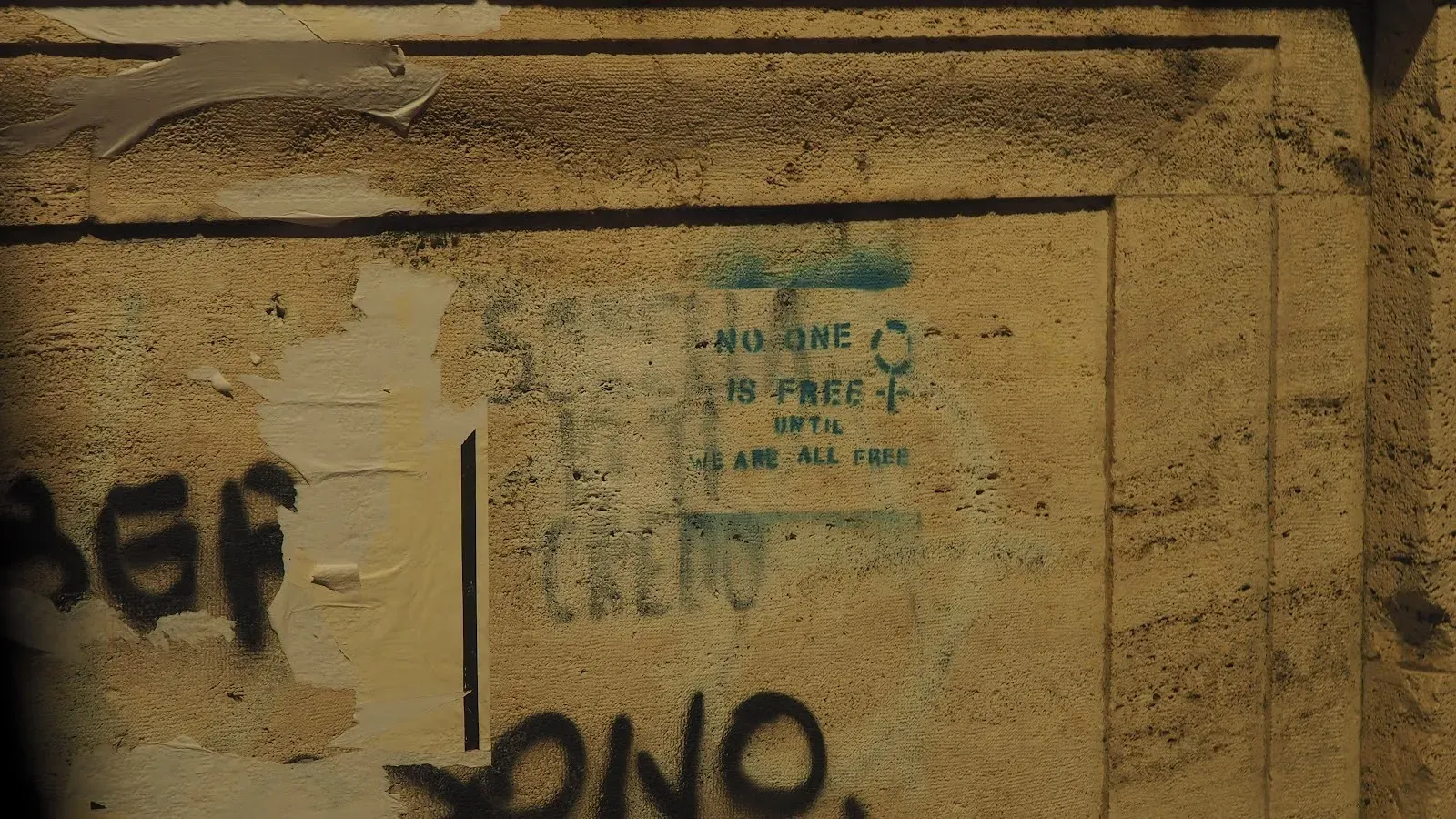
But Rizzello does not blame them. The movement has set its sights on further horizons, and its members know that their ultimate goal of shifting culture—and changing minds—takes time. But both Rizzello and fellow NUDM member Greta Mastropasqua said there is something different in the air.
“I think more and more young people agree with us and live the way we think; they practice what we preach,” Rizzello said. “But I don't think the general public changed completely.”
After Cecchettin’s death and the ensuing protests, the Italian government, led by far-right Prime Minister Giorgia Meloni, enacted a raft of legislation designed to combat violence against women.
With the exception of some provisions for education, the legislation mainly focused on increasing penalties for people who have already committed an act of violence. Members of NUDM said such measures aren’t enough. Increasing punishment for offenders, they argued, does little to protect women before they are hurt—broader cultural change is necessary.
Gergana Tzvetkova, a social science researcher at the Ca’Foscari University of Venice who has done studies on gender-based violence, echoed this idea. Through her research, she has interviewed many activists who argue that “it’s not all about larger sentences … it’s about prevention,” she said.
Education is key to this prevention, Tzvetkova said, both in terms of educating people in sectors like health care and social work about risk factors associated with gender-based violence and in terms of educating students from an early age about gender equality.
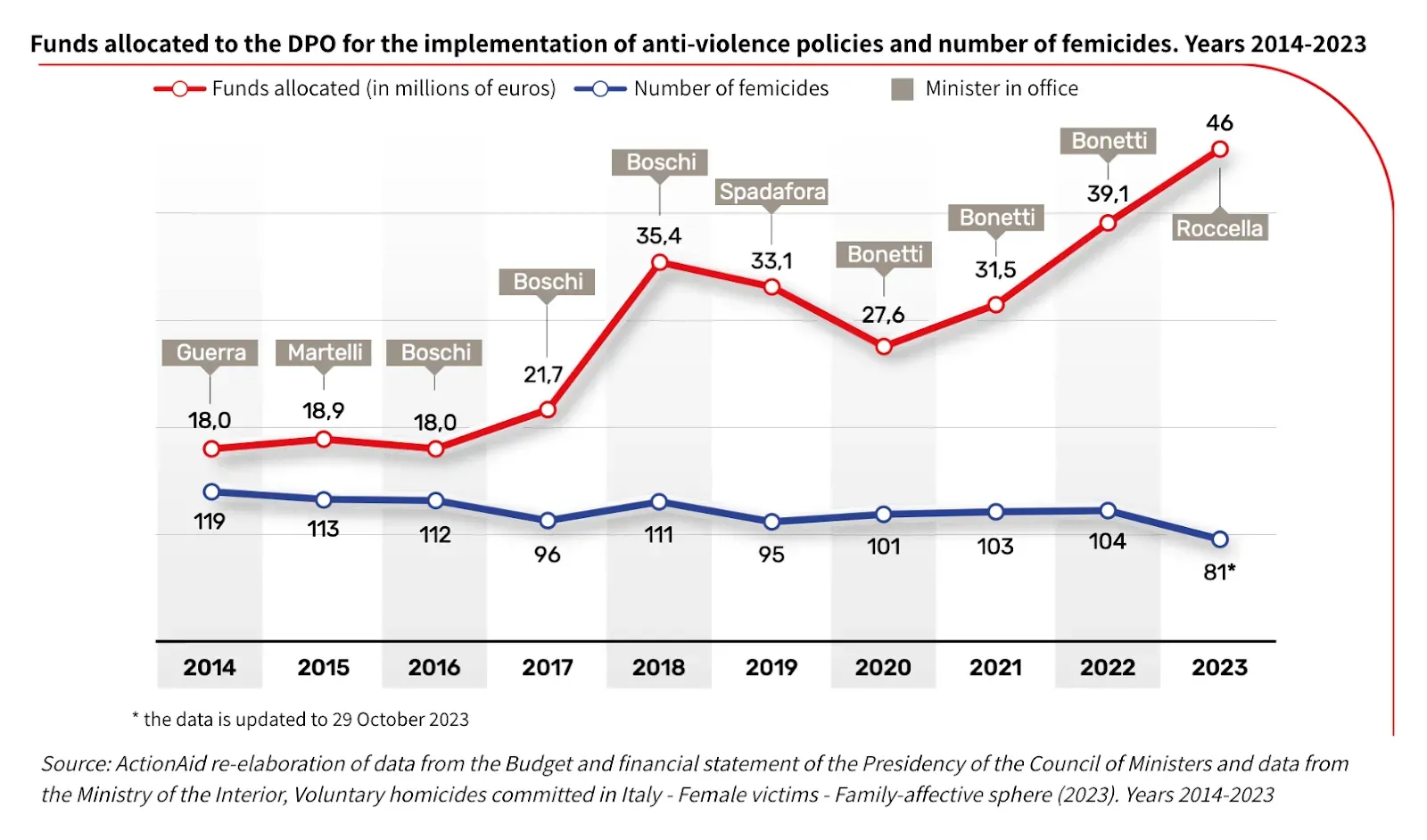
There is something to this argument, according to a report by international nonprofit ActionAid. Over the past 10 years, government spending directed at protecting women has more than doubled, while the number of women killed by their partner has remained relatively stable. During the time when the largest increase in funds was allocated—€248 million between 2020 and 2023—just 12% of funds were directed toward prevention, the report said. Activists argue that something is getting lost in translation.
Everyday work of the movement
More than a year later, the cameras have gone, the crowds have thinned, but the members of Non Una Di Meno are still at work, doing the everyday labor of their movement.
But this work, though just as important as flashy one-time events, Rizzello said, is not something the media really knows how to cover.
“Journalists really like to speak about the events … something you can see, you can touch,” she said. However, Non Una Di Meno is a political analysis movement, not just an action-oriented one, she said, so journalists don’t know what to talk about.
That is part of why, Rizzello said, the organization maintains a database of femicides that media organizations often turn to for their stats—it's something the media can hold onto. In fact, she said, news organizations frequently refer to the database, which they call the Osservatorio, or "Observatory."
But the movement is far more than just numbers. In weekly meetings across the country, and once a year when they have their national assembly, the members of NUDM discuss and redefine the shape and horizons of their feminism work.
Their main topics of debate these days are where the movement stands on the issues of sex work and surrogacy, said Mastropasqua.
Members said their feminism is one of constant re-assessment, and, when needed, re-invention.
Some of NUDM’s older members were part of the first wave of Italian feminists in the 1970s. Mastropasqua said that together, members have been having discussions about what parts of their foundation do they want to keep, and what parts do they want to leave in the past.
Some things have been easier to sort out than others. NUDM members began to call themselves “transfeminists” in order to explicitly include queer and trans members of the movement—leaving behind the so-called “feminism of difference” of the ‘70s, which was based on the idea that women and men were biologically different.
Bearing witness
Eight months after Cecchettin was killed, Manuela Petrangeli was shot and killed by her ex-partner as she was walking to pick up her 7-year-old son from school.
Her life slipped away in broad daylight in the middle of a street in the outskirts of Rome and in the peripheries of public consciousness. Unlike Cecchettin's, Petrangeli's death did not draw widespread public outcry, but quietly joined the list of more than 90 other women across Italy who had been killed by July 2024.
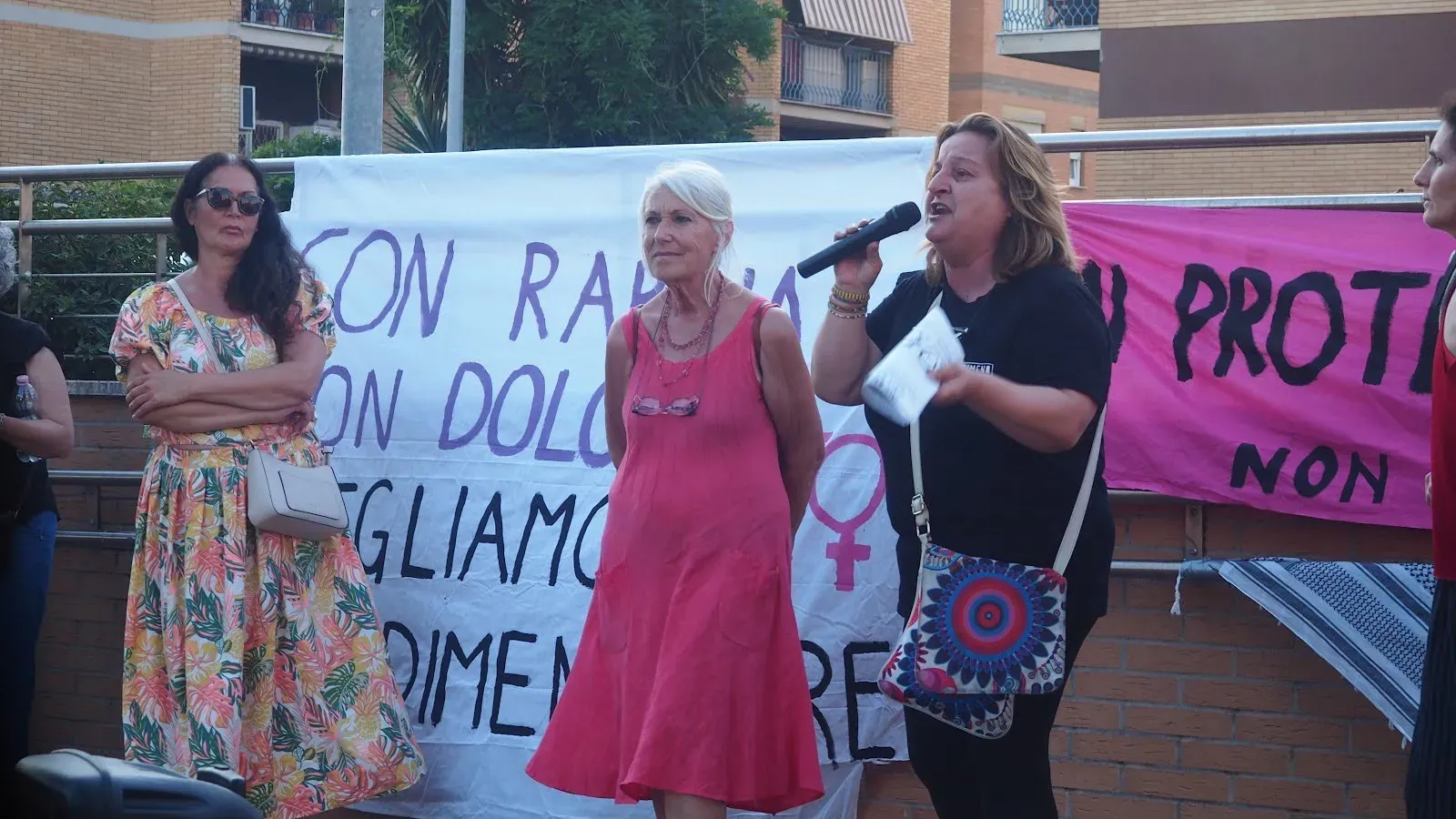
The members of NUDM and other sister organizations in the area did not want Petrangeli's death to go unremarked. Two weeks after her killing, NUDM members held a vigil and protest for Petrangeli and all those whose stories, members said, didn’t make the papers.
A couple dozen people gathered in a small square in front of a supermarket near where Petrangeli was killed, with signs, banners, and rage. Some sported keffiyehs, a traditional scarf often used as a symbol of Palestinian identity and resistance.
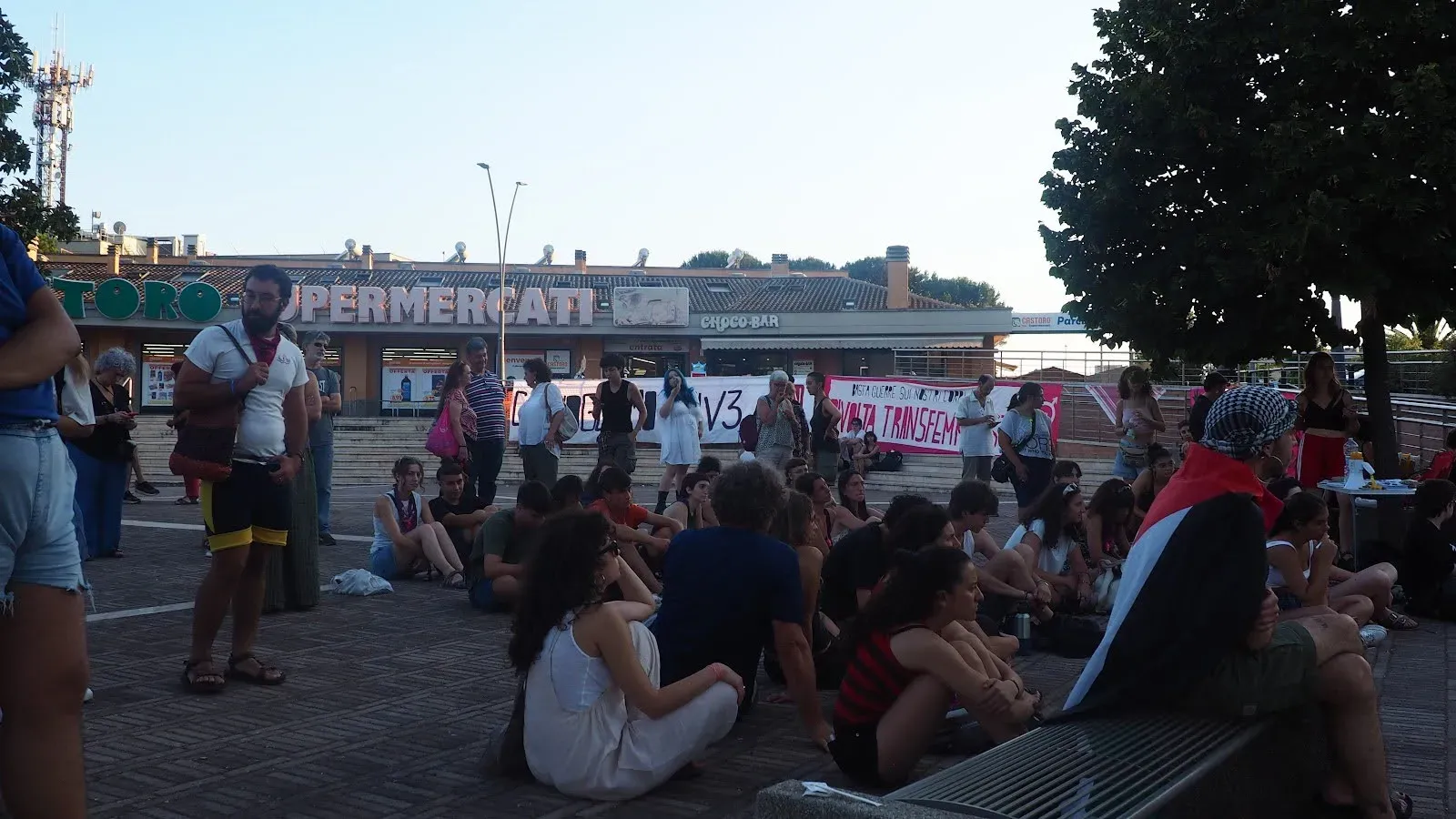
Members of NUDM are aware that Italy does not have the worst femicide rate in the world, but see themselves as fighting a global problem—patriarchy—on the home front, and offering support to other countries when they can. They frequently protest in support of Palestinians, and in the past have reached out to peer movements in Poland and England, Rizzello said.
A banner draped behind the speakers read, “Con rabbia e con dolore scegliamo di non dimenticare,” or “With anger and with pain, we choose not to forget.”
Speakers from different organizations delivered moving testimonies eulogizing Petrangeli and situating her death in a wider political context. They spoke about issues ranging from abortion access to the particular vulnerability of trans and migrant women when it came to the violence.
Almost all emphasized how important it was to not let deaths like Petrangeli’s go unremarked or unprotested.
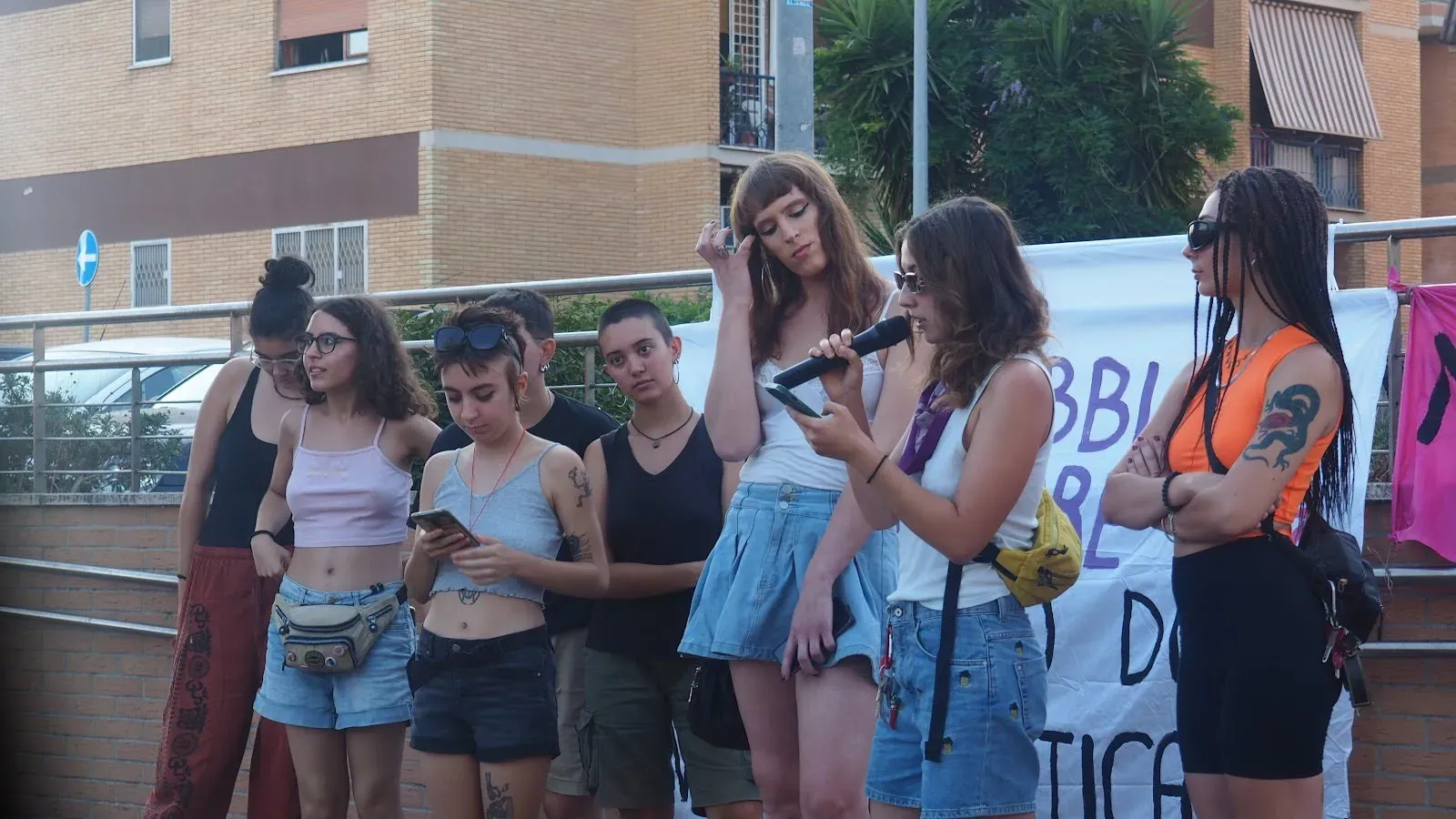
“We say ‘Non Una Di Meno,’” Rizzello said of the group’s name, which translates to “Not One Less,” “because every time someone dies, we continue talking about these things.” The group's members keep showing up, she said, so that the people who experience the violence know they aren’t alone.
The collective nature of the movement is what makes this “showing up” sustainable, said Mastropasqua. Members can trust in the fact that when they need a break, the movement will keep going and will be waiting for them when they return, Mastropasqua said.
“You're reassured by the fact that maybe you're not going to be there,” she said, “but there will be some other girl or some other activist or some other friend of yours that will happily take the weight off your shoulders and … carry for a while. And that is good.”
Its members emphasize that NUDM is in it for the long haul. And while they are ready and willing to adapt to changing times and circumstances, Mastropasqua said, the core of what they are fighting for will stay the same.
“We feel like trans feminist views and trans feminist positions are necessary for imagining a better world,” Mastropasqua said. “And that doesn't change in months. It doesn’t change in years. It doesn't change.”