Pulitzer Center Update June 16, 2025
From Heat to Action: Pulitzer Center Reporting Sparks Dialogue on Worker Protection
Country:


After international criticism, Qatar’s government implemented major reforms to protect its labor...



Rising temperatures are impacting economies worldwide and affecting how people work. Those who are most at risk have outdoor jobs that are physically demanding. Noticeably, these workers are from some of the most climate-vulnerable regions in the world.
To deepen understanding on how climate change, and particularly extreme heat, affects workers at risk, the Pulitzer Center conducted a half-day workshop that brought together researchers, workers, government representatives, and policymakers. The session created a space to exchange ideas from attendees' respective fields, and explore possible ways to address the growing impacts of climate change.
The workshop “From Heat to Action: Safeguarding Workers in a Changing Climate” was held in Bangkok on April 21, 2025. The 12 attendees included journalists, gig worker representatives, stakeholders from Thailand’s House of Representatives, the Centre for SDG Research and Support at Thammasat University, the Thailand Development Research Institute (TDRI), and the 101 Public Policy Think Tank.
Through interactive activities, participants were introduced to the issues related to worker protection due to climate change. They focused on understanding key challenges, risks, and collaboratively identifying possible ways forward.
"Inspired by the workshop, we are driven to ensure that workers affected by climate change are treated fairly and equally. It's time to push for policies that build resilience in the labor sector—so they not only withstand the crisis, but thrive and contribute their full potential,” said attendee Suttawit Sangkham, a researcher at the Department of Climate Change and Environment Thailand.
The event was designed in collaboration with Lukkid, a Bangkok-based organization that designs workshops to help organizations innovate, according to its website.
Learning From Insights in Climate and Labor Reporting
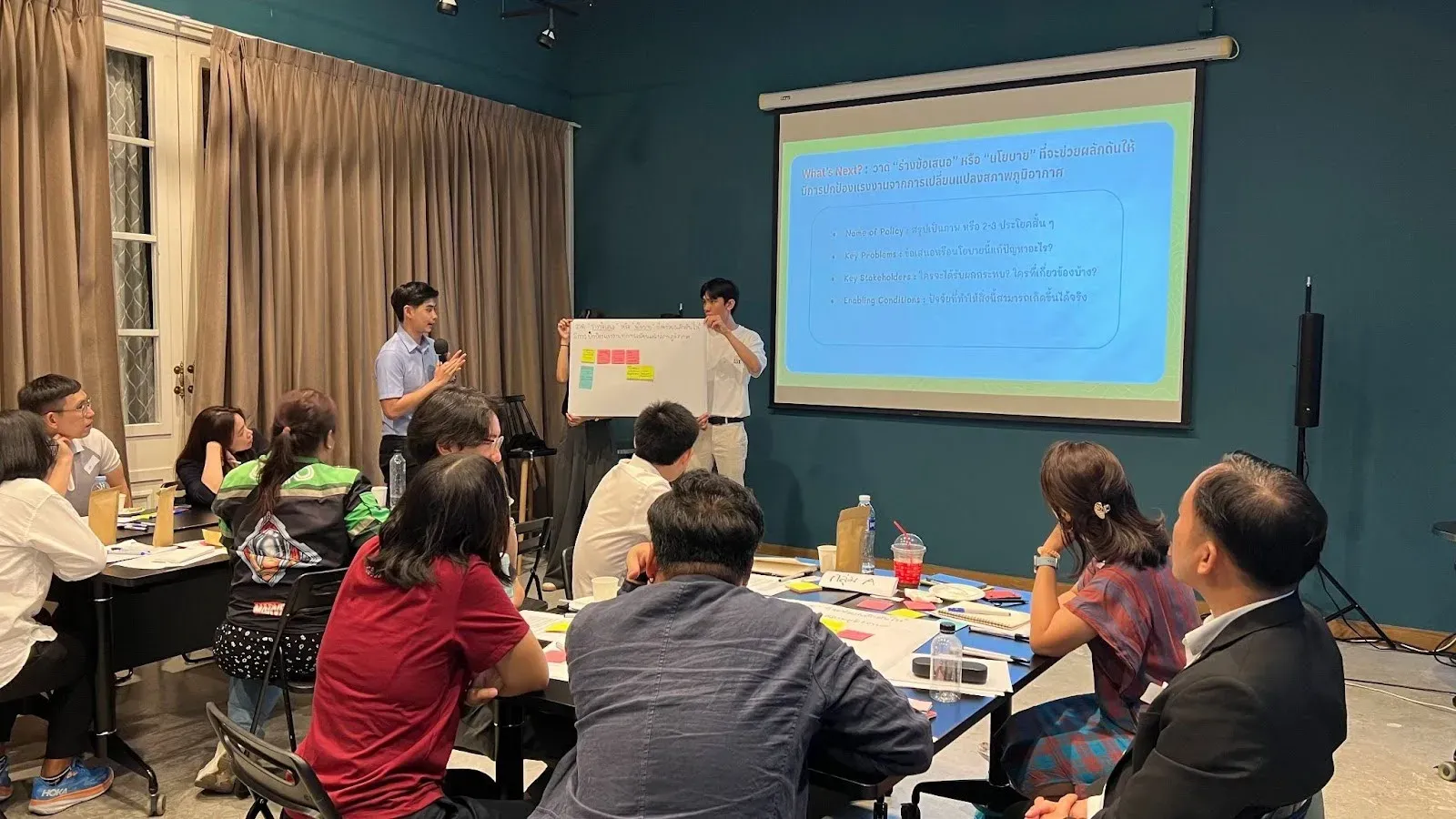
The workshop began with an analysis of case studies from around the world on the topic of heat and adaptation, mentioned in Pulitzer Center-supported news reports.
Some of these topics included Qatar’s national-level heat safety standards and smart cooling wearables for outdoor workers; India’s heat risk mapping tools and early warning systems to identify vulnerable zones; and Paraguary’s collaborative approach between young journalists, scientists, policymakers, and health workers to tackle rider protection from extreme heat.
In the workshop, the Pulitzer Center not only shared insights from the report, it also showed videos of our grantees’ reporting with Thai subtitles and discussed how other countries address extreme heat and protect workers. These case studies were then applied to the Thai context, with participants discussing the enablers and barriers around heat action strategies.
The discussions that followed touched on current realities, regulations in place, and aspirations, using structured exercises where participants brainstormed and simulated responses based on the gaps they identified. Examples included a transport company providing shelter for drivers during extreme heat; a university research group linking solidarity economy concept with occupational health; and a platform where outdoor workers can document, make complaints, or warn their peers about the working conditions.
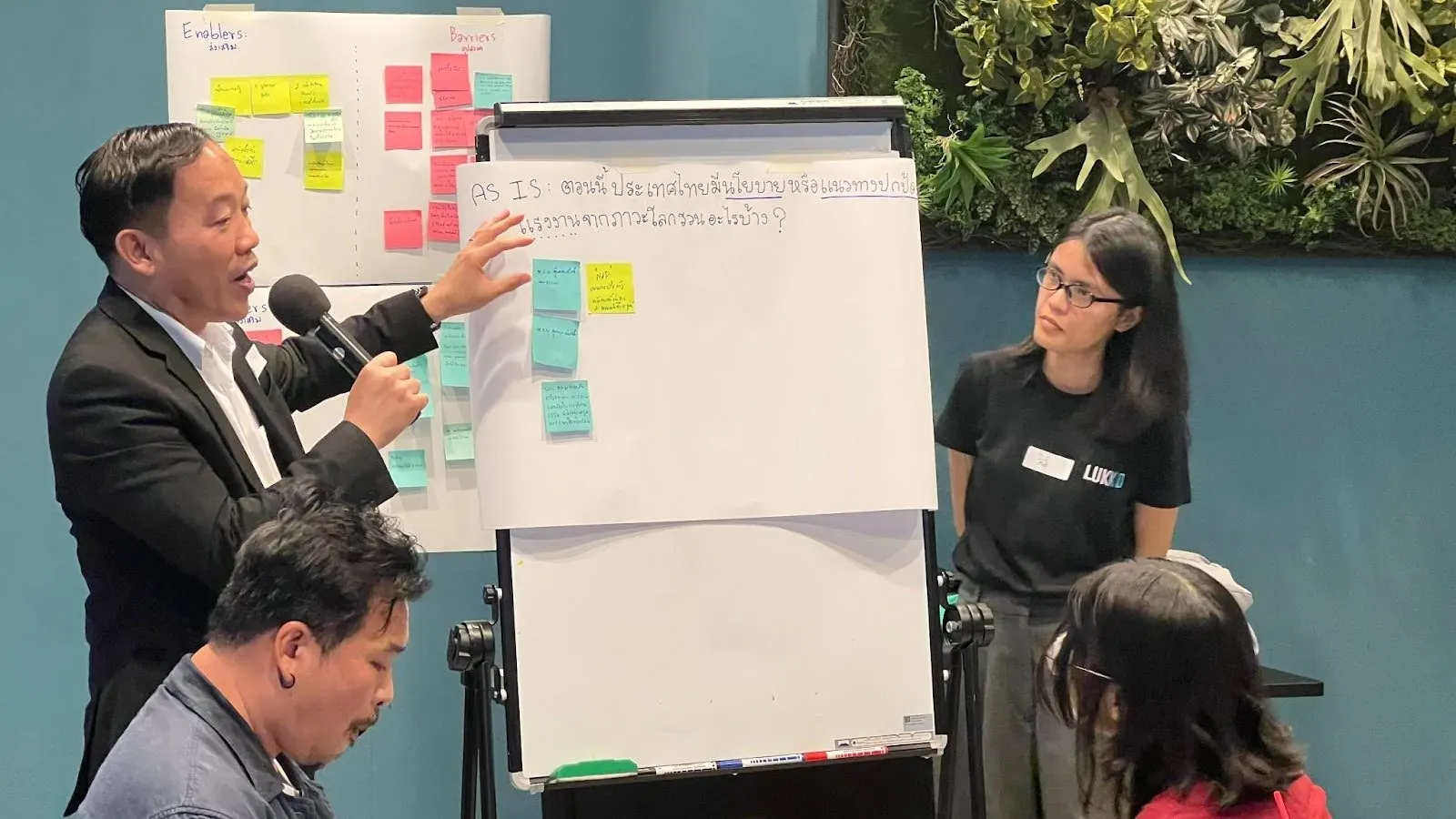
Once the workshop concluded, attendees shared their personal experiences and said they now have a deeper understanding of workers’ conditions. Participants identified that knowledge-sharing and networking between stakeholders is essential for a more informed discussion on climate and labor.
Through the session, attendees also gained knowledge for strategic communication—key to raising awareness on the topic. Further, they reflected on the value of looking at climate change from an intersectional lens, rather than from a siloed approach, when considering initiatives for climate adaptation and resilience in a warming world.
Clarification: This report has been updated to more accurately reflect the workshop.

Project
Health on a Warming Planet
For years researchers have predicted that human health will suffer as the climate warms...


El Surtidor examines how delivery app workers have to deal with extreme heat.


