

William & Mary students embarked on reporting around the world during the 14th Sharp Writer-in...


Fifteen minutes. 10 minutes. five. Claire Wright, a college student in Virginia, and her best friend were so close to seeing singer Gracie Abrams at her Secret of Us Tour. They knew getting tickets would be no easy feat. Both had their computers open and methods of payment ready. One minute. 30 seconds. Refresh. Sold out.
In disbelief, Wright refreshed the page again. The tickets reappeared—just at prices they both couldn’t afford. What was once a $70 ticket had now skyrocketed to prices between $700 and $2,000.
“I was heartbroken, but I wasn’t surprised,” Wright said, chalking it up to bad luck.
What happened in her dorm room was part of a much larger system that can work against fans like Wright and reshape live music.

As a nonprofit journalism organization, we depend on your support to fund more than 170 reporting projects every year on critical global and local issues. Donate any amount today to become a Pulitzer Center Champion and receive exclusive benefits!
Ticket scalping is nothing new. For decades, scalpers have bought up tickets and flipped them for profit. You may remember them outside concert venues, scanning the crowd for desperate fans. They’d catch your eye, lean in, and whisper, “Need a ticket?”
In the digital age, scalping has evolved into something far more powerful. Now, scalpers don't even need to leave their computers. This shift has turned ticket scalping into a national crisis, leaving small venues, independent artists, and devoted fans struggling to fight back.
But fixing a broken system is a different challenge entirely.
Automated bots allow resellers to acquire the tickets the moment they go on sale, outpacing real fans in a matter of seconds. The rise of legitimate online resale platforms—such as StubHub, Vivid Seats, and Ticketmaster—has only amplified the problem.
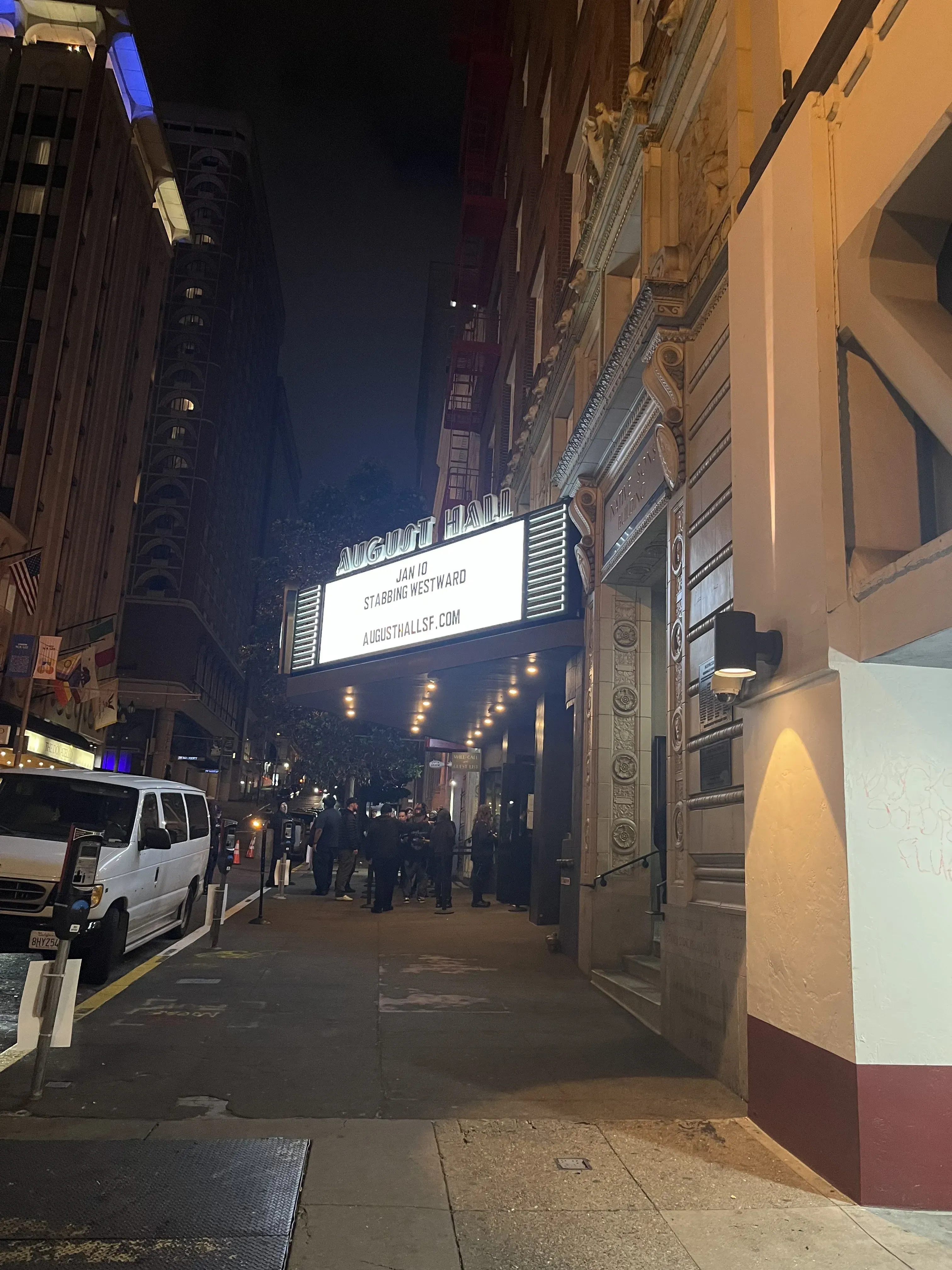
Gabe Docto, co-founder of the San Francisco Venue Coalition and the director of operations at August Hall in San Francisco, sees the impact firsthand. The mid-sized venue, located on Mason Street in downtown, features a main floor for concerts and a mezzanine that offers a bird’s-eye view of the stage. It hosts a wide range of artists, from rising indie acts to touring favorites.
Docto says the widespread belief that Ticketmaster is the only ticketing platform out there is simply not true. “The nuance is that Ticketmaster is the only ticketing platform that can handle high-volume ticket sales,” Docto said.
Alternatives like TicketWeb and Front Gate exist, but many are owned by or tied to Ticketmaster. Even Live Nation, seen by some as a separate player, merged with Ticketmaster in 2010. This kind of consolidation makes it difficult for smaller platforms to compete, especially for in-demand shows.
Docto says that before tickets for his venue's shows go on sale online, scammers “start advertising that they already have the tickets. In reality, they don't, because they haven't been put on sale.”
This practice, known as speculative ticketing, allows scammers to list tickets for sale before they’ve actually secured them. These “tickets” appear on resale platforms next to real tickets, misleading fans and inflating prices. Desperate for seats, fans unknowingly buy tickets that may never materialize.
Speculative ticketing has been allowed to flourish, with scammers exploiting gaps in the system. In California, Senate Bill 785 was supposed to change that.
In February 2023, Democratic state Senator Anna M. Caballero's proposed bill was designed to bring transparency to ticket reselling, requiring platforms to disclose whether a seller actually possessed the tickets before listing them for sale. Independent venues, artist organizations, and industry groups rallied behind the bill, seeing it as a crucial step in protecting both fans and the live-music ecosystem. The bill would have made it harder for resellers to list speculative tickets at inflated prices.
As the bill moved through the Senate, amendments weakened its protections, prompting groups like NIVA California, a nonprofit representing the 500 live venues across the state, to express concerns and re-evaluate their position.
In the end, SB785 failed, leaving venues like August Hall to fend for themselves. Despite these changes, NIVA California continued to praise Caballero for her efforts but could no longer support the bill in its final form.
Independent venues have relied on collective advocacy to push for better protections. During the pandemic, Docto and August Hall General Manager Josh Lieberman co-founded the San Francisco Venue Coalition. The coalition was formed when COVID-19 shutdowns left venues without revenue, and they needed government support to survive.
The coalition played a key role in lobbying for relief funding, uniting venues across San Francisco to ensure they weren’t left behind in recovery efforts.
At its peak, the coalition had strong participation from venues eager to work together. But as restrictions were lifted and businesses reopened, participation dwindled.
“Essentially, we are the San Francisco Venue Coalition now,” Docto says, referring to himself and Lieberman. With fewer venues actively engaged, the fight for better ticketing policies and industry protections has become even more challenging.
In the absence of widespread industry reforms, venues have had to take matters into their own hands.
“We have delivery delays in place, so tickets aren’t emailed until about 48 hours before the show,” Docto says. It's one of the strategies the venue uses to curb scalping.
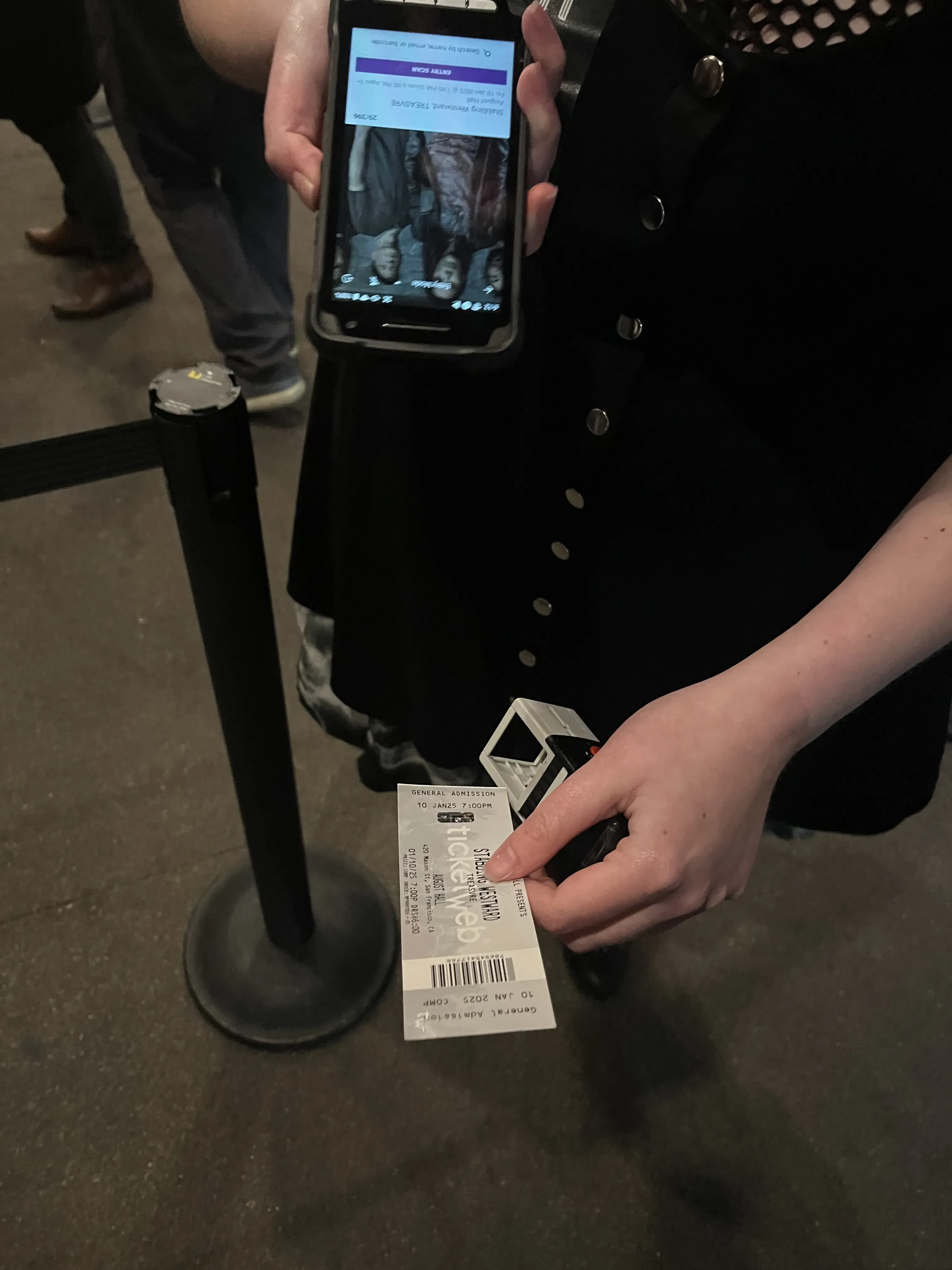
Another measure is ticket “scrubbing,” a manual process where August Hall’s box office staff goes through its ticketing platform, TicketWeb, to identify and cancel purchases flagged as potential scalping attempts. The refunded tickets are then put back on sale, in hopes of giving fans a better chance of buying them. Each show undergoes multiple rounds of scrubbing to minimize scalper influence.
If there are any issues when fans arrive at a show, August Hall's box office is there to help. It’s also the venue’s first line of defense. It can help fans print out digital tickets if necessary, and check for counterfeit QR codes to prevent speculative tickets from slipping through.
For fans, getting a ticket to see their favorite artist can feel like a victory in itself. But for venues, the process is more complicated.
Even for mid-size venues like August Hall, a sold-out show doesn’t always mean a successful one. With an 800- to 1,000-person capacity, most ticket revenue goes straight to the artist, production, and staff. That leaves venues relying on bar sales to stay afloat. If resellers hang on to too many tickets at inflated prices, fans might not show up, leaving empty seats, fewer drink sales, and a quieter room.
Docto notes that if the crowd is largely under 21 or buying non-alcoholic drinks, this can impact the venue's ability to cover its costs.
“We depend on concession sales, food, and beverage,” Docto said. “Right now, though, all those sales are way down compared to our ticket sales. [Ticket sales] have stayed the same, but our beverage sales are down quite a bit.”
On top of predatory ticket sales, the financial strain on independent venues is a constant challenge.
When resale prices spike, it undercuts the entire live-music ecosystem. Whether a ticket sells for $70 or $700, the venue’s earnings stay the same, while resellers pocket the markup.
Docto points to a research study that shows the impact of concerts on a surrounding community. For every dollar spent on a concert ticket, an estimated $12 is funneled into the surrounding community, supporting restaurants, bars, hotels, and shops.
It’s a precarious model. Tickets need to be priced affordably enough to bring fans through the door, but high enough to sustain venues and attract artists. Scalping throws that balance off.
Many live-music venues have begun to host unconventional events: boxing matches, candlelight concerts, themed dance parties, anything to bring in new crowds and keep revenue flowing. As Stephen Parker, executive director of the National Independent Venue Association, puts it, they’re trying to “meet audiences where they are.”
At August Hall, Docto mentioned the introduction of cannabis-infused beverages as a way to cater to ever-changing consumer preferences while maintaining sales.
“It’s an experience that, you know, people do carry with them,” Docto said. But these adjustments cannot fix ticket fraud. “The structure and foundations of what this industry has relied on for so long [are] start[ing] to deteriorate.”
No current legislation addresses the resale practices or speculative ticketing, leaving venues like August Hall to navigate the fallout alone, and fans like Wright are forced to face a tough truth: what once brought people together could also price them out.

