Lesson Plan April 1, 2026
COVID-19 and the Long-Term Impact on the Nervous System
State:
Grades:

This lesson was created by Yesenia Lisette Munoz, a high school teacher in Santa Barbara, California, as part of the fall 2025 Pulitzer Center Teacher Fellowship program. It is designed for facilitation across approximately five 45 minute class periods.
For more lessons created by Pulitzer Center Teacher Fellows in this cohort, click here.
This is valuable for my students as many of them will become health care professionals as early as next year when they complete the CNA program offered at the high school. Therefore, there is immense value in having the students learn about global health as they will be a part of the health care profession.
Yesenia Lisette Munoz
Lesson Overview
Students investigate the impact of long-COVID on the nervous system in both the United States and Mexico.
Objectives
- I can list and describe the structures and functions of the nervous system.
- I can list and describe the long term neurological symptoms of COVID-19.
- I can create a model to show the cause, mechanism, and effect of the long-term neurological symptoms of COVID-19.
- I can compare and contrast the availability of treatments for long-COVID in both the United States and in Mexico.
- I can raise awareness on the impacts of long-COVID and identify steps to address the impacts of long COVID-19 in Mexico.
- I can come up with solutions on how to help patients who are experiencing long-COVID neurological symptoms.
- I can create an educational tool to raise awareness on the impacts of long-COVID.
Performance Task
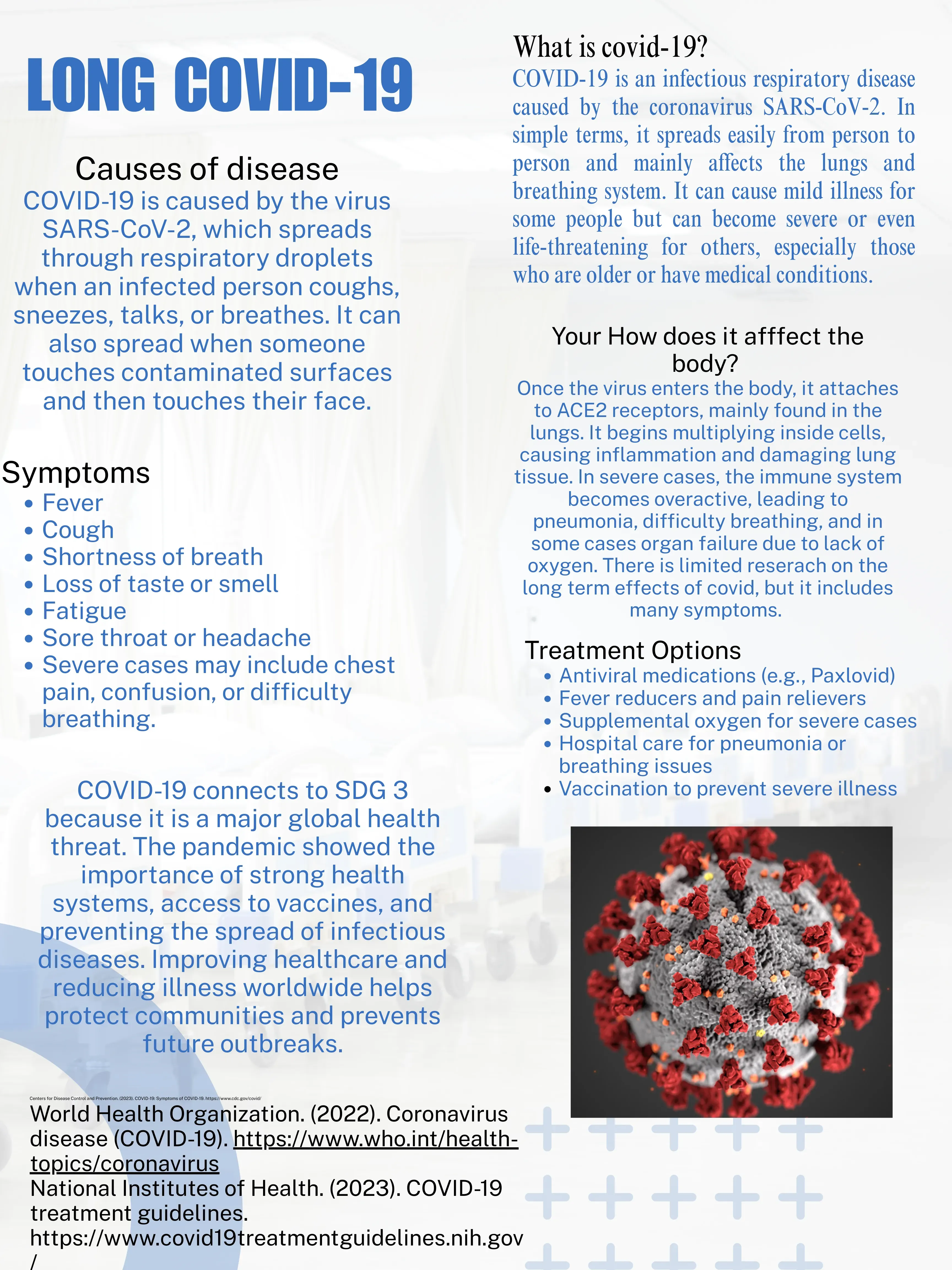
- Students will create a poster that raises awareness on the long-term effects of long-COVID
- Students will use the information that they learned in the lessons as well as information from the database to create their poster.
- The posters will be delivered to a clinic in Mexico, in the cities of Guadalajara and Agauscalients, and the town of El Sitio, Zacatecas. (I have family members who work as doctors in these clinics who will receive the posters to distribute them.)
- Students will also send posters to health offices in our school district and to local skilled nursing facilities that focus on neurological care and COVID-19 prevention.
- Since over 75% of my students are bilingual. I will have students volunteer to translate the posters in Spanish as well.
Assessment
- Padlets
- Clinical Case Study
- Graphic Organizers
- Class Discussions
- Performance Task: Culminating Project
Notes on Context & Content Advisory
The course that I teach is called Biomedical Sciences 100. This course is an introductory dual enrollment Anatomy and Physiology course. Students would take this course prior to taking college level anatomy and physiology. This course is a part of a Health Careers Academy Patient Care Pathway. The students in this course are in the Health Career Academy and are interested in pursuing a career in health care. This course counts as a career technical education course as well as a life science course. Students are receiving both high school and college credit for this course.
Content: COVID-19, Mental Health Disorders and Suicide, Death
Three-day lesson plan, including texts, videos, discussion questions, and a creative final activity. Download below to read the complete lesson plan.
Lesson Resources
Next Generation Science Standards
High School Life Science Standards
HS-LS1-2: Develop and use a model to illustrate the hierarchical organization of interacting systems that provide specific functions within multicellular organisms.
California Career Technical Education Model Curriculum Standards for Health Science and Medical Technology
Patient Care Pathway
B2.0: Understand the basic structure and function of the human body and relate normal function to common disorders.
In this lesson, students studied the effects of long-COVID on communities in the United States and in Mexico.
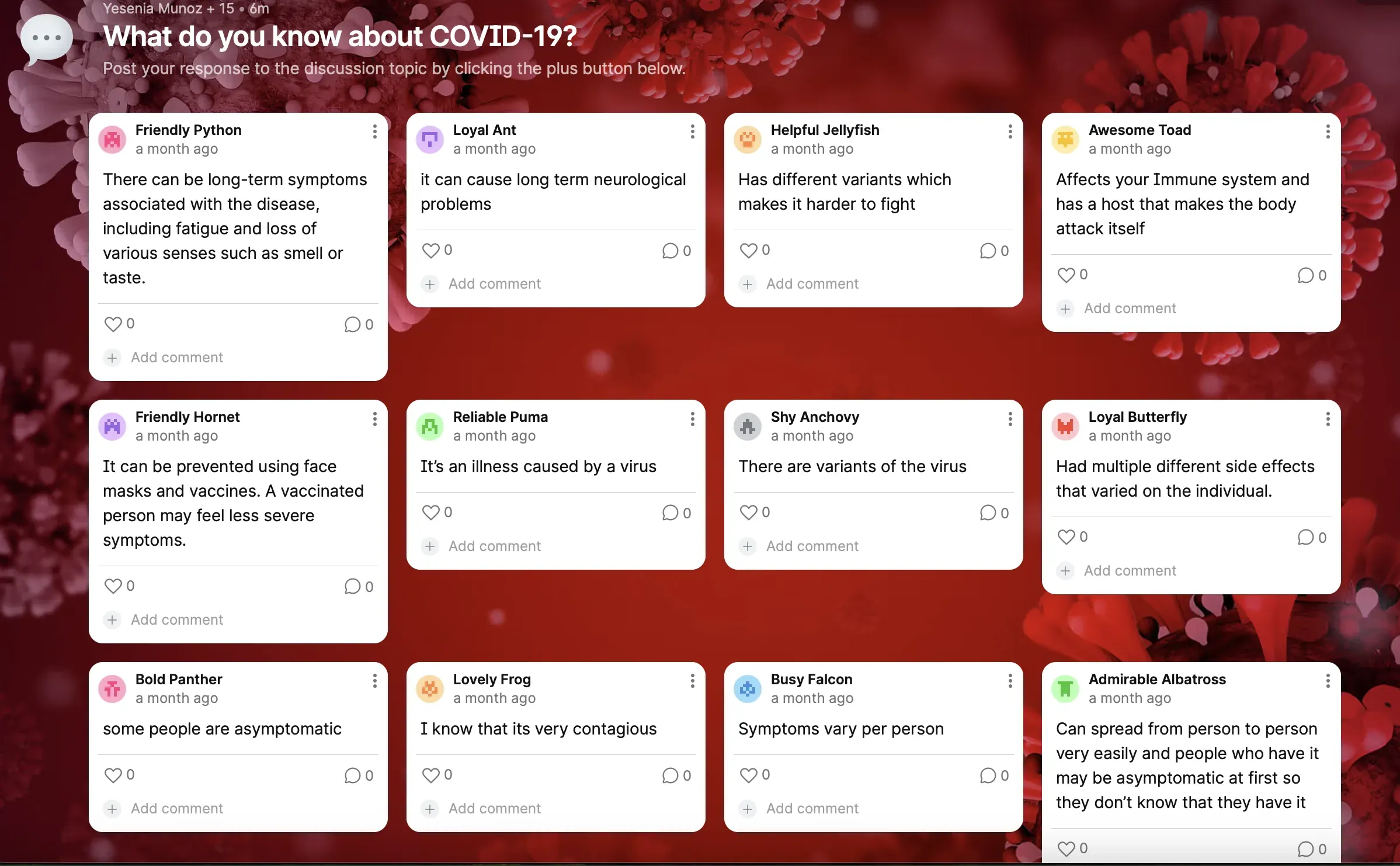
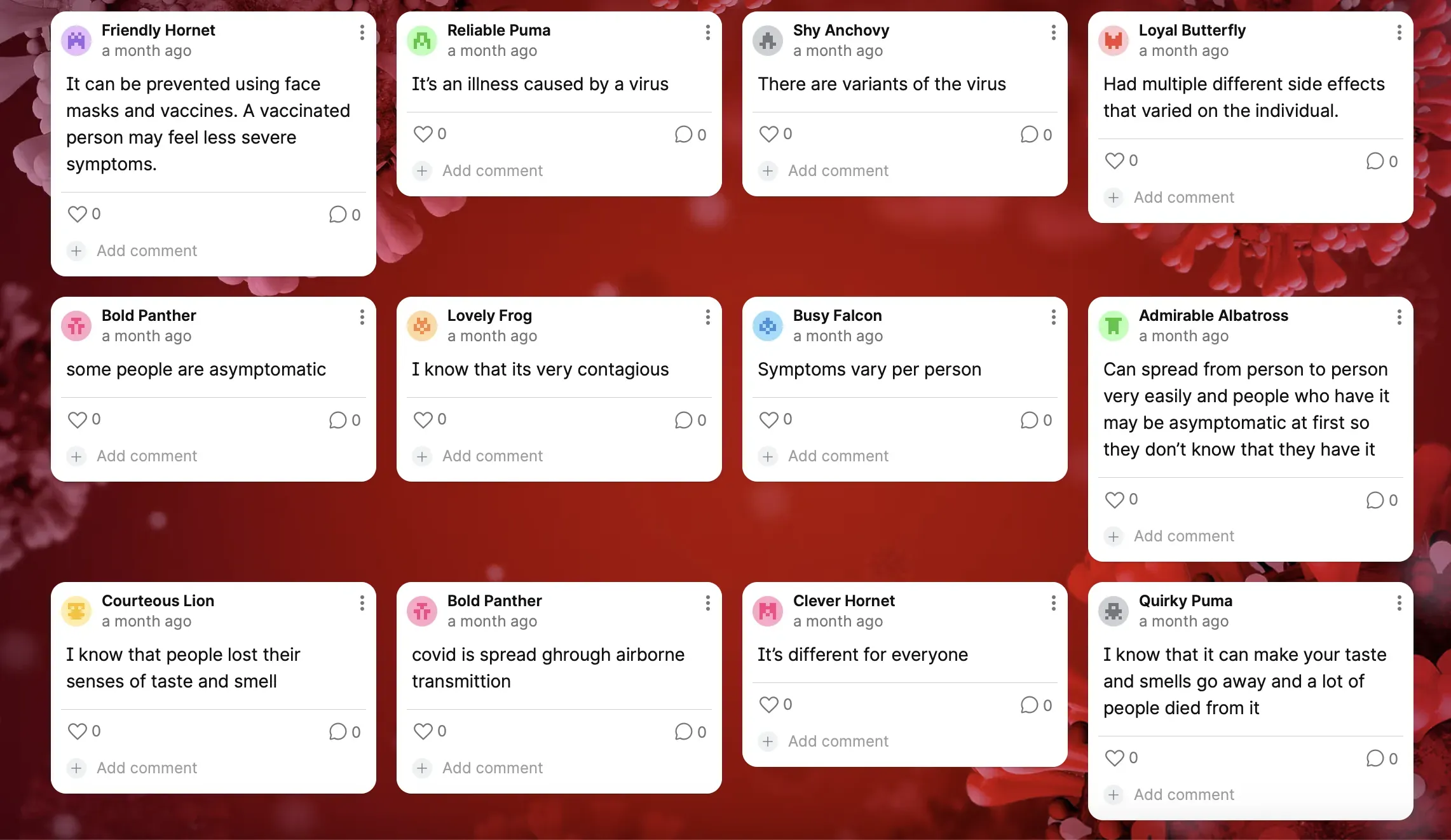
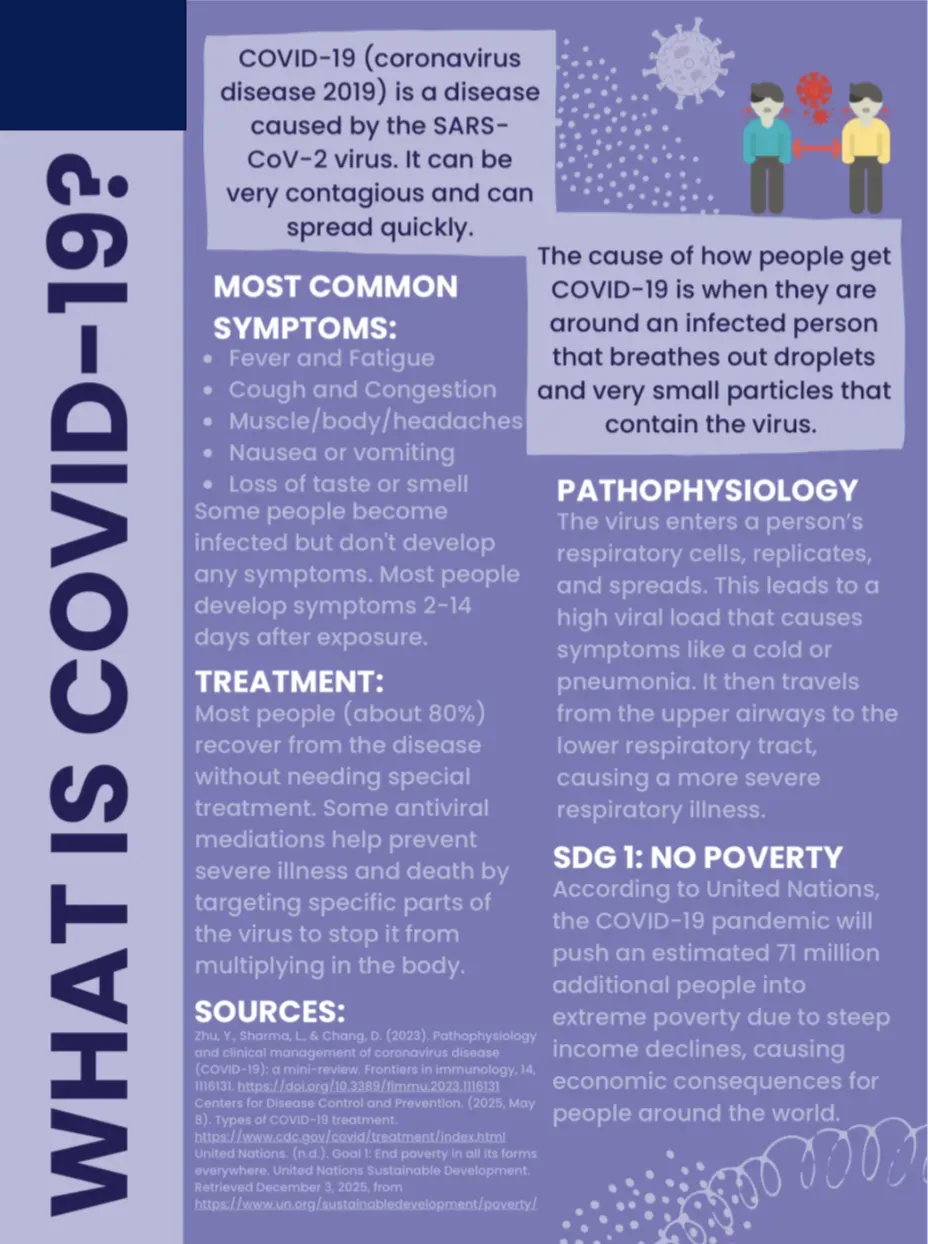
For a final project, students gathered the information they learned to create a poster sharing symptoms, treatment, and other facts about COVID-19.
Teacher Reflection
What is the focus of your lesson plan, and why did you write this lesson for your community?
My name is Yesenia Munoz and I am a teacher at San Marcos High School, located in Santa Barbara, CA. I teach courses in the Science, Health Careers Academy, and AVID department. Prior to working as an educator, I worked as a registered nurse. Combining my passion for health and education, I currently teach a course called Biomedical Sciences 100 for the Health Careers Academy for students in grades 9th - 12th grade. Many of the students in my class are in the Health Careers Academy. This is a program for students that are interested in pursuing a career in the medical field. Given this, when creating this lesson plan, I made sure to incorporate important aspects that would be beneficial for students to learn who are interested in pursuing a career in the medical field. This allows students to learn about topics they are interested in and how it will be beneficial to their future careers as a health care professional.
“I definitely think it's important to read underreported stories, especially in the context of global health. A lot of systemic health problems worldwide result from a lack of resources, and journalism has the potential to bring light to these issues and thus broader advocacy.”
High School Student, San Marcos High School
How did you build this lesson with your community in mind?
The lesson focused on connecting the nervous system with Covid-19. I chose to focus on this lesson because it is important for students to understand that while we may no longer be in the Covid-19 pandemic it is still crucial to understand the long term effects that may be associated with the Covid. This is also important to consider the lasting impacts that Covid-19 has had on many communities and on the people who live in these places. Many of my students do come from Hispanic backgrounds and may relate to the stories presented in this reporting. This is valuable for my students as many of them will become health care professionals as early as next year when they complete the CNA program offered at the high school. Therefore, there is immense value in having the students learn about global health as they will be a part of the health care profession.
What did your students learn while engaging with this lesson?
The students developed the skills of health literacy and understanding the various reports. The student took the opportunity to learn about the impact of long-covid on the nervous system. The students gained experiences in researching more about the disease and using critical thinking to understand the impact this disease has on the nervous system. Students also learned about how this disease is affecting other communities abroad such as the communities in Mexico. Students learned to make connections about the health care system in the U.S. and also in Mexico. One of my students highlights the importance of this by stating “I definitely think it's important to read underreported stories, especially in the context of global health. A lot of systemic health problems worldwide result from a lack of resources, and journalism has the potential to bring light to these issues and thus broader advocacy.”
What did you learn by creating and teaching this lesson?
From this lesson, I have gained a deeper understanding of global health and how it is important to incorporate lessons around it in my classroom. Creating this lesson allows me to think about how to connect the topics around the nervous system and how it relates to diseases such as COVID-19. My biggest take away is making sure to relate this article back to the topics discussed in the class so students can see tangible connections. My advice for other educators who want to engage in this lesson is to allow a safe space for student questions, discussion, and reflection the helps build on health literacy and encourages critical thinking. Finally, staying flexible and open to new research is essential, especially when teaching topics related to evolving global health challenges especially around the impact that long-covid is having in our communities.
About Yesenia Lisette Munoz
Yesenia Muñoz is an educator and registered nurse currently teaching at San Marcos High School in Santa Barbara, California. Yesenia is currently pursuing her Doctorate of Education degree.