Pulitzer Center Update December 16, 2025
Webinar On-Demand: Unpacking the Political and Economic Drivers of Modern Piracy in Our Seas
Country:


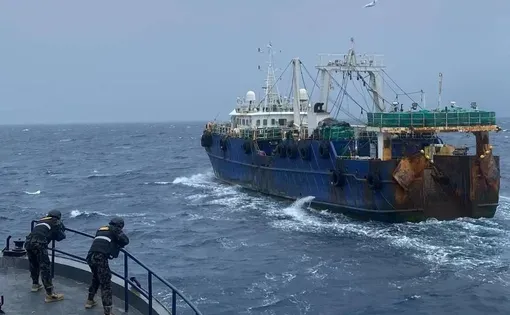
Large-scale illegal fishing is unstoppable in the Natuna and Arafura seas.

Insights from the first in a series of Southeast Asia Journalist-Academics dialogues, part of the Pulitzer Center's International Education and Outreach initiative
The webinar "Why Are Modern Pirates Still Ruling Our Seas?” brought together journalists and academics to unpack the critical issues surrounding modern piracy and illegal fishing and its profound political and economic drivers. The discussion highlighted how these issues are systemic, political, spanning multiple continents, and resulting in devastating environmental and human consequences. Nearly 90 participants attended, including lecturers, students, editors, and government officers from across Indonesia.
The recording of the session is available on YouTube and can be viewed here:
Investigations Across Continents
Two Pulitzer Center-supported investigative stories presented during the discussion revealed strikingly similar systemic failures in Indonesia and South Africa:
The Arafura and Natuna seas (Indonesia): Corruption and human trafficking
Ocean Reporting Network Fellow Abdus Somad presented findings from the investigation "Chasing Dark Ships to the Arafura Sea," which detailed ongoing Illegal, Unreported, and Unregulated (IUU) fishing, modern slavery, and forced labor in the border region of Indonesia, Papua New Guinea, and Australia.
Somad's team found that practices previously banned, such as the use of trawl nets, have returned under new names like "shrimp pocket drag nets." Crucially, the investigation uncovered severe conflicts of interest involving Politically Exposed Persons (PEPs). The investigation showed that companies affiliated with the children and families of sitting Cabinet ministers received exceptionally rapid permit approvals (sometimes within one to two days) to operate ex-foreign vessels using this banned fishing gear. These vessels often dock at private ports, complicating government oversight.
The investigation also confirmed severe cases of human trafficking and forced labor at sea, including documentation of crew members jumping ship in the Arafura Sea to escape conditions, resulting in at least one documented fatality. Despite evidence reported by civil society organizations, law enforcement efforts against these powerful actors remain stagnant.
Sodwana Bay (South Africa): Environmental destruction and poverty
Pulitzer Center grantees Suzanne Paxton and Lizette Labuschagne shared their investigation, "Illegal Fishing Threatens Sodwana Bay Livelihoods," focusing on the iSimangaliso Wetland Park, a UNESCO World Heritage Site in South Africa.
The journalists reported widespread illegal fishing by large trawlers operating at night within Marine Protected Areas (MPAs), destroying fragile ecosystems like coral reefs. This activity has severely depleted fish stocks, leaving local communities who rely on the ocean for sustenance literally starving.
A central theme of their findings was the pervasive lack of policing and enforcement. Although strong legislation exists, corruption within the government has led to a lack of capacity, such as operational Navy ships, making effective patrolling impossible. The vast remoteness of the area further exacerbates this issue. This policing void is exploited by outsiders, leading desperate, impoverished locals to also resort to illegal fishing methods, like using gillnets or spear-fishing with scuba gear, just to survive. When authorities were questioned, they often said information was too sensitive to release or that they lacked capacity.
Systemic Barriers: Budgets, Policing, and Scale
The panelists, including academic Asmiati Malik, confirmed that the primary actors driving the most damaging IUU fishing are those operating large vessels, which require substantial monetary capability (upwards of 50 billion IDR). These vessels possess advanced technology, including the ability to produce ice and remain at sea for months without docking, making them difficult to track and catch. This mirrors findings from both Indonesia and South Africa, where the scale and sophistication of illegal operators far outpace the state’s enforcement capacity.
A consensus across the geographic case studies pointed to a crippling flaw in the governmental response:
Lack of political will and funding: Malik noted that the fundamental issue in tackling IUU fishing is inadequate budget allocation for law enforcement. These constraints are exacerbated by a highly fragmented enforcement architecture—Indonesia alone has up to 48 institutions with overlapping mandates—resulting in poor implementation and operational gaps. When police or patrol entities are required to chase illegal vessels in the deep sea, they often lack the necessary funding for fuel or operations. Similar dynamics were reported in South Africa, where authorities frequently cited “insufficient capacity” or “sensitive information” to avoid acting on IUU fishing cases, leaving a policing vacuum that illegal operators exploit.
Organized crime and danger: Illegal operations are often linked to sophisticated organized crime syndicates capable of monitoring police movements and evading capture by slipping across borders or into international waters. Journalists recounted instances where individuals attempting to report illegal activity were confronted with weapons—including AK47s—highlighting the severe risks faced by local community members. This makes community involvement crucial for information gathering but unsafe for direct confrontation.
Harassment of legal fishers: Paradoxically, while large illegal vessels often escape punishment, smaller, compliant fishers are frequently harassed and subjected to unwarranted penalties and document checks (up to 16 required items) by officials, which sometimes leads to illegal transactions (bribes) at sea. Kajidin, representing traditional fishers from Pantura, underscored this imbalance, noting that enforcement is often “sharp downwards, dull upwards,” disproportionately targeting small legal operators while failing to pursue major violators. He also emphasized how such practices discourage vessel owners—many of whom operate on credit—from developing their businesses, especially when fines and unofficial payments erode already thin margins.
Environmental concerns were also raised: Destructive gear used by illegal vessels damages habitats like coral reefs, which take 10–20 years to grow just 1 centimeter, further illustrating the long-term ecological cost of enforcement failures.
The Path Forward: Community and Accountability
While satellite monitoring and traceability tools are available, speakers noted that they only provide clues; they must be supplemented with on-the-ground confirmation and, critically, community reports.
Somad highlighted positive local methods, such as the implementation of sasi, an Indigenous tradition in parts of Papua and Maluku where communities enforce traditional laws to protect their fishing grounds for a fixed period. Similarly, in South Africa, communities are mobilizing themselves to create forums and clean beaches. However, this community involvement can only be effective for gathering information; they are often unable to confront the heavily armed organized criminals themselves.
The essential conclusion is that until governments exhibit the political will to enforce existing laws, dedicate centralized funding for law enforcement operations, and address underlying poverty. Large-scale IUU fishing will continue to dominate and deplete crucial marine resources.
When the Discussion Meets Reality
What stood out most from the post-event reflections was how deeply the discussion resonated with participants across backgrounds—lecturers, students, editors, government officers, and even a maritime inspector.
From the post-event survey, participants generally expressed strong satisfaction with the session, noting the quality of the substance, speakers, and overall experience. Their written reflections were even more telling. Several respondents said the discussion revealed how powerless communities are when facing large and well-equipped illegal fishing vessels, and how enforcement gaps and corruption allow these practices to continue. Others noted that illegal fishing is both an economic and ecological problem involving unexpected actors, including complicit officials. Many highlighted the journalists’ investigative stories as the most memorable part of the event, especially those tracing cross-border networks and showing the human impact on coastal communities.
Most attendees also said they felt encouraged to stay engaged, whether by seeking more information, sharing what they learned, or exploring collaboration with speakers and other participants. Some remarked that hearing both journalistic and academic perspectives made IUU fishing feel more concrete, while others said the discussion helped them understand illegal fishing as a global problem rather than a purely Indonesian one.
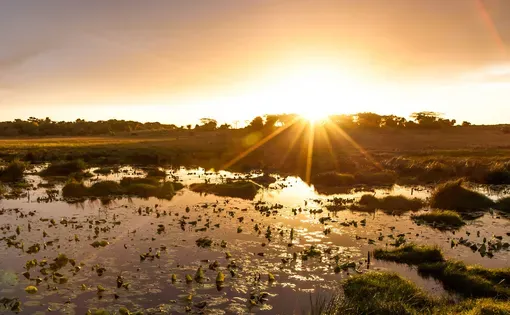
Poachers hiding just beyond the marine borders of the country are plundering marine areas.


