Pulitzer Center Update October 21, 2025
Walking Tour Shows D.C. Residents How Climate Change Fuels Flooding and Heat
Country:

A team of youth reporters will map temperature differences across D.C. and examine the causes and...


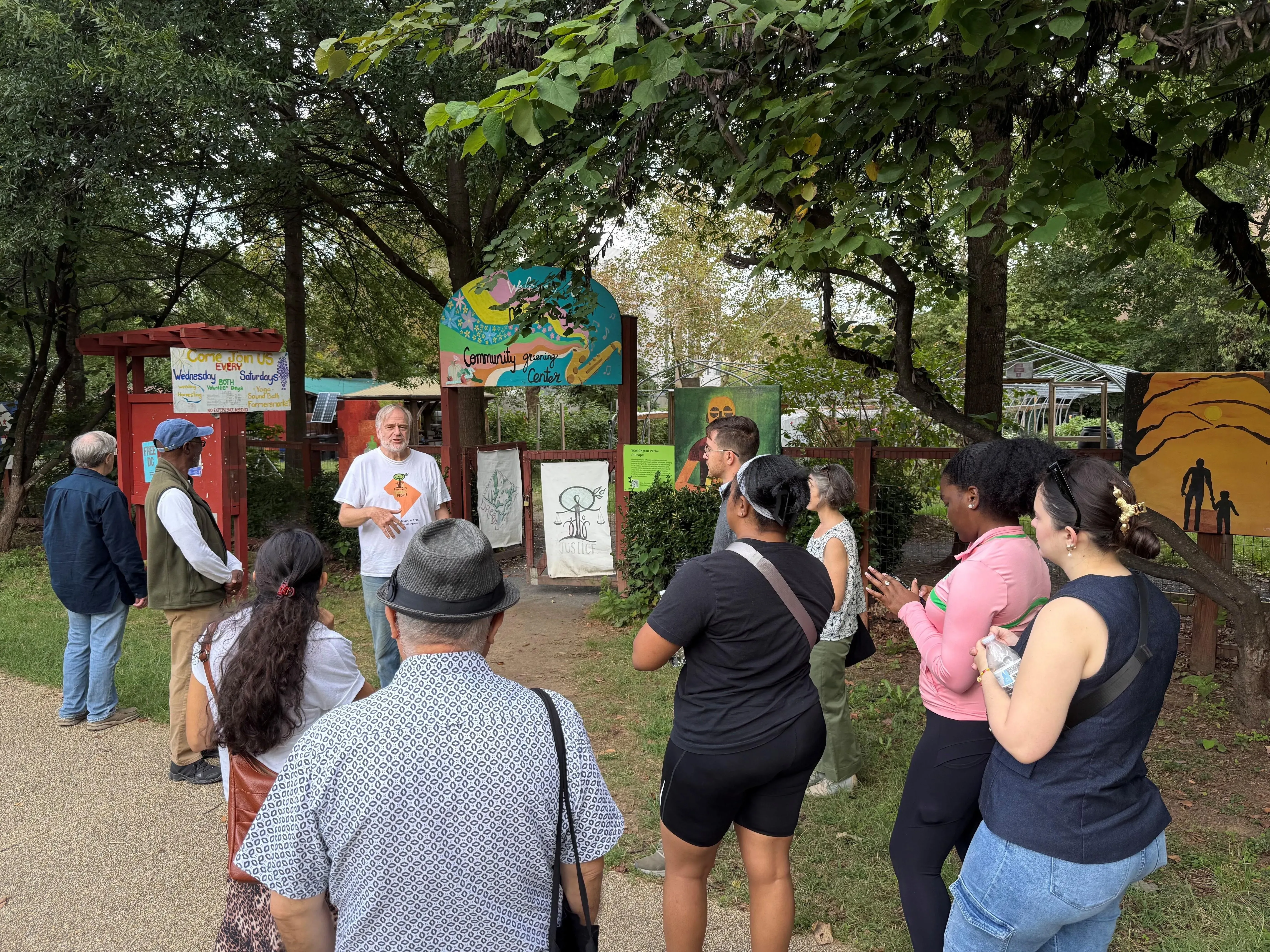
The Pulitzer Center teamed up with Hola Cultura and the FH Faunteroy Center & Resilience Incubator on September 20, 2025, to host a nature walk and panel discussion in Washington, D.C.’s Ward 7, where climate change is exacerbating longtime environmental problems.
The event, during National Emergency Preparedness Month, drew residents, community leaders, and experts. The conversation examined the physical and mental health consequences of living with environmental stress and explored solutions for neighborhoods facing disproportionate flooding and extreme heat compared to other parts of the city.
The event featured Hola Cultura’s ongoing reporting on climate change and environmental justice in Washington, D.C. Its work was supported by the Pulitzer Center.
After a morning walk through the neighborhood, investigative reporter Christine MacDonald, Hola Cultura’s executive director, moderated a panel discussion with Dennis Chestnut, a lifelong Ward 7 resident and member of the Ward 7 Resilience Hub Community Coalition, and Estelle-Marie Montgomery, executive director of the FH Faunteroy Center, where D.C.’s first Resilience Hub is currently under construction.
According to the D.C. Department of Energy and Environment's website, community resilience hubs are "facilities that provide information and services to build resilient communities before, during and after emergency events."
“Climate change is already making storms more extreme and D.C.’s summers hotter,” MacDonald said. “There’s a wealth of evidence that BIPOC, immigrant, and low-income communities in the District and around the country are bearing the worst effects, but sharing these facts can be challenging in our information-saturated world. Meeting people in their neighborhoods can help break through all the noise.”
Montgomery added, “Ward 7 has some of the worst social determinants of health compared to other wards in D.C. Sessions like these are part of the health and wellness literacy that needs to be provided at the grassroots level to inform the community and enable advocacy for better outcomes.”
Environmental challenges
The walk began at the FH Faunteroy Center, where Chestnut led the group on a guided tour highlighting the neighborhood's history and flood mitigation infrastructure.
“I remember flooding in the area where I live,” Chestnut said. “Even in recent years, Nannie Helen Burroughs Avenue, especially at the intersection of Minnesota Avenue, has flooded.”
Chestnut added that flooding really began after the Anacostia Freeway (I-295) was constructed in the mid-1950s, which disrupted natural drainage areas and made the situation worse for residents.
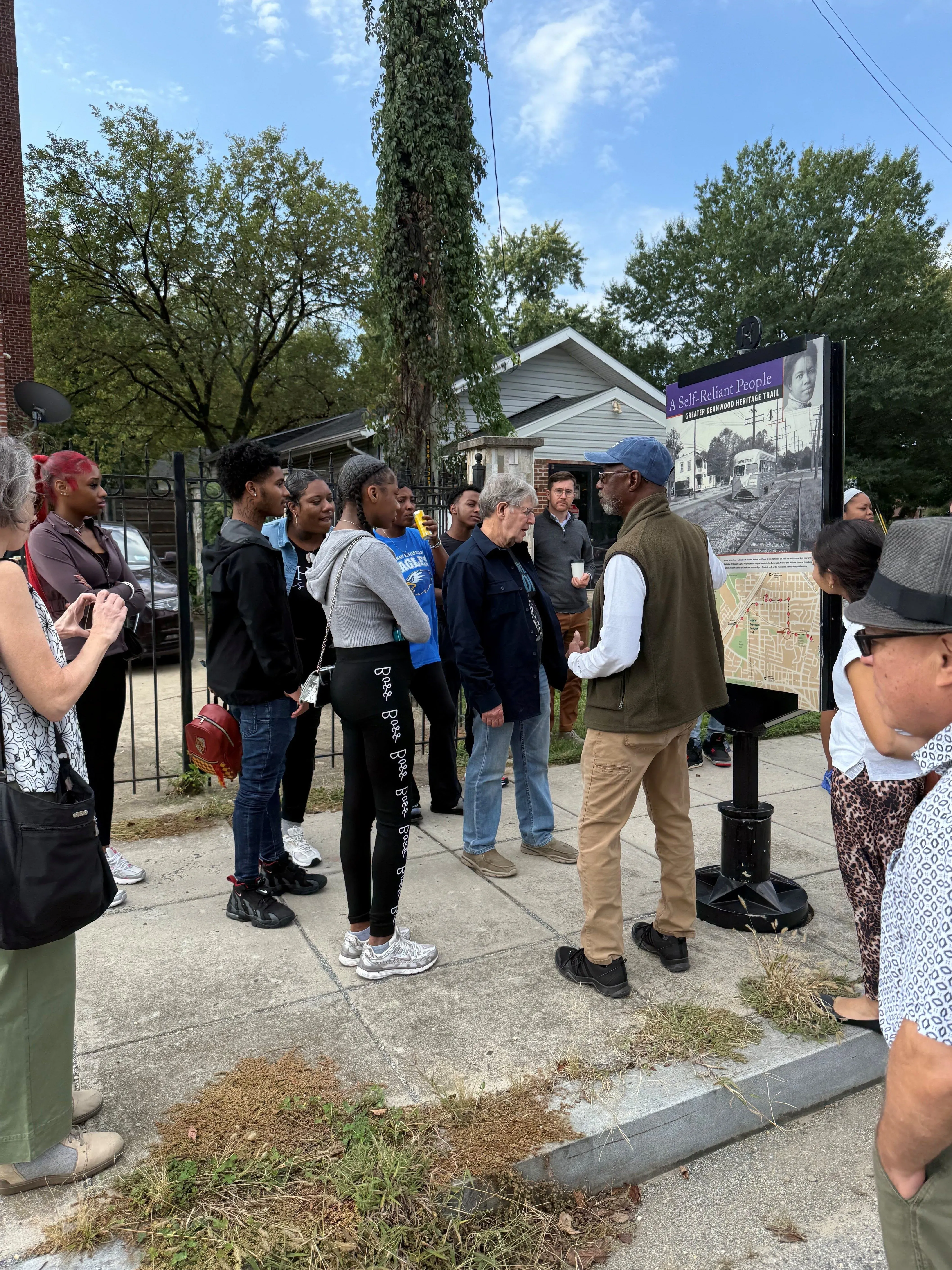
As the group walked along Nannie Helen Burroughs Avenue Northeast, Chestnut pointed out key stormwater management features, including cuts in the curb that direct rainwater into bio-retention cells.
“It captures that stormwater and allows it to slowly percolate into the subsoil without going into the storm drains. That reduces some of the risk of flooding and helps manage stormwater for that area,” he explained.
Several D.C. agencies made a coordinated effort to install these stormwater management systems, Chestnut explained. The District Department of Transportation, he said, worked alongside DC Water, the District's Department of Energy and Environment, and the Environmental Protection Agency to install permeable pavement, bio-retention cells, and other green infrastructure designed to reduce flooding.
“Nannie Helen Burroughs Avenue was designated the first 'Green Street' in the city and is now a pilot model for what has been incorporated in other parts of the city,” Chestnut added.
The group moved on to Marvin Gaye Park, named after the legendary soul singer who grew up in the neighborhood. There, Chestnut emphasized that the ward’s stormwater mitigation work is still not done.
“There are not enough initiatives yet in Ward 7 for environmental hazards and stormwater retention,” Chestnut said. He added that the community could benefit from new technologies and materials that were not available when local neighborhoods were built.
Chestnut also discussed Ward 7’s geographic vulnerabilities. With the longest shoreline along the Anacostia River, “a lot of the homes in this area … are very vulnerable to flood risk,” he said.
Opportunity for change
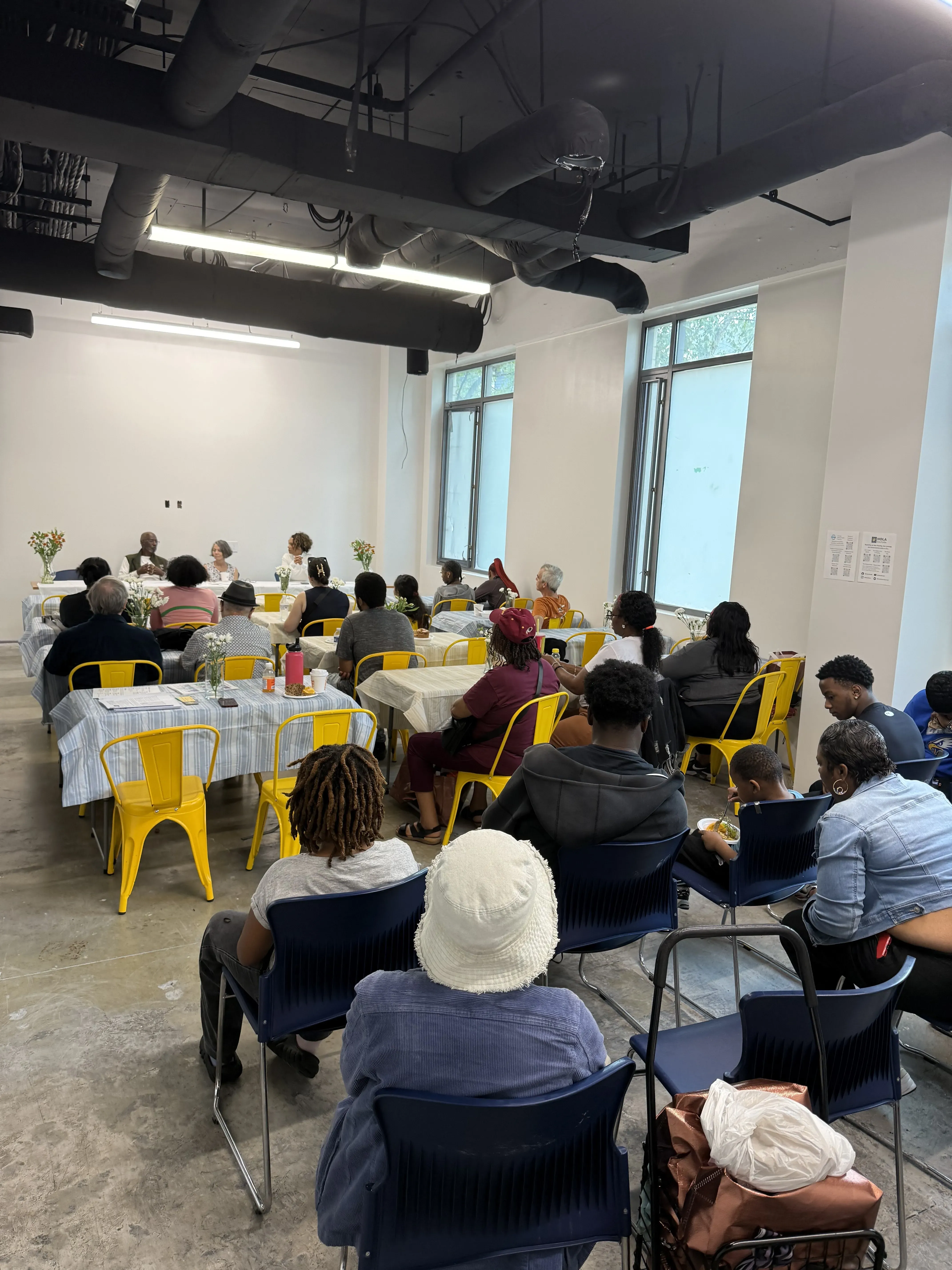
After the walk, participants returned to the FH Faunteroy Center for breakfast and a discussion. Panelists reflected on the walk and shared insights about climate resilience and community health.
MacDonald discussed Hola Cultura’s investigative reporting on heat islands, which the media outlet first embarked on in 2021. That year, Hola Cultura’s reporting team exposed how some D.C. neighborhoods, including much of Ward 7, have less tree cover and more asphalt than others, making them 10-20 degrees hotter on a summer day, experts say.
“This summer, we took our reporting a step further,” MacDonald said. “After reporting how historic racist practices like redlining have led to fewer trees in neighborhoods of color, our 2025 investigation exposed how today’s real estate development practices continue to fuel disproportionate tree loss in D.C.’s poorest wards, home to some of our most vulnerable residents.”
Attendees asked the panelists questions about the neighborhood’s resilience and the upcoming Resilience Hub.
“We are building the airplane as it flies,” Montgomery said, referring to how her staff has kept operating the center as construction of the Resilience Hub continues. “We anticipate final finishes by early spring, and once fully operational, our impact will be immediately felt given the robustness of programming that will be possible.”
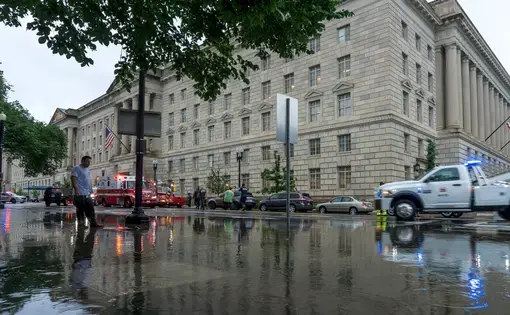
Flooding disproportionately afflicts low-income neighborhoods in Washington, D.C.