Pulitzer Center Update October 13, 2025
Vox Journalist Shares Lessons From Solutions-Oriented Reporting
Country:

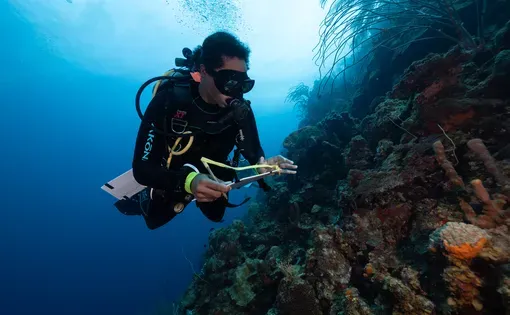
An island just east of Curaçao demonstrates an exceptional ability to recover.


This update was originally published by the Charles Center Community News and William & Mary College.
Whether our most pressing environmental problems are solved—or not—may come down to the coveted click, to whether journalists can capture the attention of readers and make their stories stick.
Benji Jones, senior environmental correspondent for Vox and Pulitzer Center grantee, joined Christian Science Monitor environment and climate change writer Stephanie Hanes, and Pulitzer Center Director of University & Community Outreach Ann Peters on campus September 7-8 to help kick off the 15th annual Sharp Journalism Seminar.
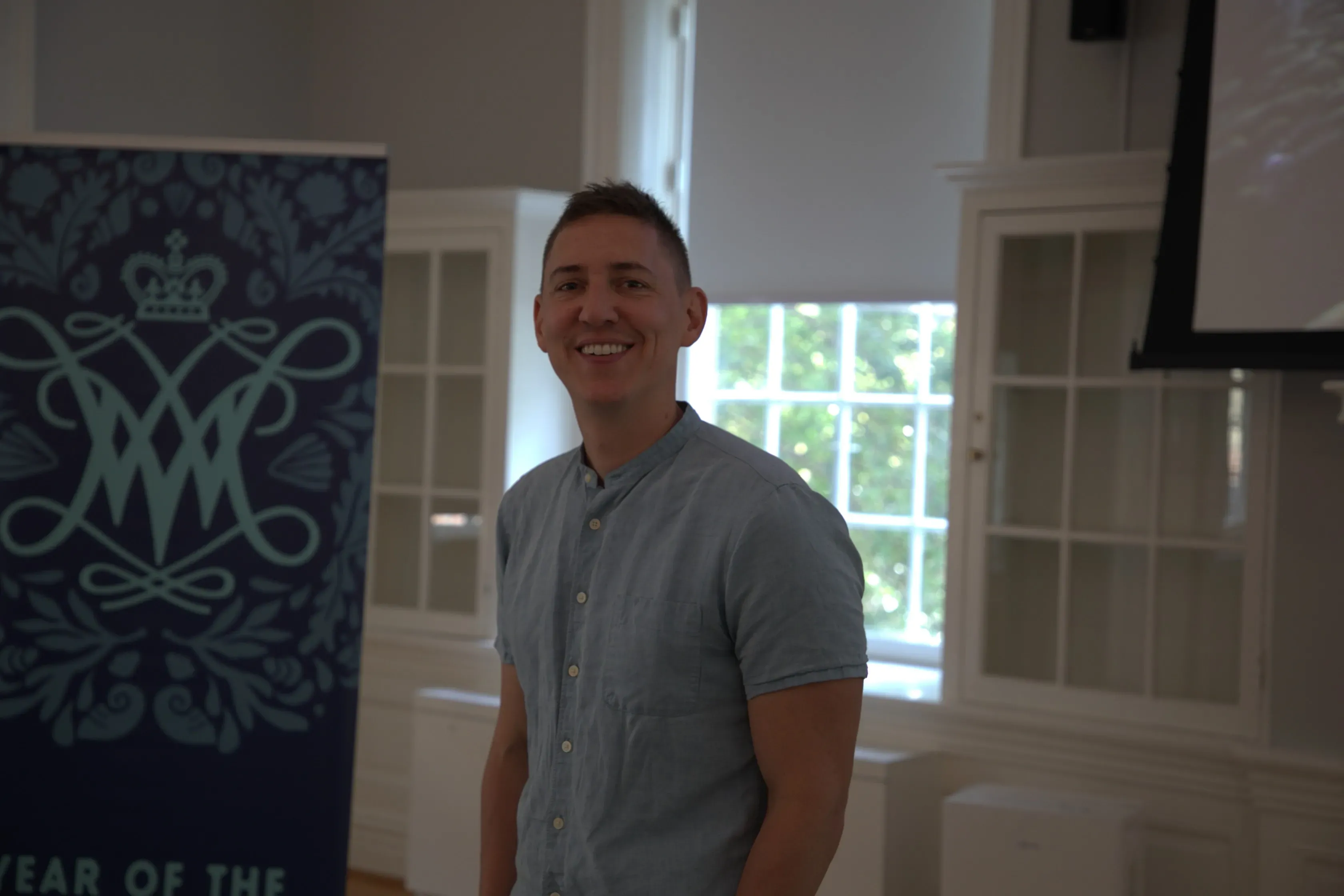
As part of his two-day residency at William & Mary, Jones co-taught the first meeting of the seminar, met with 1693 Scholars at Murray House, and gave a public talk, “Making Ocean Stories Stick,” to a crowd of 60 in Blow Hall's Grimsley Boardroom.
At each stop along his visit, Jones invited students to discuss how storytellers can get people to care about the environment.
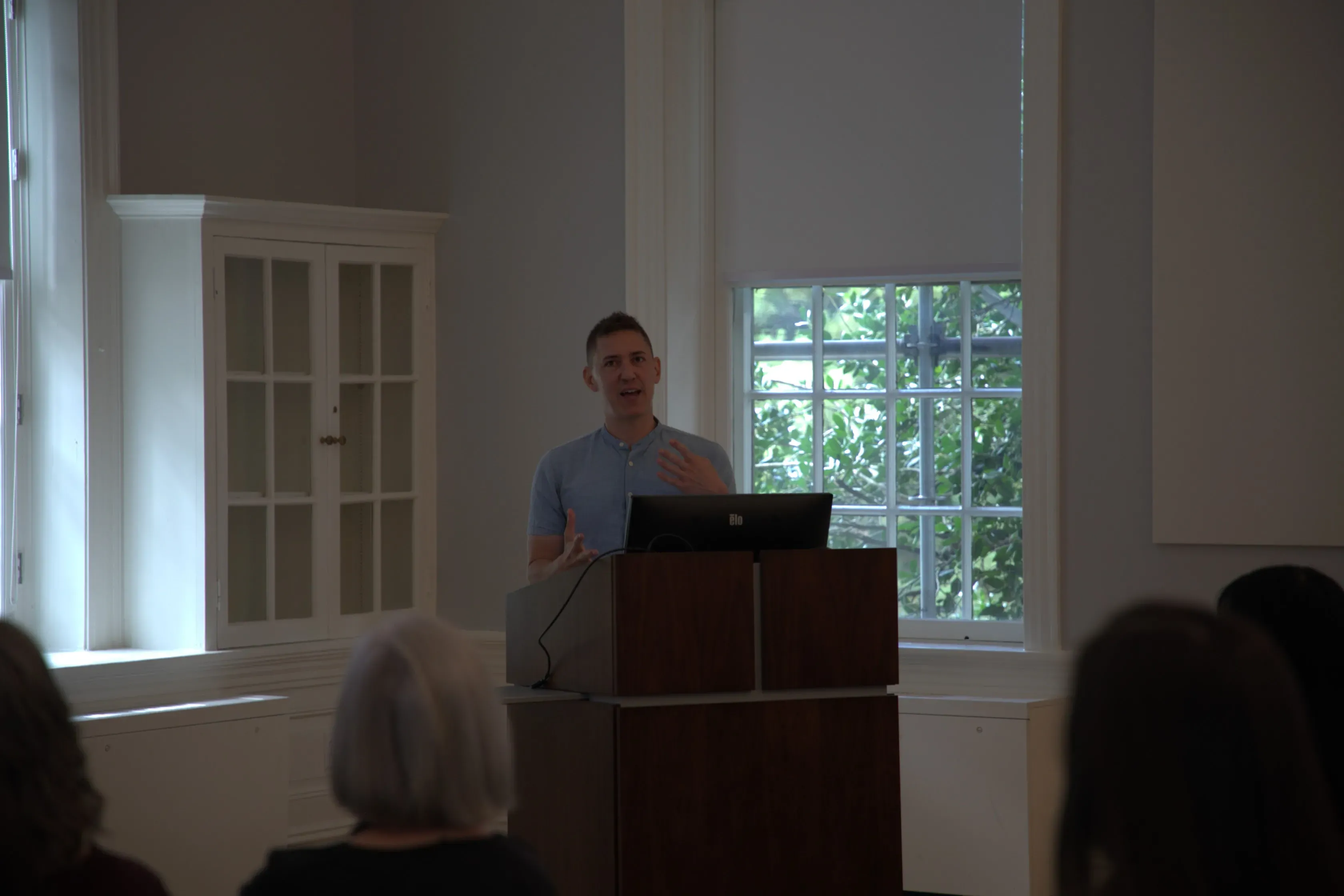
Jones shared his tried-and-true strategy for engaging the public on tough topics like the climate crisis: “Be adaptable,” he advised.
At an audience-driven outlet like Vox, Jones said he thinks about both how to report what people care about and how to help people care more.
He suggested ways to make tough stories stick—to write with a focus on wonder and curiosity, to offer readers surprising solutions, and, where possible, to employ the “Trojan horse,” to deepen audience engagement in unpredictable ways.
Jones said the Trojan horse is a metaphor for delivering what he called often bleak, but important, information to the reader in a creative way.
“While we are doing these stories with wonder and curiosity that seem like, ‘oh this is a cool thing,’ I always take this approach of trying to 'Trojan Horse'-in information about what’s actually happening to these ecosystems.” In this way, Jones says he educates readers on issues they might not be aware of.
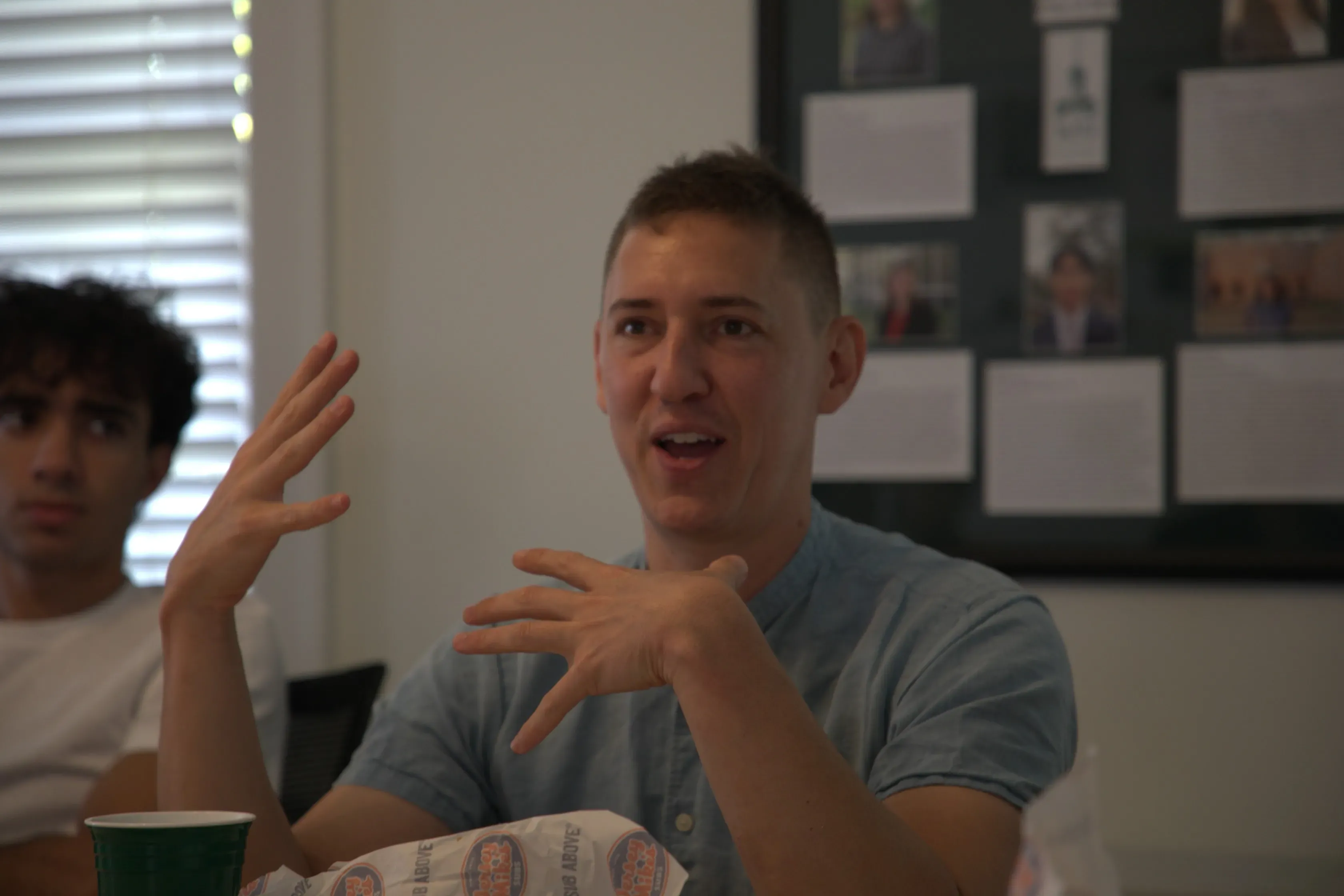
Jones met with 1693 Scholars at Murray House September 8 and invited students to share their thoughts on how to interest readers in environmental issues.
Aliyana Koch-Manzur ‘28, a Stamps 1693 Scholar studying international relations, said she was eager for Jones’s insights. She pointed to changing temperature effects on lobster populations in the Gulf of Maine.
“It pains me to see how we continue to exploit and pollute that vital ecosystem, with little regard for the irreparable damage we are causing,” Koch-Manzur said.
This concern also drove Koch-Manzur to attend Jones’s evening talk, “Making Ocean Stories Stick,” an event cohosted by the Reves Center for International Studies and W&M’s Year of the Environment. “I wanted to learn how to effectively raise awareness of the importance of our oceans and the devastation that climate change is wreaking on them,” Koch-Manzur said.
Jones said he is excited and encouraged by W&M’s support of reporting, bringing new and bright minds into journalism, “the best job in the world,” and perhaps the most important one in raising awareness of the urgent issues facing the world’s climate today.