Pulitzer Center Update November 11, 2025
Uncover the Dark Secrets of Our Seas: Call for Write-Ups!
Country:

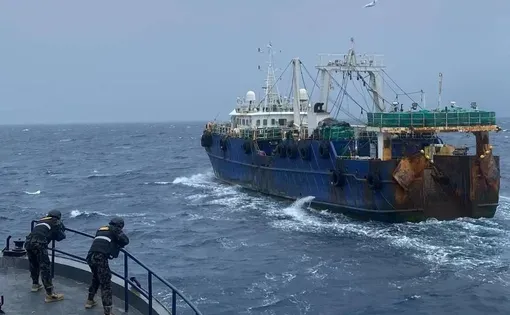
Large-scale illegal fishing is unstoppable in the Natuna and Arafura seas.

Beneath the calm surface of the ocean, unmarked vessels continue to sail in the dark. They steal fish, conceal the origins of their catch, and leave behind a trail of destruction for marine ecosystems and coastal communities. Known as dark ships, these vessels operate across borders, exploiting legal loopholes and global economic inequality to sustain the practice of illegal fishing.
A Pulitzer Center field investigation reveals how this complex network operates, from opaque seafood companies to policy failures that leave small fishers unprotected. The impact is not only ecological but also social and political. The ocean loses its balance, while coastal communities lose their livelihoods.
To unpack these issues, The Conversation Indonesia, in collaboration with the Pulitzer Center, presents a special Conversation Corner titled “Why Are Modern Pirates Still Ruling Our Seas? Unpacking the Political and Economic Drivers of Illegal Fishing.” Aired on Thursday, October 30, 2025, the discussion brought together journalists and academics in an open dialogue about the marine economy, political power, and the widening social consequences of illegal fishing.
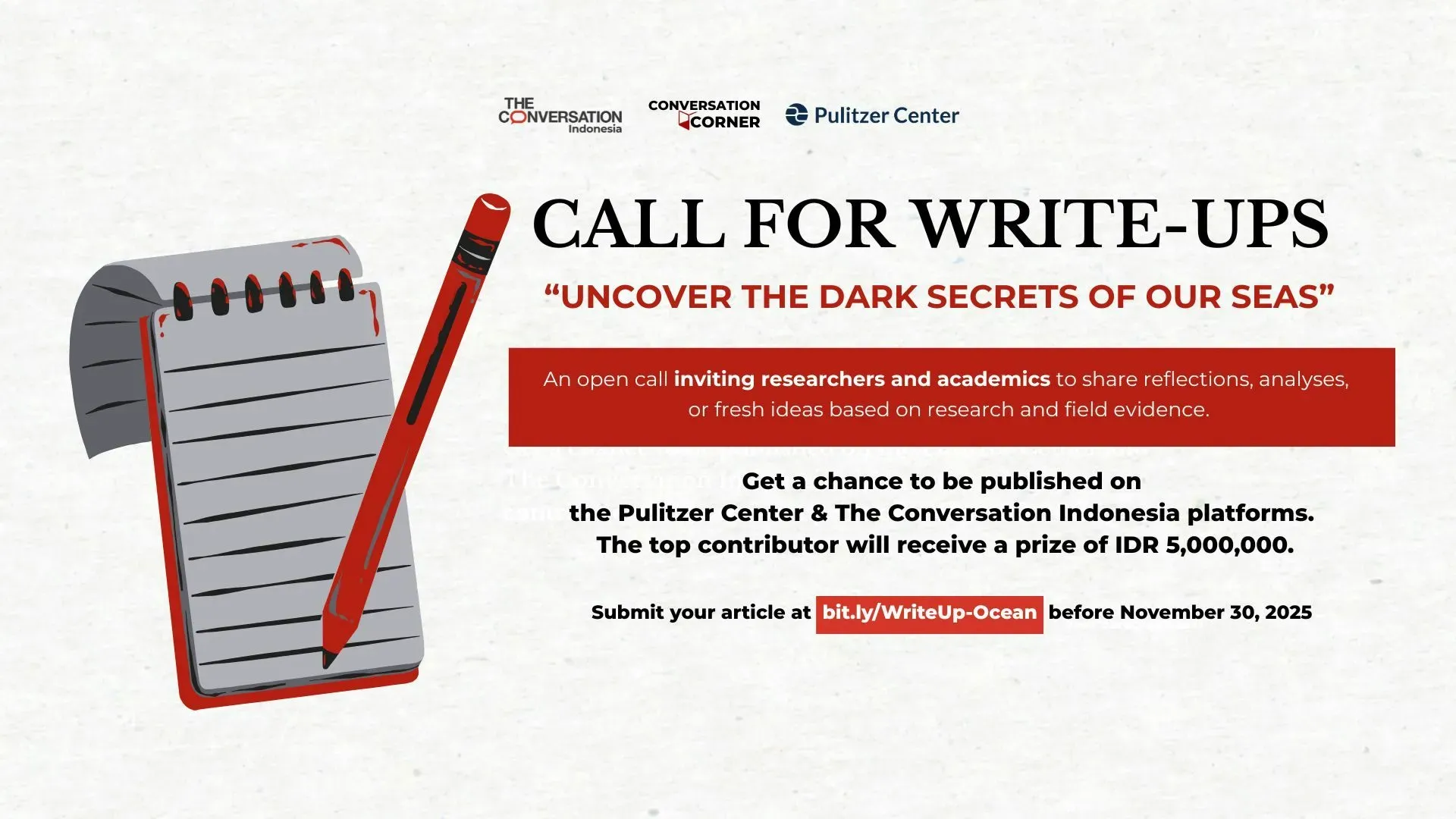
Now, we invite you to extend the conversation through our Call for Write-Ups: Uncover the Dark Secrets of Our Seas—an open call for researchers and academics to share reflections, analysis, or new ideas based on research and field-based evidence.
What Can You Write?
Your article may take the form of a short reflection, critique, or analysis connecting journalistic findings with academic research and public policy insights.
Technical Guidelines:
- Reflecting on thoughts and ideas related to the journalistic work listed in the reference.
- Length: 600–900 words
- Written in English (preferred) or Indonesian, using an accessible and engaging popular style
Reference:
"The Dark Side of the Natuna and Arafura Seas" reported by Abdus Somad, Ocean Reporting Network Fellow, Pulitzer Center for Jaring.ID
Prize:
- A publication opportunity in The Conversation Indonesia (1 best article winner selected from three episodes of the TCID x Pulitzer Center webinar series) in Q1 2026
- The best article winner will receive a cash prize of IDR 5,000,000
Submission deadline: November 30, 2025
Submit your article: http://bit.ly/WriteUp-Ocean
All submissions will be reviewed by a Pulitzer Center judging panel based on relevance and originality of the topic, strength of argument and evidence, clarity and coherence, creativity, and adherence to ethical and technical standards.
To strengthen your articles, rewatch the Conversation Corner: “Why Are Modern Pirates Still Ruling Our Seas? Unpacking the Political and Economic Drivers of Illegal Fishing" on The Conversation Indonesia’s YouTube channel @ConversationIDN.
The sea is a space for life, not a field for plunder. It’s time for research, policy, and journalism to come together in exposing practices that threaten it.
Share your reflection, send your idea, and be part of the movement for a sustainable ocean!
For more information: Binar Lestari, SEA Education Coordinator, email: [email protected].