Pulitzer Center Update March 4, 2026
Rooted Realities: Where Artists Meet Vietnam’s Mangrove Forests
Country:


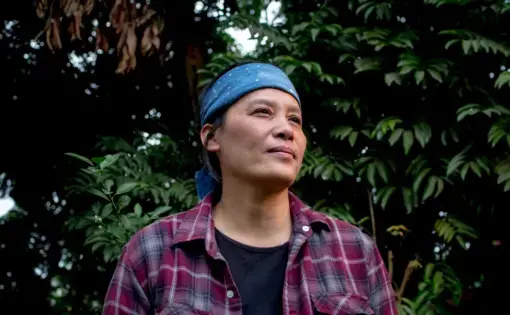
In October and November 2020, Central Vietnam experienced the worst flooding and landslides in 20...


The role of journalism is to shine the light on truths and inform public discourse. When it engages people at the grass roots through a multidisciplinary approach, it can be transformational.
Bên Xâm, or the Rooted Canvas Art Residency, is an interdisciplinary initiative that connected Vietnam’s local artists to mangrove forests and communities along the Thu Bồn River in Hội An, Vietnam. Inspired by the Pulitzer Center-supported project Rethinking Reforestation in Vietnam From Community-Led Perspectives, the weeklong art residency program aimed to nurture a diverse and flexible creative space.
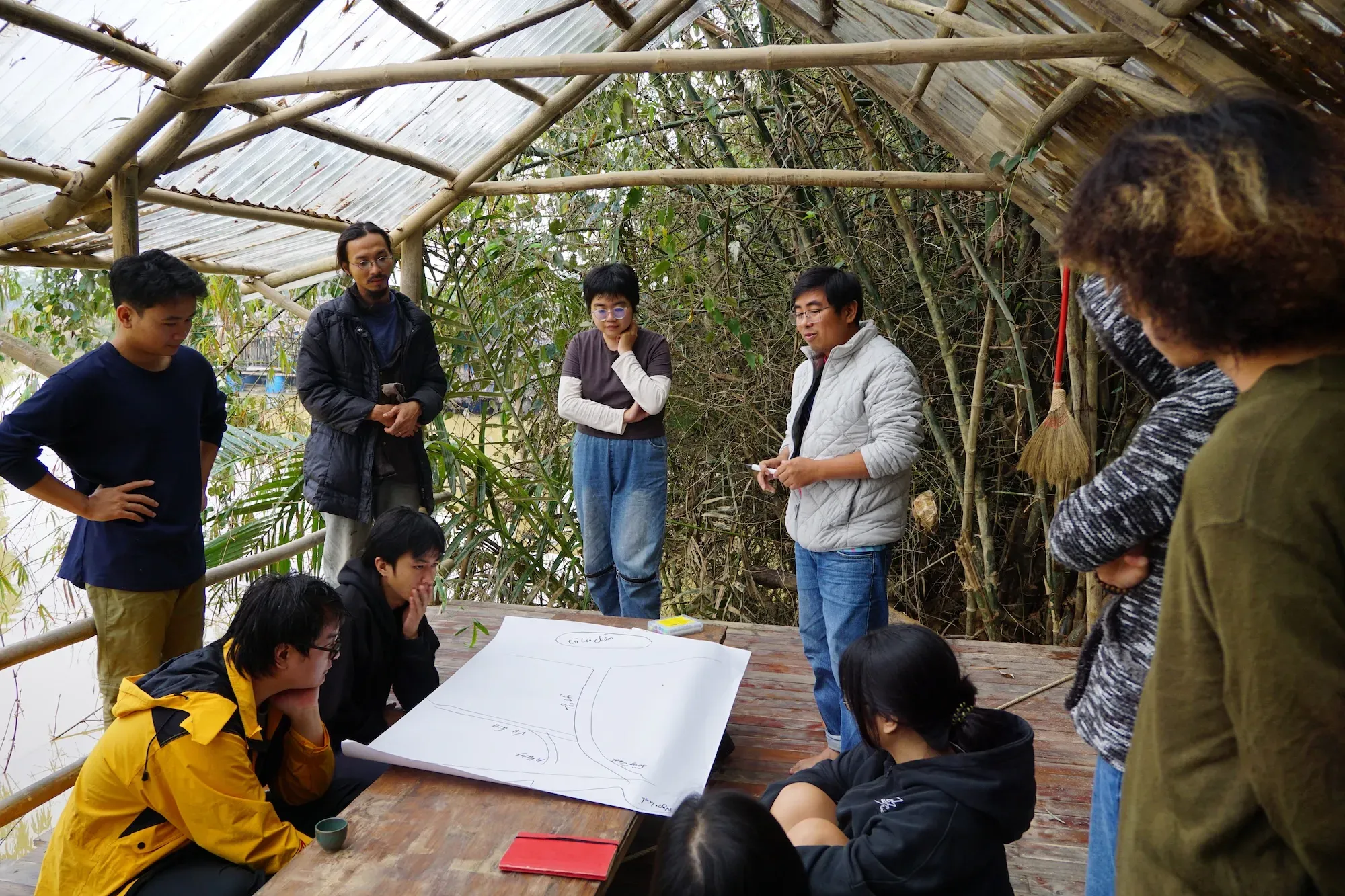
For this initiative, the Pulitzer Center collaborated with the Thì Collective—an interdisciplinary art collective of writers, performance artists, and multimedia practitioners that fosters spaces for dialogue on contemporary environmental and social issues. It's based in Da Nang, Vietnam.
In the program, experts and practitioners of ecology, journalism, and the arts exchanged theoretical and practical insights with 10 artists through sessions, film screenings, field visits, and composition practice.
Participants connected with local communities through interesting immersive activities to develop a deeper understanding of mangrove ecosystems. This knowledge exchange helped develop ideas for their artworks that culminated in an open studio titled Solid–Liquid–Gas, organized on November 27, 2025. An open studio fosters creativity, cultural exchange, and freedom of expression.
“I believe fostering ecological awareness in artists is vital. Even when the artwork is not explicitly about the environment, this consciousness informs the choices we make to reduce our impact during production and material selection. Participating in Bên Xâm offered me a broader perspective—a landscape far beyond the confines of a small pottery studio, where I learned about people doing small things to adapt to massive, systemic changes,” said ceramic artist Linh San.
The art residency initiative also ran a social media campaign that generated over 19,335 views—the highest ever for any campaign led by Thì Collective.
Translating lived realities into art
The art residency, held November 22–28, 2025, was all about getting to know Vietnam’s incredible mangrove forests. Artists were urged to dive deep into the local ecology and culture, learning from experts and the community alike. The goal was simple: Let the land and its people inspire new, site-specific art.
A comprehensive six-day curriculum covered ecology, journalism, and art. On the seventh day, a collective critic and reflection session was facilitated.
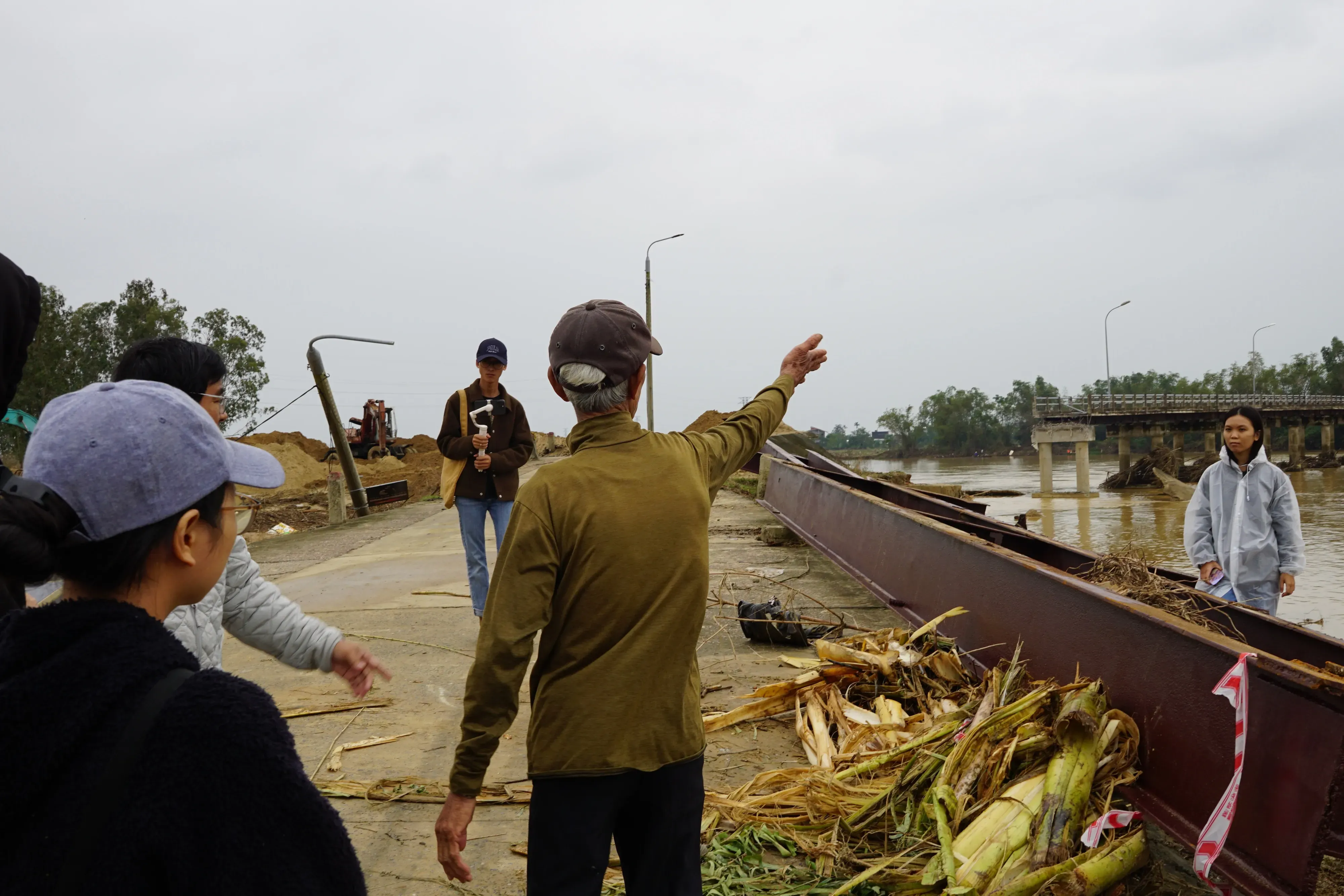
Just before the initiative began, in October 2025, Vietnam and the region where the residency was to take place, was hit with the most devastating floods the region has seen in 20 years. With the region reeling from the floods, sessions were included where local community members shared post-flood adaptation strategies.
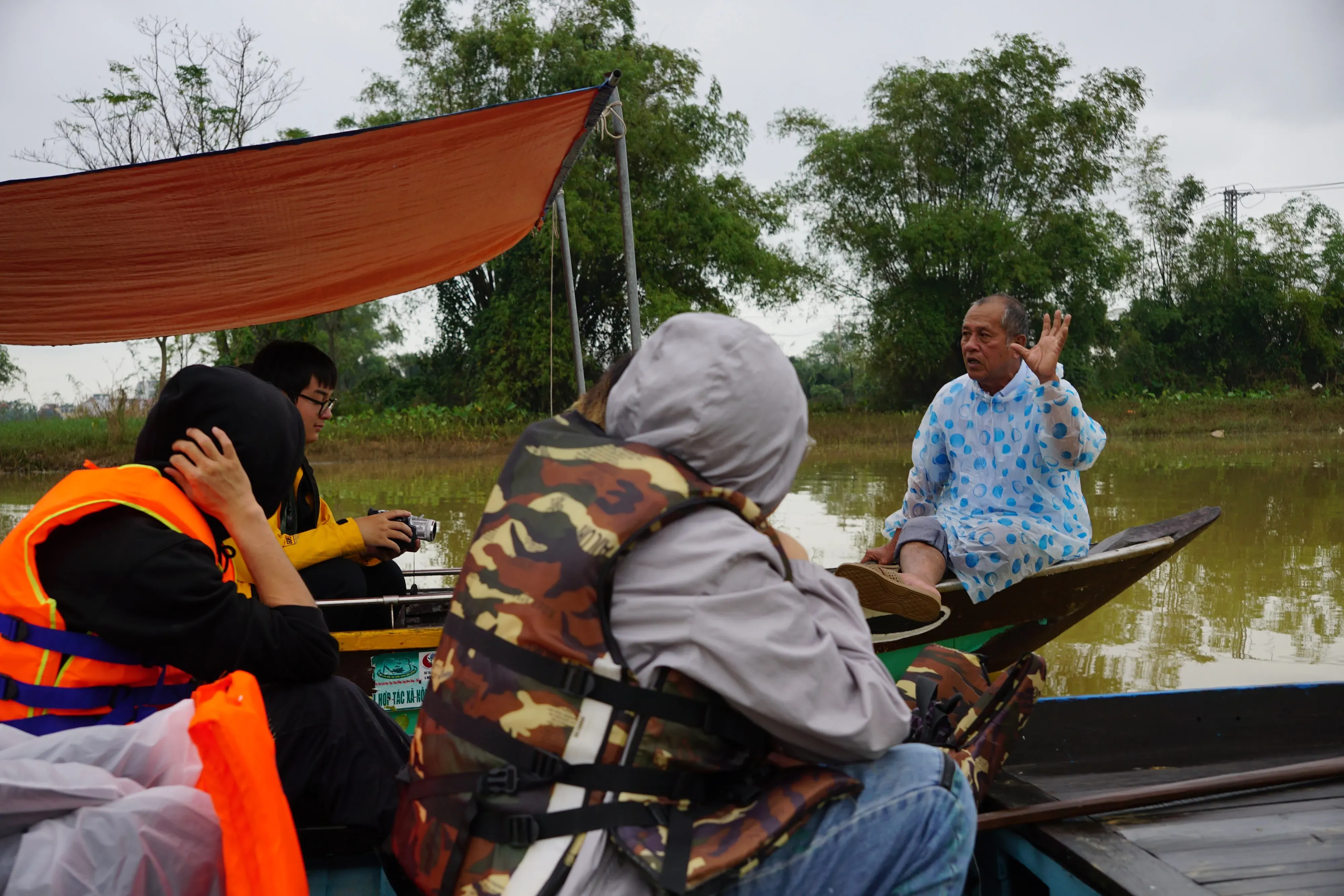
“Although I have lived in Hội An since childhood and see floods every year, this time—hearing many stories from people around me, as well as the efforts to build embankments and adapt to the water and climate—I suddenly felt moved, things to think about rather than just being stuck indoors, and I suddenly wanted to make something to record it,” said artist Thư Lê.
Additional field activities included an ecological site visit and a boat trip through mangrove forests coordinated by local residents, where artists learned about mangrove conservation, ecotourism, how locals navigate the river systems, and the oral histories related to it.
Experts and mentors hosted insightful sessions on art theories, adaptive art practice, research and curatorial mentorship, and more.
When journalism informs creative expression
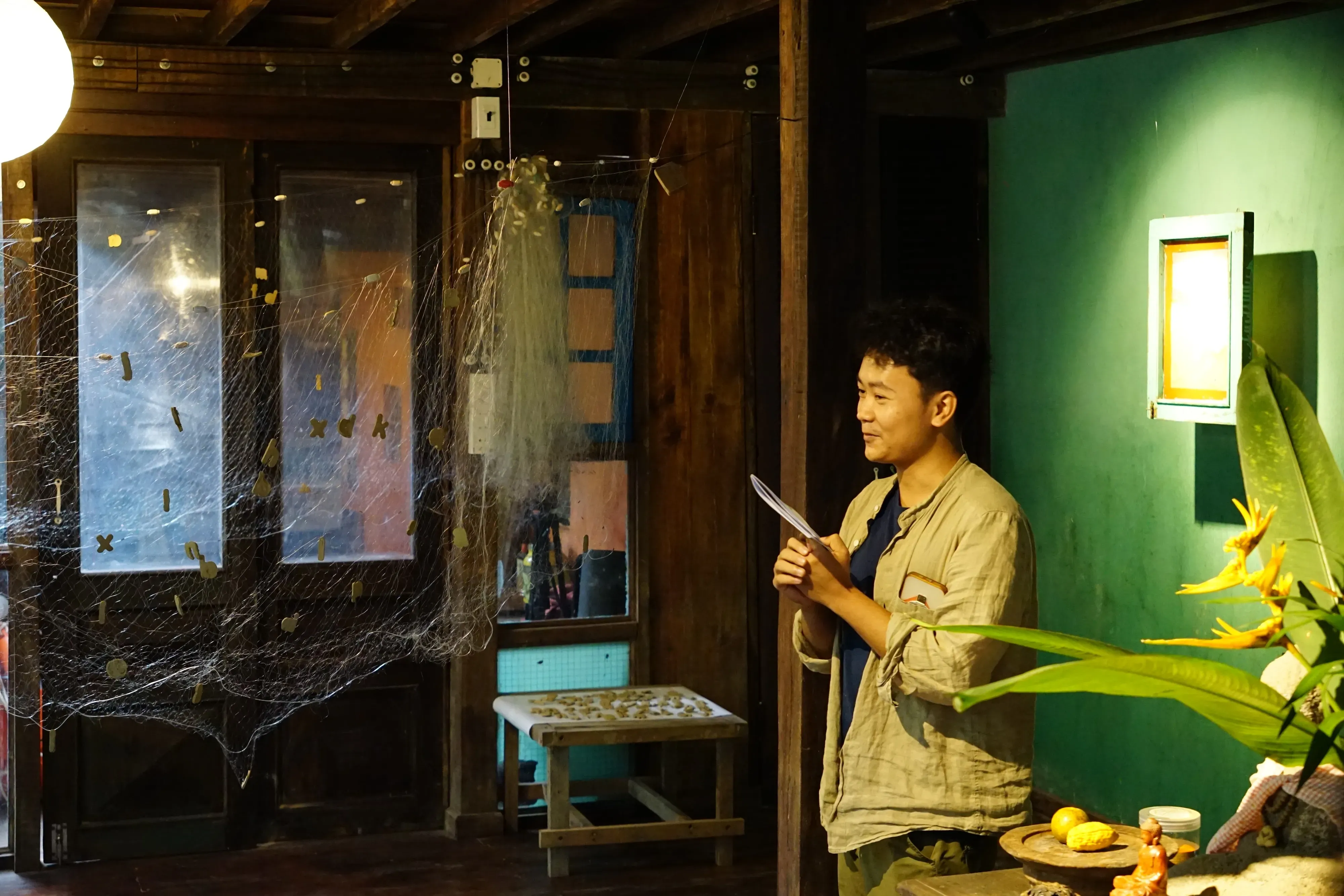
Journalist Lam Lê, a Pulitzer Center Rainforest Journalism Fund grantee, whose reporting served as foundational knowledge for artists, delivered an impactful session on reframing the crisis where the narrative moves away from “fighting floods" to “co-existing with floods" through the lens of local knowledge and resilient reporting.
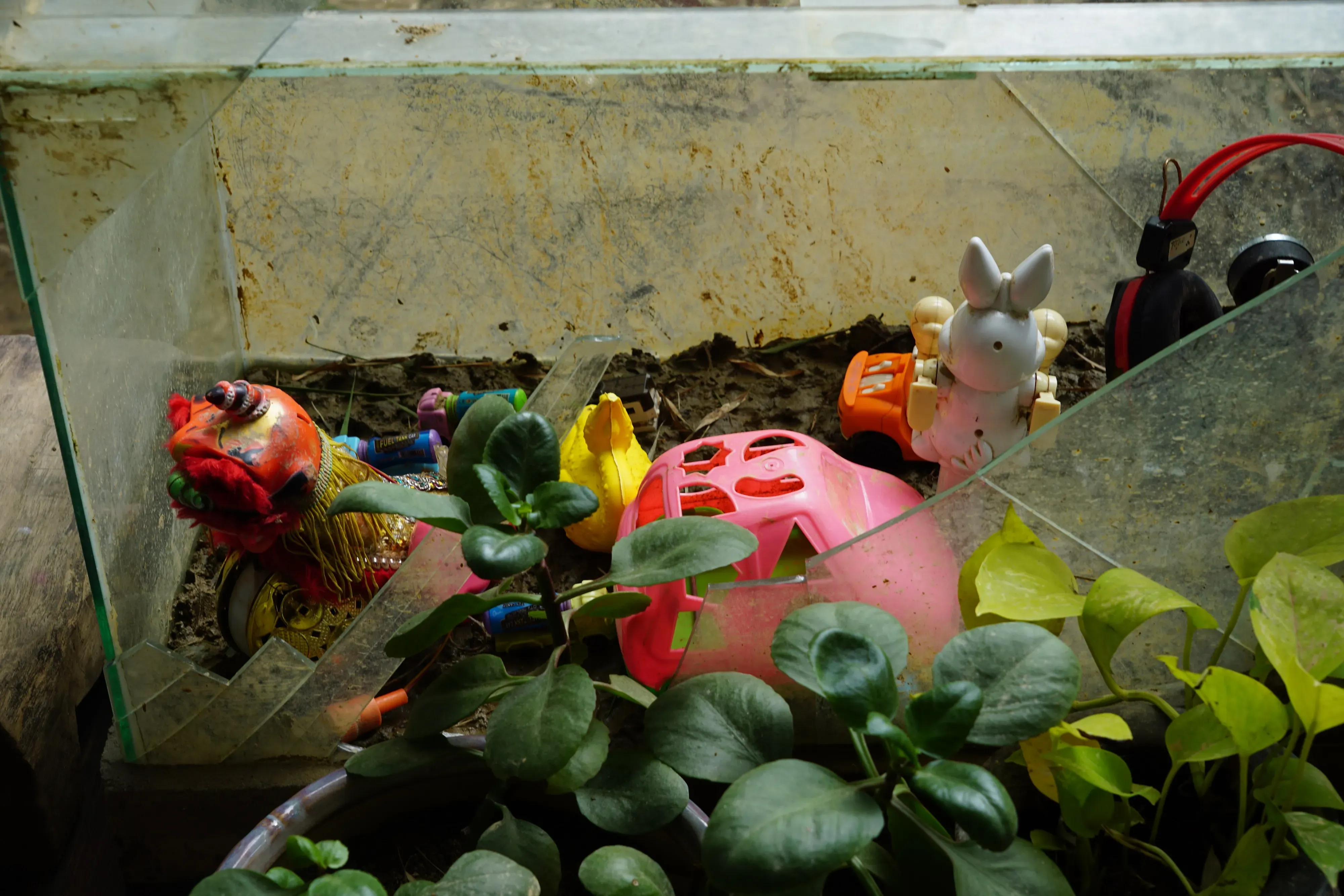
The Solid-Liquid-Gas open studio contained installations and paintings that incorporated local materials (like bamboo) and objects found after floods.
Some artworks used fishing equipment, including nets and hooks, serving as a tribute to the village's fishing community. Others used films, poems, and other forms of performance arts that encapsulated their weeklong journey.
Lê was impressed with the diverse ideas.
“Through the stories they told and the performances they gave, it naturally sparked a feeling of being closer to the sensation of what it would actually be like to face the rising waters,” she said. The common thread among these works was loss and transformation—how one shifts to another, she added.
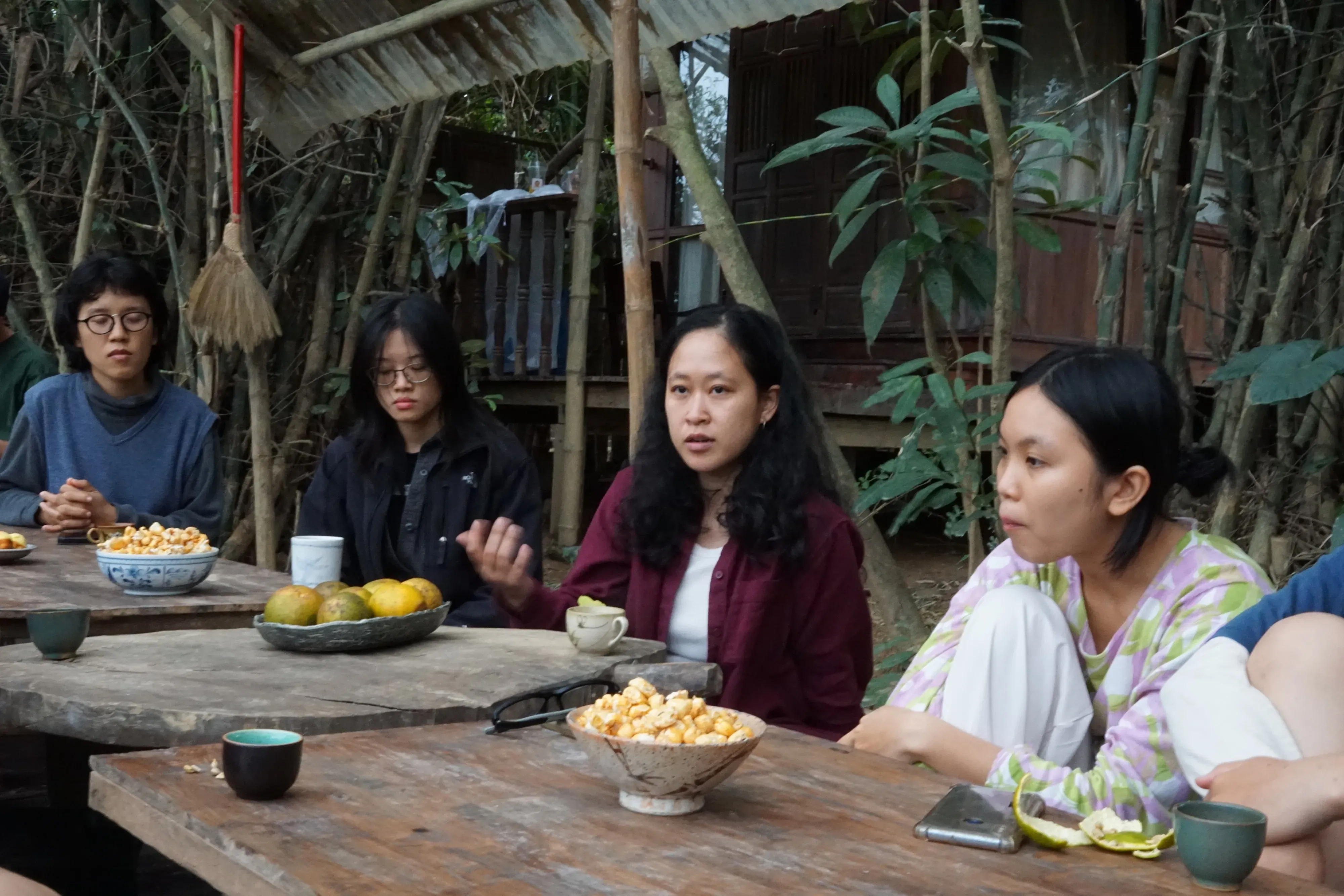
“A work of art truly has impact and 'lives' only if it resonates with the audience. From that connection, it evokes emotions and sparks what we call discussion and dialogue,” said Lê.
Acknowledgements
Artists: Nguyễn Hoàng Anh, Vũ Phan Anh, Nguyễn Văn Tôn, Lê Anh Thư, Linh San, Thuỳ Dung Nguyễn, Nguyễn Tuấn Đại, Tường Vân, Quywn
Project advisers: Đỗ Kỳ Huy, arts educator and visual artist; Phan Công Sanh, ecology and conservation adviser; Dương Thanh Quang, curator a multimedia artist; Lam Lê, journalist and Pulitzer Center Reporting Fellow; Lê Xuân Hùng, architect, co-founder of Thuận Nhiên Community and Yên Homestay
Community and venue partners: The Kim Bồng Ecoagriculture and Educational Community-Based Tourism Cooperative, Yên Homestay & Vegan Macrobiotic