Pulitzer Center Update December 29, 2025
With Pulitzer Center Support, Ghana Youth Use Investigative Reporting To Push for Sustainable Fashion
Country:

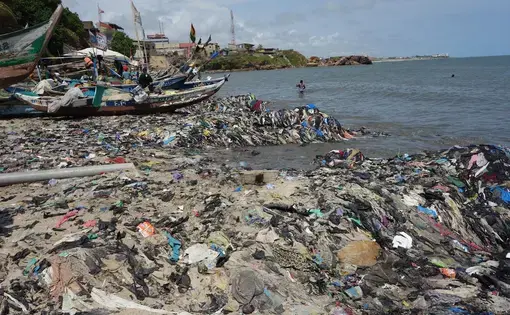
As textile waste continues to litter Ghana’s waterways, it also contributes to toxic microfiber and...

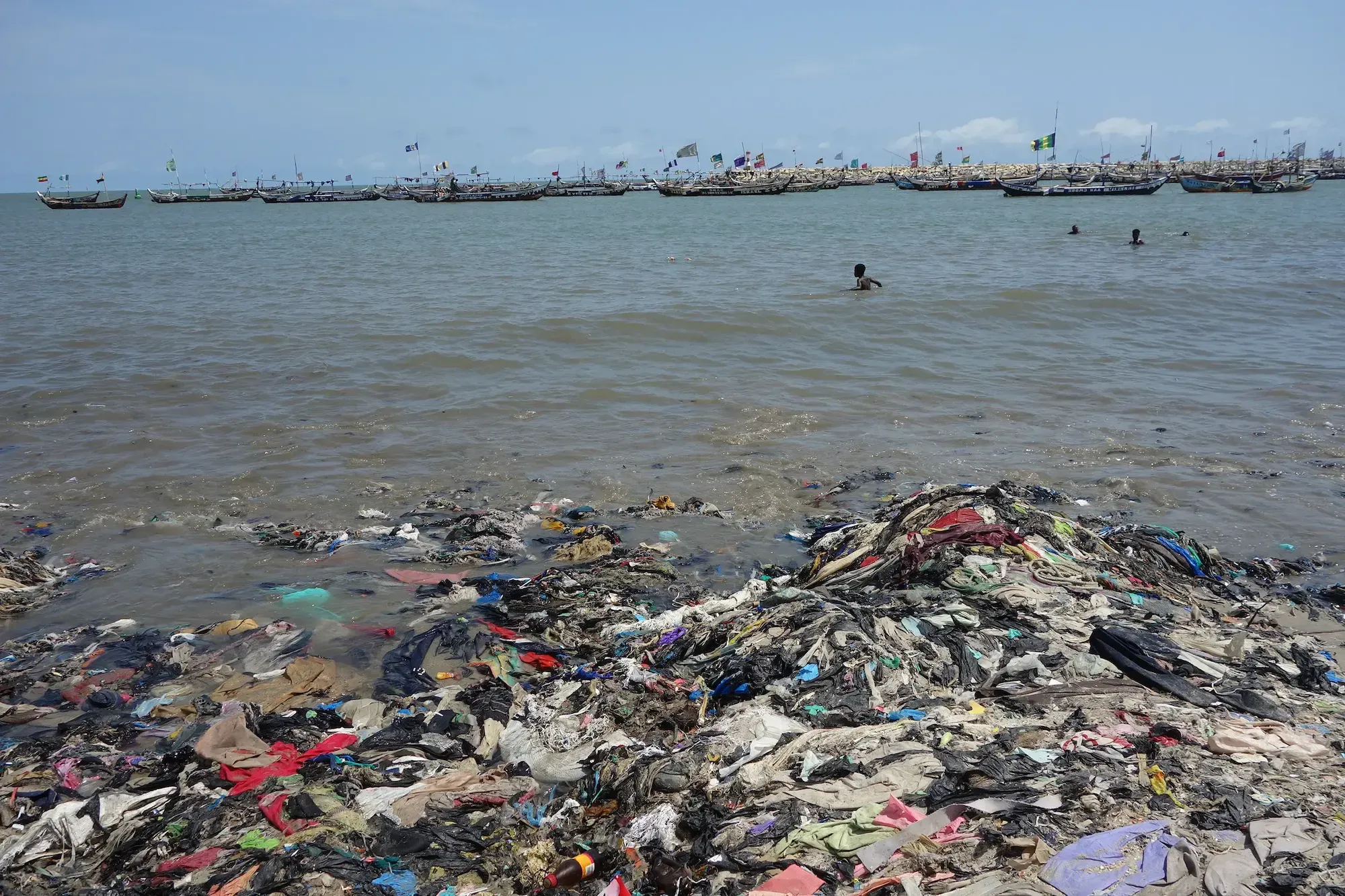
A narrative about "waste colonialism" led to a nationwide, youth-led initiative by the Ghana Youth Environmental Movement's (GYEM) YouthOvaFashionWaste project.
In October and November 2025, GYEM leveraged the power of investigative journalism to spotlight one of the country's most pressing environmental and social justice issues: the tidal wave of secondhand-clothing waste from the Global North. The project was inspired by Pulitzer Center-supported journalist Anne Whiting's investigation Secondhand Synthetics, Sinister Secrets.
The project's core goal was to move beyond simple awareness-raising; it aimed to change Ghanaian youth from passive witnesses to a crisis into informed advocates for systemic change.
With the help of Whiting's rigorous reporting, the initiative provided a factual foundation connecting environmental damage in local communities—including the pollution of Accra's beaches and lagoons—to the global economic systems of "waste colonialism."
From Journalism to Dialogue and Action
The initiative unfolded in two dynamic phases designed to educate, engage, and empower.
Phase 1: Knowledge-building through national dialogue
GYEM organized three thematic webinars, blending expert insights with direct audience interaction. Two sessions were held on the accessible, audio-only platform X Spaces to ensure broad participation, despite connectivity challenges. A more in-depth policy discussion took place on Zoom.
The topics covered included: youth perspectives on fashion waste and waste colonialism; policy frameworks and governance for textile waste; community innovations; and scientific insights on fashion waste.
These sessions collectively brought together over 5,000 people, generating nearly 50,000 online interactions. Post-event surveys revealed the impact of using Pulitzer Center-supported journalism as a catalyst: 92% of participants reported a deeper understanding of the issue, and 87% directly credited Whiting's article with helping them connect local struggles to global inequality.
Phase 2: Empowering youth as storytellers and advocates
Building on the webinars, GYEM challenged participants to become storytellers through a Digital Article Writing Competition. Nine candidates, all of whom had attended at least two webinars, were required to use Whiting's investigation as their primary source.
Their articles blended data on microplastic pollution with powerful human narratives centered on traders at Accra's Kantamanto Market, linking environmental degradation to livelihoods and dignity.
A panel of judges, which included Whiting, evaluated the submissions.
A subsequent survey of the participants demonstrated the project's success in promoting advocacy: 91% reported that the Pulitzer Center article helped them understand the link between fast fashion, trade, and the environment, and 82% felt empowered to use storytelling to influence policy.
Measurable Impact and a Path Forward
The YouthOvaFashionWaste project successfully translated journalism into tangible civic action.
- Enhanced policy engagement: The initiative succeeded in shifting the debate toward governance, elevating the national dialogue on integrating textile waste into Ghana’s Extended Producer Responsibility (EPR) frameworks.
- A new generation of advocates: The project trained an informed cohort of young leaders; 78% of webinar participants reported being motivated to take personal or community action, and several speakers committed to ongoing support for GYEM’s newly strengthened Sustainable Fashion Advocacy Unit.
- A model for inclusive engagement: By strategically using X Spaces for audio discussions, the project overcame the challenge of unstable internet connectivity in some regions, ensuring broader and more equitable participation.
This initiative demonstrates how on-the-ground, donor-supported journalism can serve as a powerful engine for civic education and mobilization.
By providing Ghanaian youth with data, a platform, and creative tools, GYEM and the Pulitzer Center have helped launch a sustained, youth-led movement for environmental justice and a sustainable fashion future.
For more information, visit GYEM's website.
