Pulitzer Center Update September 30, 2025
Pulitzer Center Reporting Inspires N.Y. Students To Investigate Lead Pollution in Their Community
Country:

Lesson Plan
Living With Lead Exposure
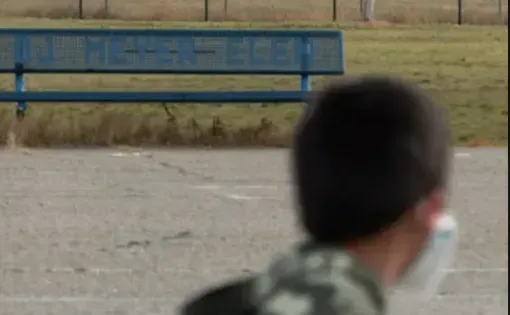
Reporting on lead exposure inspires students to investigate levels of lead pollution in their own community and public awareness of the longterm exposure risks.
Vadim Feyder teaches English language arts at a New York City high school. Feyder created the lesson plan “Living With Lead Exposure” as part of the fall 2024 Pulitzer Center Teacher Fellowship program “Making Local Connections to Global Health Stories.” Click here to view his full lesson.
His four-day lesson plan reached 50 10th- and 11th-grade students at Leadership & Public Service High School in New York City. At the conclusion of the Fellowship, Feyder shared the following reflections on his experience developing and teaching the lesson.
Tell us about you, your students, and your community
I work in a small high school in the Financial District on the lower tip of Manhattan. Students commute to the school from all five boroughs of NYC. Students in the school come from a diverse range of backgrounds. I have been teaching ELA [English language arts] in the school for three years. In the past three years, my colleague and I have started an after-school newspaper club, where students write and publish stories on a website. This year, I am teaching two sections of a journalism class. This is my first year teaching journalism. The students are mostly native speakers, although there are a few for whom English is not their first language.
Tell us about your lesson
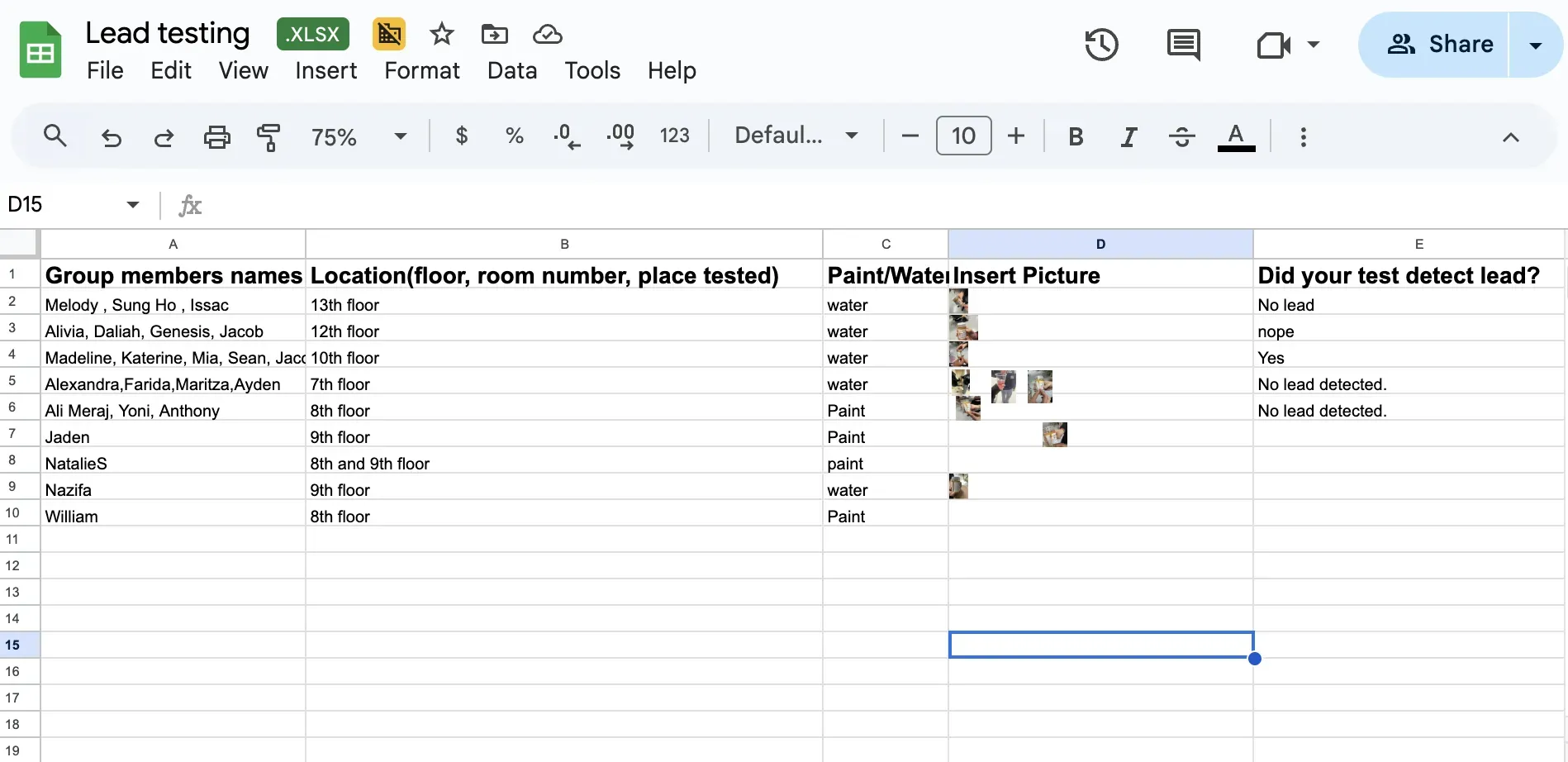
After reading "Living With the Risks of Childhood Lead Exposure: A Day in the Life," I noticed some situational commonalities that I felt would resonate with my students. The article deals with a community in proximity to an airport. In addition, most of our school’s water fountains were not available for use until this year due to toxins found in the water. I wanted my students to experience the process of investigative journalism and what they, as journalists, could do to help their community be better informed and prepared to take necessary action. I also wanted this learning experience to be hands-on. We learned about lead testing and then went out to test for lead in the water and in the paint of rooms and hallways. Students also interviewed teachers, administrators, staff, and other students to get their perspective on how safe our school was from lead exposure. Students then discussed what the school should do to ensure the school remains safe from toxic exposure.
Tell us about what your students learned while engaging with the lesson
- Students learned about the social determinants of health and how they impact an individual’s health in the future.
- Students learned how to read and interpret an infographic.
- Students learned how to read and analyze an article. They learned how an article is organized.
- Students learned how to reach out to an individual to request an interview and how to create questions for the interview.
- Students learned how to interpret results and how to be careful about drawing conclusions based on a limited number of results.
- Students learned to conduct background research on their topic and to incorporate that knowledge in their writing. They learned how to take their story idea and flesh it out in detail. They learned how to write a lead and nut graph for a story. Students learned how to incorporate quotes in their story.
The most important thing that they learned is to dig deeper into an issue, to not just skim the surface, but to uncover issues that no one wants you to know about. To ask uncomfortable questions. To pursue and persist. To use their platform as journalists to inform the community. To write without bias.
As one of the students wrote in her reflection: “... I have learned that the staff and students mainly have issues with lead because of the water fountains. Many students forget to buy or bring their water bottles, which causes them to worry mostly about the lead in water since they need it to stay hydrated.”
This shows that the student understands the larger issue, which is that possible lead in water fountains can lead to students and staff not drinking water and not being hydrated. Also, not everyone is able to bring a water bottle or have access to clean water.
Tell us about what you learned by creating and teaching this lesson
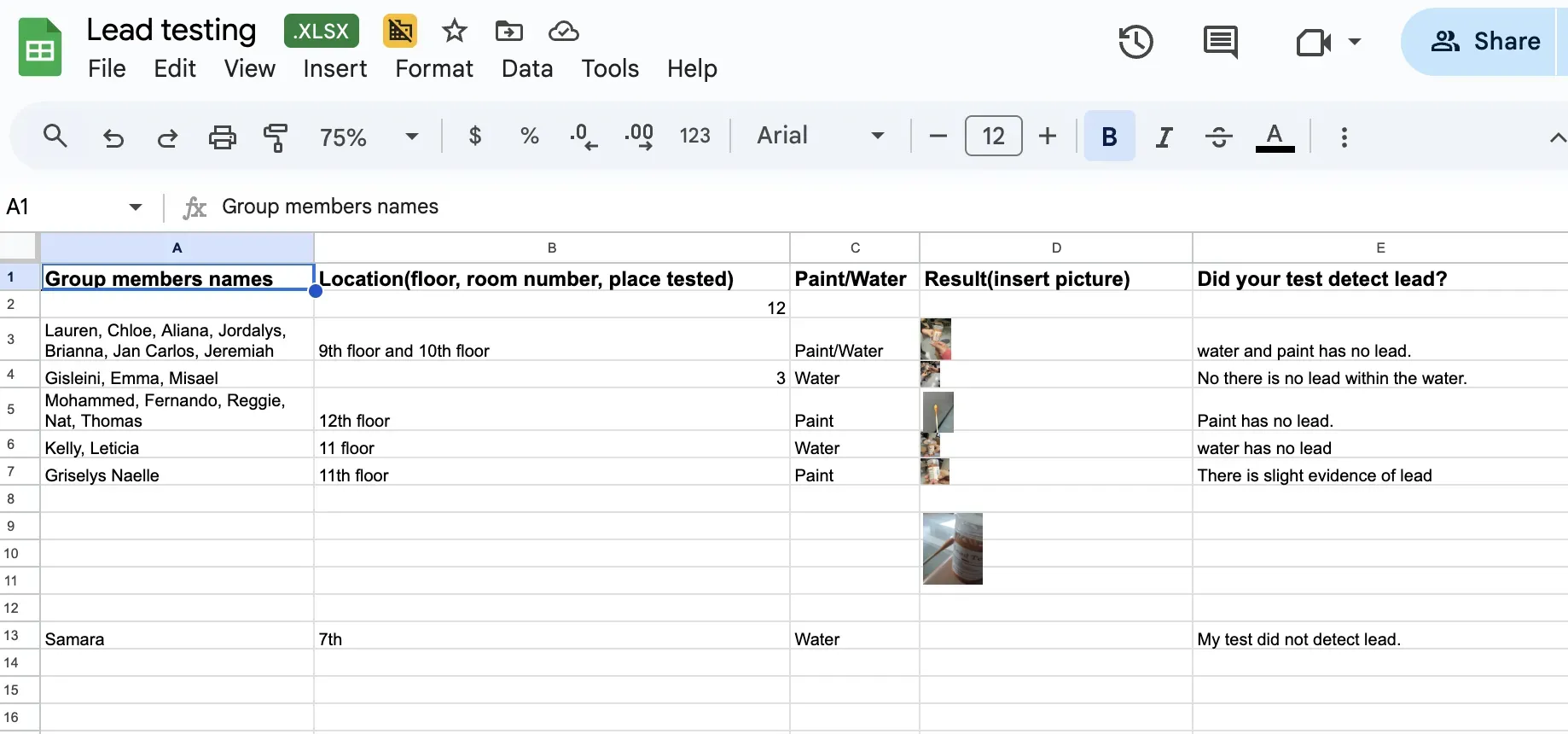
I have learned that students really enjoy hands-on learning. Everyone was engaged when students had a chance to test the paint and water for lead. All students wanted to see what their results meant, which shows that it is important to balance theoretical knowledge with specific actions.
I think in the future I would want to maybe read and analyze an extensive feature article to model what goes into the process, but then have students write articles on topics that interest them. Because all the students were focused on the topic of lead exposure, it created issues with students basically writing the same articles and doing the same research as everyone else. Also, students would interview the same teachers (science teachers) for their articles.
Because we didn’t have positive test results for lead in our school, it seemed that the story would be a non-starter. It felt at times as if we were creating a story where no story exists. Toward the end of the learning experience, I pivoted to allow students to choose their own story topic that was inspired by the process we went through with lead testing, and it went a lot better once students were writing on topics in which they had an interest.
As part of the fall 2024 Fellowship, “Making Local Connections to Global Health Stories,” 14 educators from nine states created and taught lessons to engage their over 1,500 students in projects inspired by global health reporting.
Click here to learn more about the Fellows and their collective impact.