Pulitzer Center Update January 15, 2026
Melting Point: Rescuing Chocolate in a Warming World
Country:



Project
Chocolates Melting Away
Climate change is an increasing threat to the crop and livelihoods in the Philippines.

Climate change is coming for your favorite chocolate bar—but the hands that produce it are facing the real heat. What can save it?
This is a question that Pulitzer Center brought up for discussion at the Bangkok Climate Week 2025 with the session, “Sweet Surrender? When Chocolate Melts, Can Innovation Save It?” on September 30. This program was designed to align with Bangkok Climate Action Week’s mission to engage cross-sector audiences in human-centered climate action and storytelling.

The focal point of the event was a screening of Chocolates Melting Away—a short documentary by Filipino filmmaker Breech Asher Harani, Financial Times, and One World Media, supported by the Pulitzer Center. The screening was complemented by a pop-up chocolate museum, discussions, and engaging group dialogues exploring parallels with Thailand’s growing cacao industry.
The event brought together around 40 participants, including students and professors from agriculture faculty, entrepreneurs in the cacao and chocolate sector, representatives from embassies, and environmental advocates for an evening of film, conversation, and chocolate.
“I found the event to be more thought-provoking than what I would’ve read in a news report. If I just read the report, I could only understand the issue, like 'Global warming affects farmers,' that's all I would know. But at the event, I was asked 'What if there's no cocoa in three months?' In addition to just knowing it, it made us all think," said a student from the Faculty of Forestry, Kasetsart University.
Climate, Cacao, and Conversations
The documentary, Chocolates Melting Away, spotlights the critical connections between climate change, agriculture, and the future of food and labor.
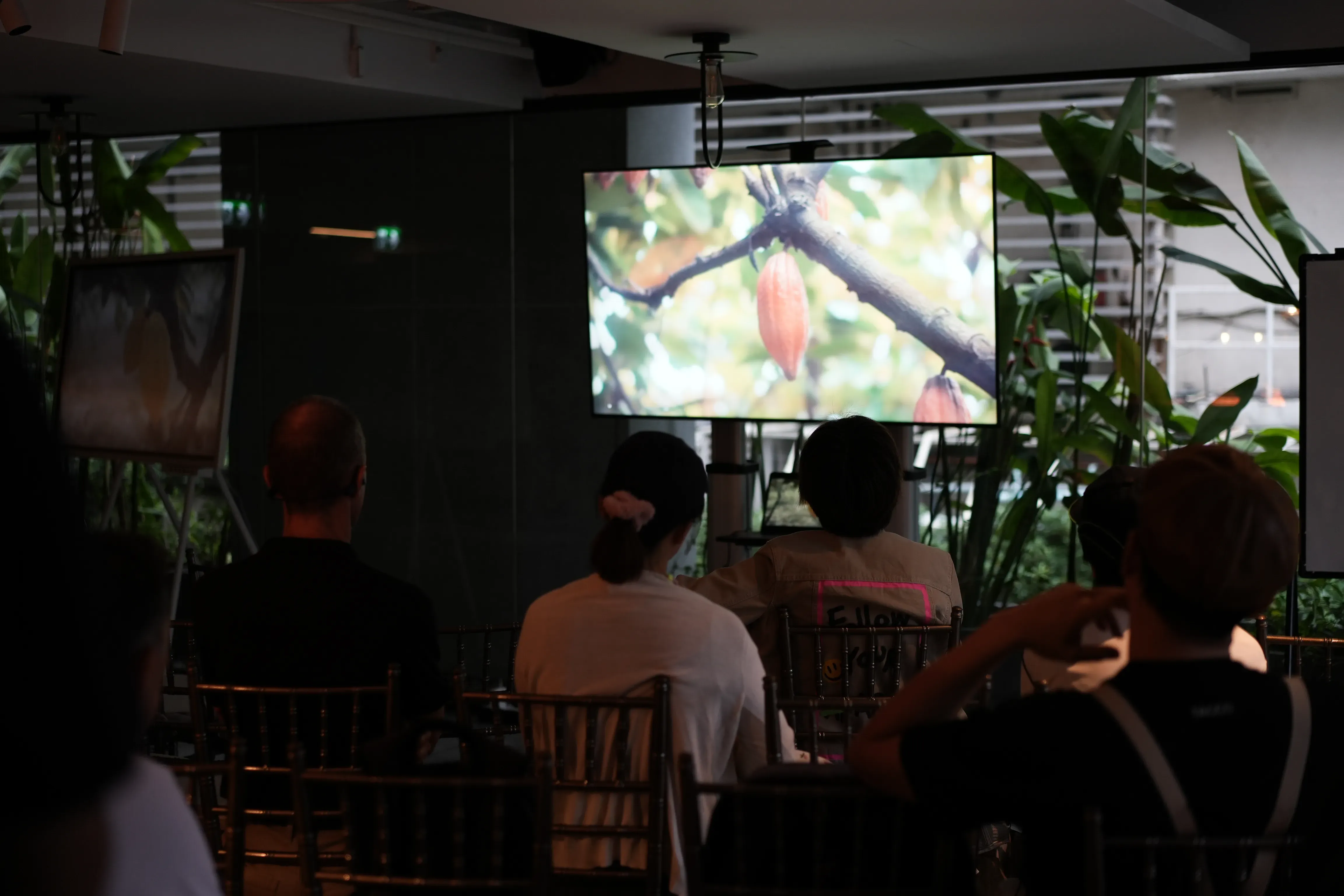
The film offers a visually intimate and sobering account of how erratic rainfall and sometimes extreme heat induced by climate change is disrupting cocoa farming in the Philippines—impacting livelihoods, labor, and food systems. Nature-based solutions, such as agroforestry, biofertilizers, development of a climate calendar to counter unforeseen calamities—adopted by Filipino farmers to adapt to extreme weather were also presented in the film.
Although the film showcased the experiences of Filipino farmers from Davao, the screening was relevant to a Thai audience as the cacao industry in the country also faces identical challenges. The film screening was followed by a multi-stakeholder dialogue featuring the filmmaker, Thai and regional cacao farmers, sustainable chocolate entrepreneurs, and agricultural or climate experts.
“I understand it quite deeply because it's similar to the problems we’re facing. We know that when there's global warming, plants don't absorb nutrients, when they flower but can't bear fruit, thus, our yield decreases. Sometimes, too much rain causes mold to grow on the cacao. Watching the film has made me realize that we need to adapt to the current situation, including reducing these factors as much as possible,” said Khun Candy, a young chocolate farmer from Thailand.
The discussion with stakeholders from the industry unpacked the shared challenges and adaptive strategies emerging across Southeast Asia’s cocoa sector, highlighting the intersection of climate, labor, community resilience, and agricultural innovations.
“I see how the Pulitzer Center has translated a critical climate issue into an event that’s engaging and relatable to the general public,” said Kanjana Chaiwatanachai, a professor from the Faculty of Forestry, Kasetsart University.
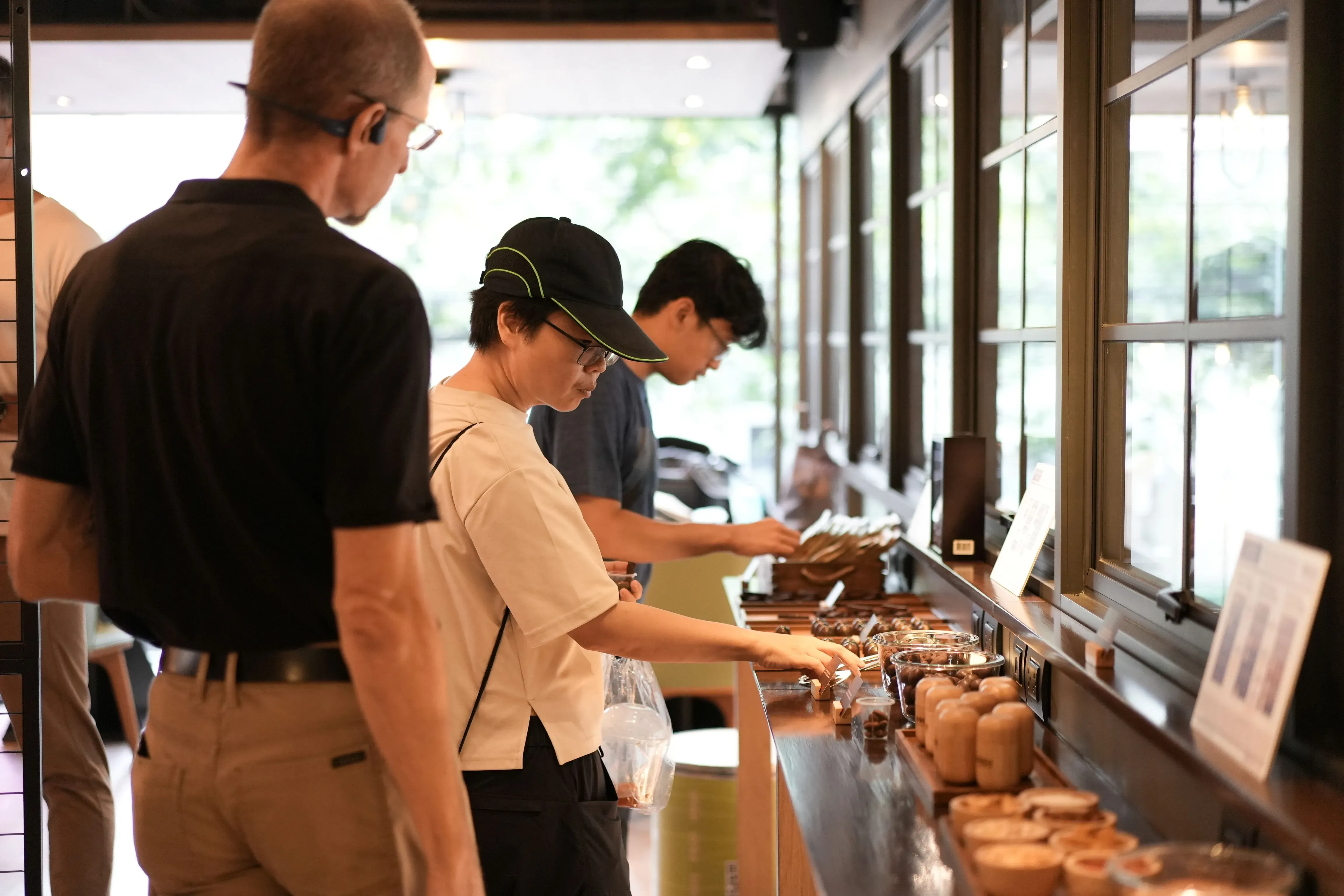
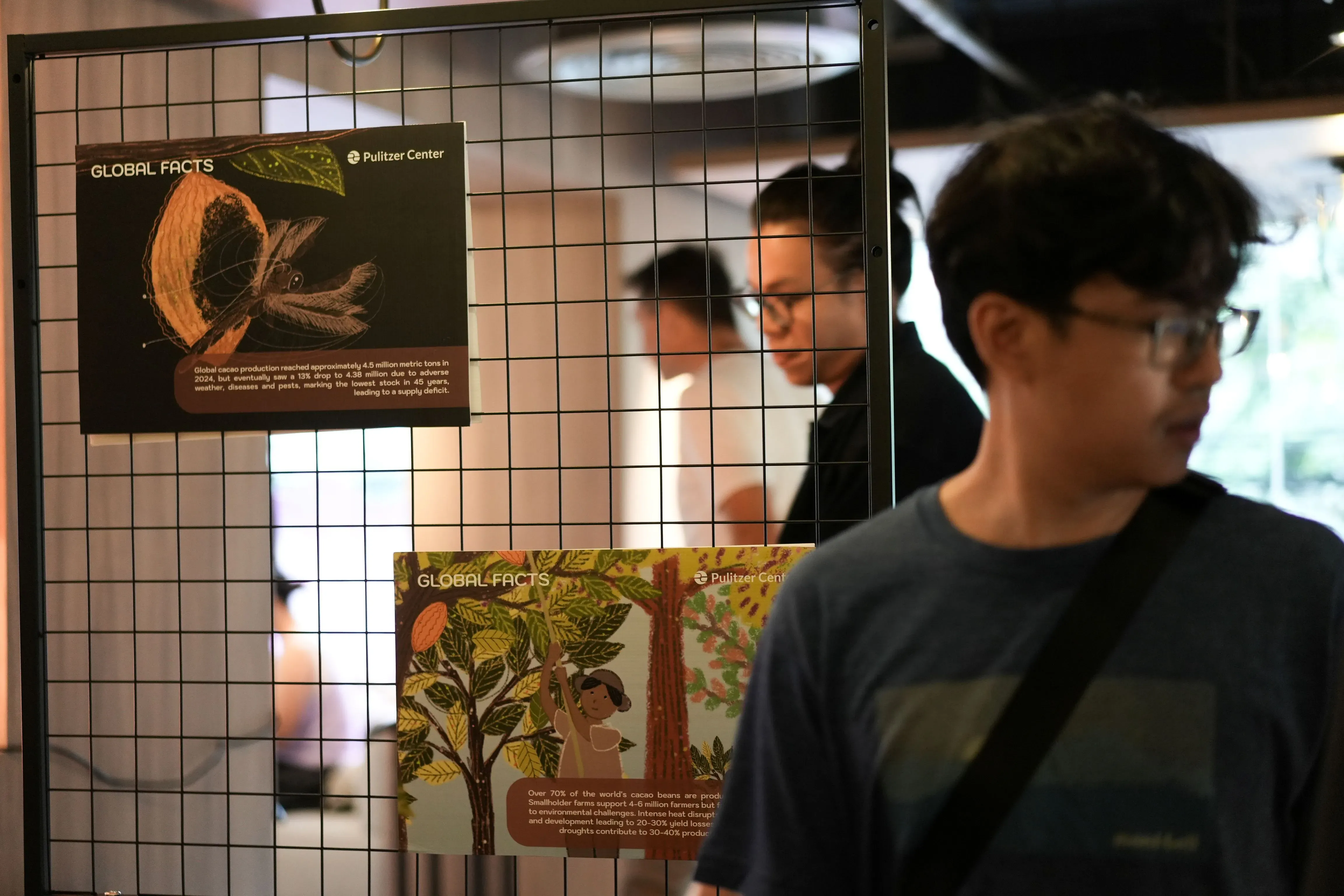
The chocolate museum at the venue provided the audience a multisensorial experience with photographs, information on the global industry, and details from the film screened at the event. Attendees also got to taste chocolate produced using cocoa grown by Thai farmers.
