Pulitzer Center Update August 21, 2026
Kansas City Students Make Local Connections to Reporting Investigating Undercounted Deaths in Pennsylvania Jails
Country:

Students evaluate the role of journalism in uncovering systemic issues, and inspiring local action, through analysis of investigations into prisons in two U.S. states.
Karen D. Sojourner is a high school English and Dual College Enrollment Instructor at Southeast High School in Kansas City, Missouri. Sojourner created the lesson plan, “We Know These Stories: Teaching Investigative Journalism and Incarceration,” as a part of the spring 2025 Teacher Fellowship for alumni, “Global Issues, Local Contexts: News for Civic Knowledge and Engagement.” Her lesson reached 50 students. At the conclusion of the fellowship, Sojourner shared the following reflections on her experience developing and teaching the lesson.
When I planned a lesson around the investigative article “Deaths in Pa. Jails Are Undercounted. Our Investigation Found Dozens of Hidden Cases” by Joshua Vaughn and Brittany Hailer for PennLive, I knew it would stretch my ninth graders’ thinking. What I didn’t expect was just how personal it would become—not just for them, but for me. This lesson became a shared moment of introspection and inquiry.
The article investigates the silent, often invisible deaths that occur in county jails—deaths that go unreported, uncounted, and often unnoticed because the deaths have been pushed off into other statistics unrelated to what actually occurred. My students and I asked:
What does it mean when someone dies in custody and no one is held responsible? What kind of system allows that? And what kind of culture tolerates it?
Starting With Humanity
I started this investigative journey off with NBCU Academy’s video titled, “How to Become an Investigative Reporter.”
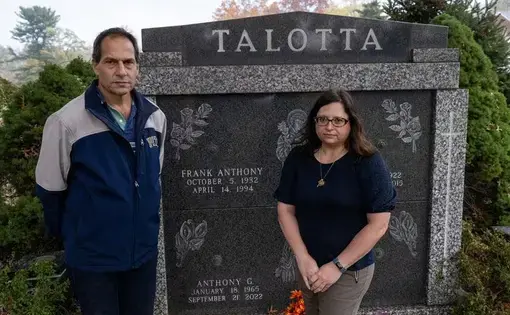
Before we read, I projected photos of two men at the center of the article: Anthony Tralotta and Jamal Crummel. No names. No context. Just the question:
“What do you see?”
Not what do you think or what do you assume. Just observe. Most of the responses started with, “I see a man….”
That simple moment cracked something open. These weren’t faceless figures from a faraway state. These were men who reminded my students of their own families—people they’ve loved and worried about, and sometimes lost to a system that rarely makes space for full stories.
Once we started reading, I asked things like…
- Does this story connect to anything you've seen or experienced?
- Why do you think these deaths weren't reported?
- What can people—what can we—do about this?
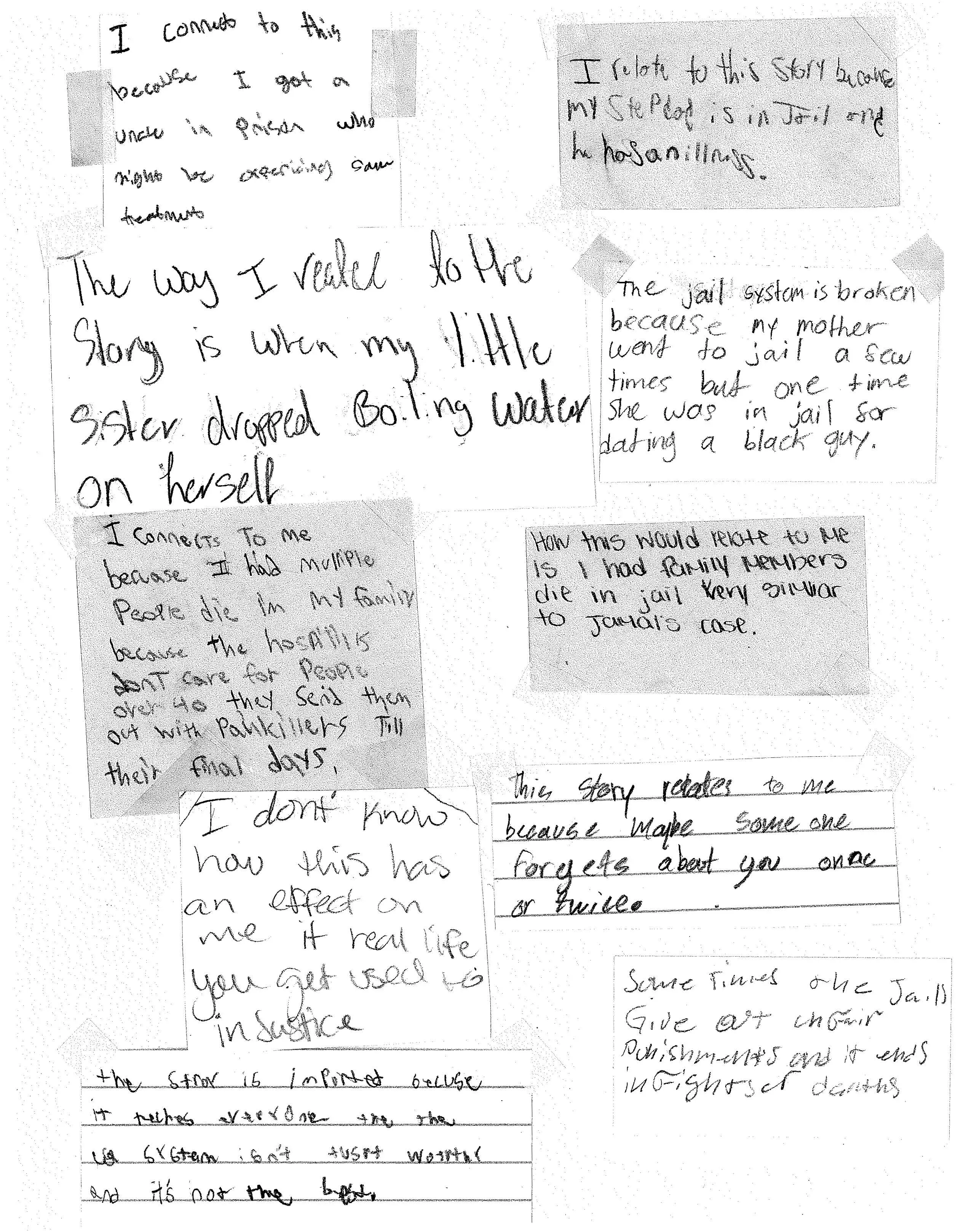
Some responses were shared aloud, others written privately on sticky notes. The honesty in their responses was overwhelming:
- “This story connects to me because my stepdad is in jail and he has an illness.”
- “My mom is in jail right now and it makes me scared all the time.”
- “I related to this because my mother is in jail and I know how it feels to have someone go to jail and die over a asthma attack. [I shared with the students that my young cousin died in prison because of what was relayed to his family as an asthma attack.] This story connects to me by my concern for justice and care, showing my mama that I actually care about her and to show her that I’m here for her no matter what we been through. Ima always be there for her.”
My students weren’t reading about injustice—they were recognizing it. Naming it. Questioning why it had become so normal. Even with that said, one student wrote, “I am not really affected by this at all because you just expect injustice and get used to it.”
Bringing It Home: Connecting to Local Reporting and Organizing
To deepen the connection, we brought the conversation even closer to home with a second article from The Beacon in Kansas City titled “‘Trapped in a fiery kennel’: Lawsuit against Missouri Department of Corrections alleges extreme heat at one prison is a constitutional violation” by Meg Cunningham. This piece reported that temperatures in solitary confinement at Algoa Correctional Center had reached 111 degrees—conditions that are inhumane by any standard.
The combination of the national and local articles helped students draw links between patterns—not just in one state, but across the country. Suddenly, the lesson became a web of questions:
Why is this happening? Who’s responsible? Why don’t more people know?
To shift gears and talk about collective action, we watched a video about the KC Tenants Union. My students were hooked. The idea that everyday people—many of them renters, low-income, Black and Brown—could come together to resist evictions and demand change? That was energizing on some levels and even polarizing at times, which is a reflection of how these topics are reflected outside of the classroom. In this instance, however, students were in a safe place to voice their respective opinions.
The Culminating Project: Creating for Change
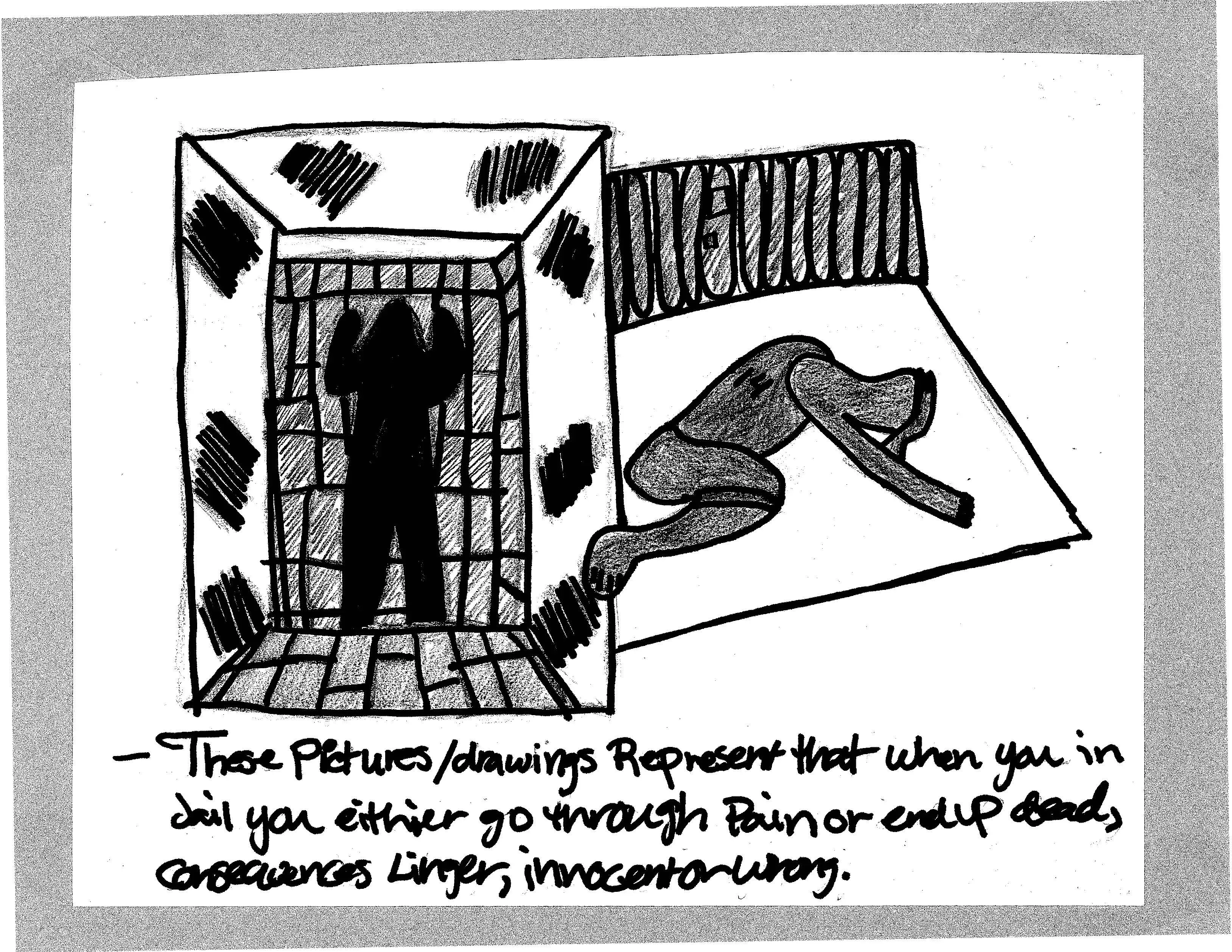
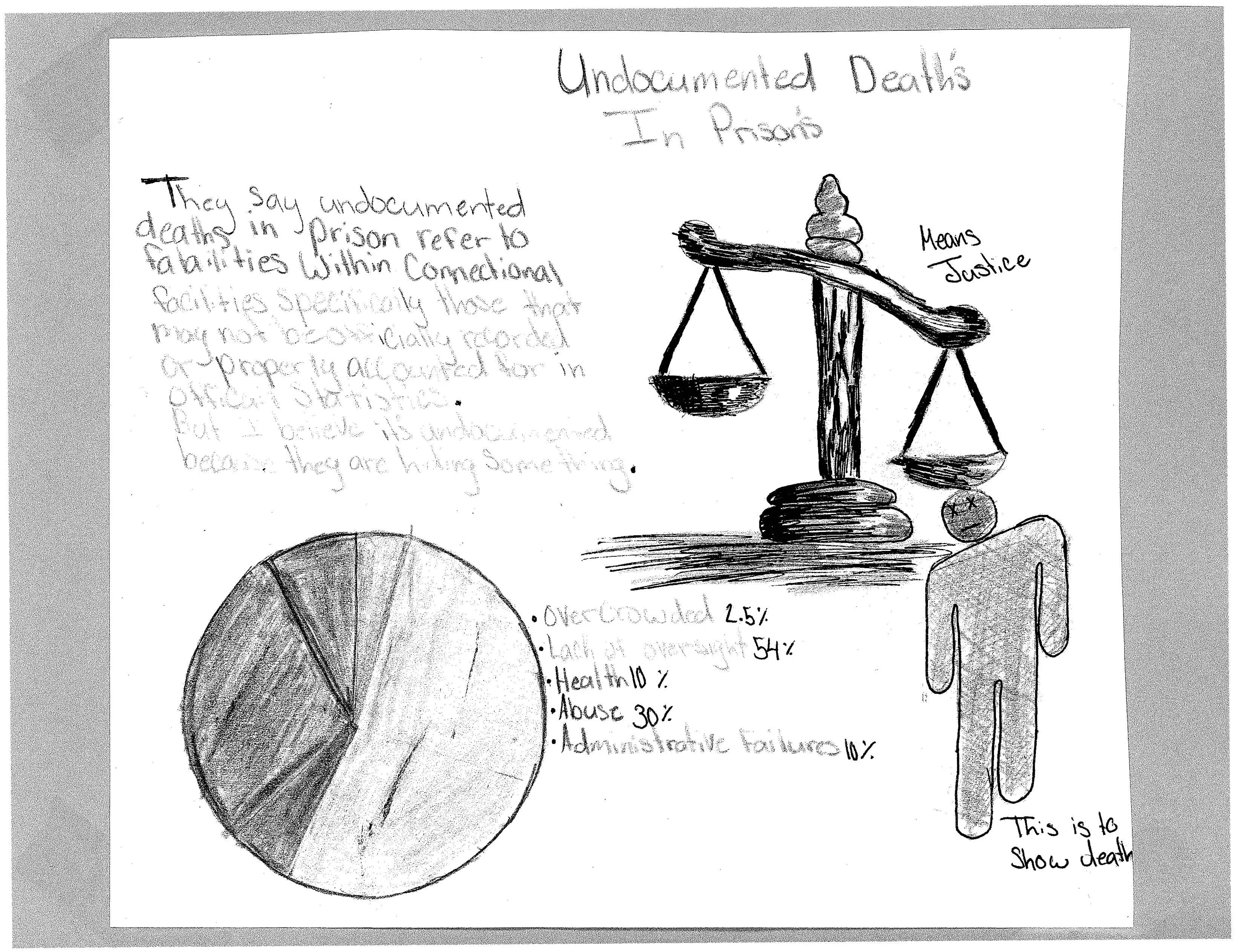
For the final piece of this unit, students created social media posts to raise awareness about deaths in custody and the lack of accountability from prison systems. Their posts were powerful—some used stark imagery, others focused on quotes from the articles. Many chose language that demanded attention:
“Don’t let them die in silence.”
“Their lives mattered too.”
“Justice doesn’t end at the prison gate.”
Through this project, they demonstrated their understanding of audience, tone, message, and purpose—all essential writing and media literacy skills. But more than that, they demonstrated care, empathy, and advocacy.
What I Learned
Students are paying attention. They want to talk about the world as it is and how what is happening relates to them. They came in with questions, connections, and concerns, and they left with even more.
Teaching this wasn’t easy. It brought up real things for students—and for me. But it was worth it. Ending the school year with this lesson has helped me to envision how I will start my lessons for the upcoming school year. The goal isn’t just to check boxes on a standard. The goal is to make space for truth, curiosity, and the kind of learning that lingers long after the class ends.
If anyone’s thinking about using this kind of material, my advice is don’t overexplain it. Let students lead. Give them room to process, question, and respond in their own way. Students who weren’t typically academically engaged in my classroom perked up with this lesson and participated. I'm sure relevance had a lot to do with that sudden engagement.
Throughout the lesson, I built in collaborative structures tied to Missouri Learning Standard (MLS) 9-10.SL.1.A. Students set discussion norms, divided into roles, and led peer-led conversations that required listening, patience, and curiosity. The classroom took on the energy of a small newsroom—each table a hub of thought, emotion, and inquiry. This wasn’t just a lesson in reading nonfiction. It was a lesson in seeing the invisible, in valuing the overlooked, and in using literacy as a lens for justice.
We didn’t just study the article—we sat in it. And that was personal for many of my students.