Pulitzer Center Update December 3, 2025
Journalist Karen Hao's St. Louis Visit Explores AI’s Impacts on Society, Environment
Country:

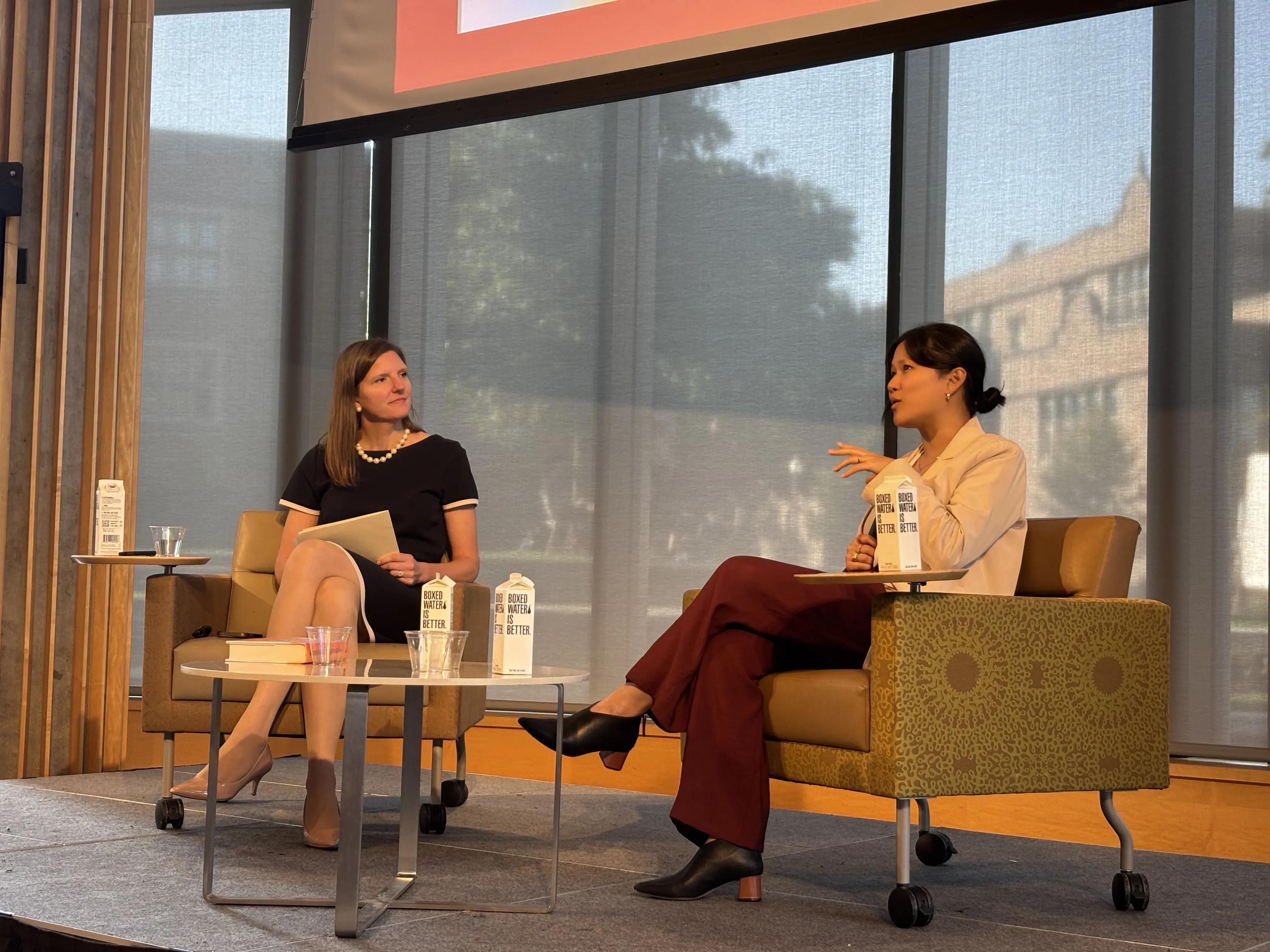
Journalist Karen Hao spoke with community members, students, and faculty at Washington University in St. Louis about her latest reporting on artificial intelligence (AI) and its impacts on society and the environment.
Her comments came during an Oct. 16 community conversation with Elizabeth Pippert Larson, associate director of the University’s Weidenbaum Center on the Economy, Government, and Public Policy. The conversation was part of a two-day visit to Washington University as part of the University’s partnership with the Pulitzer Center Campus Consortium Network.
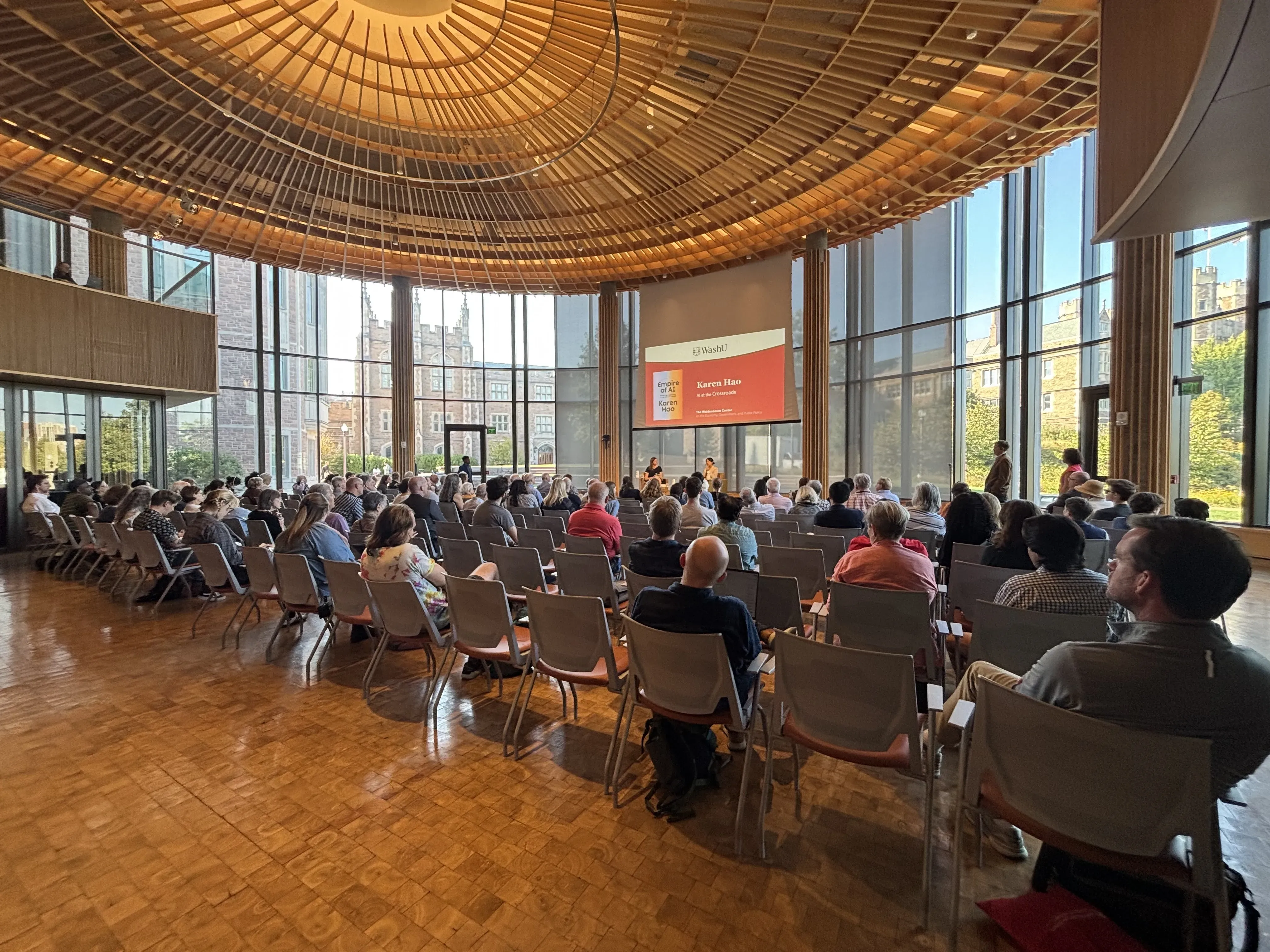
In 2025, Hao published Empire of AI: Dreams and Nightmares in Sam Altman’s OpenAI. Five years earlier, Hao, who once worked in Silicon Valley, was the first journalist to profile OpenAI. She has written for several publications during her career, including MIT Technology Review, The Wall Street Journal, and The Atlantic. Hao also has been a Fellow with Pulitzer Center’s AI Accountability Network and co-created its AI Spotlight Series, a worldwide program that has trained thousands of journalists on how to cover AI.
For the full conversation between Hao and Larson, watch the recording.
To read more about the event and community reactions, see the article written by Nicholas Demba for Student Life, the independent newspaper at Washington University.

