Pulitzer Center Update May 20, 2026
Indigenous Stories Get a Starring Role at Cambodian Film Festival
Country:

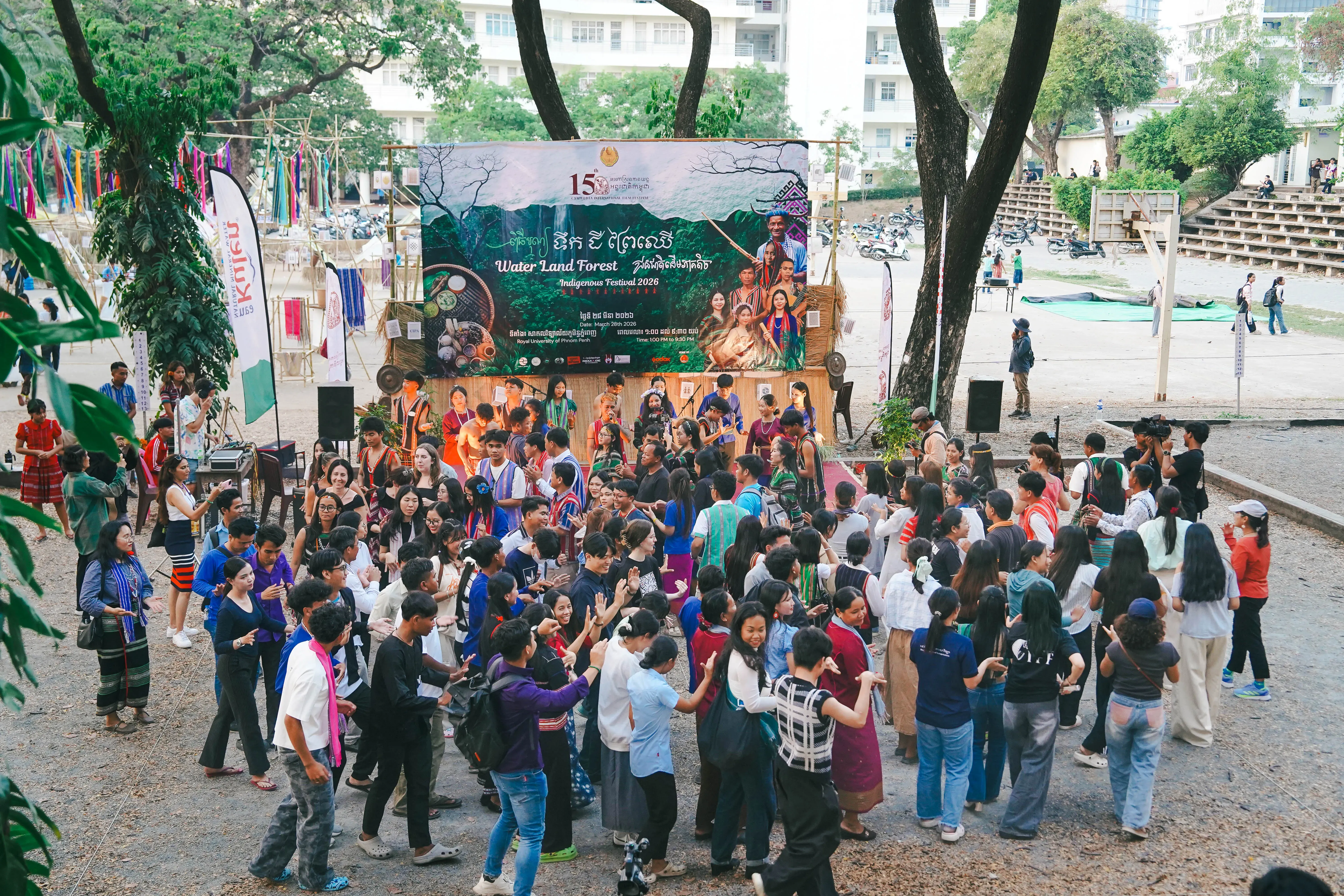
Event co-hosted by Pulitzer Center draws more than 3,000 people
In March, the Pulitzer Center co-hosted the Water Land Forest Indigenous Festival, as part of the 15th Cambodian International Film Festival (CIFF), which ran March 24-29. This was an opportunity to spotlight stories of Indigenous peoples through Pulitzer Center-supported films and reporting.
However, a month before the festival, I found out I couldn't go.
The Thai-Cambodian tensions were still running high in February 2026 after border disputes and armed clashes. The two countries may be separated by territorial boundaries, but there is so much shared in common—the history, the coastline, and similar stories that connect us like an invisible thread.
I decided that the best approach was not to travel. So I did what I've learned over four years of remote organizing—I adapted. I reached out to Miguel Jeronimo, a Phnom Penh-based photographer who has contributed as an artistic partner across several of our projects in Southeast Asia. He co-coordinated with the Indigenous groups and CIFF on the ground, to ensure that our vision was materialized and that our journalism reached wider audiences in ways the Indigenous communities themselves had envisioned. I watched the event unfold from across the border.
On March 28, at the Royal University of Phnom Penh, we showcased a village, brought to the city. “Nothing of this sort attempted at this scale in Cambodia," my friends from Cambodia said.
Between 3,200 and 3,500 people moved through eight hours of conversations with Indigenous elders, theater performed in languages most of the audience had never heard, a blessing ritual by the Sui community from the Cardamom Mountains who had never before come to Phnom Penh, and hidden speakers playing forest sounds recorded in Borneo.
The logic behind all of it, as Jeronimo put it, was simple but radical: "In Cambodia, virtually only journalists and environmental NGO workers read articles on the environment. These exhibitions and events are crucial to bring the important work journalists do to the general public."
Stories of the people for the people
Munny Rochom, a young Jarai woman working with the Cambodia Indigenous Women Association, coordinated her first large-scale event, since I wasn’t able to be there in person.
“Bringing this festival to life meant a lot to me. As an Indigenous woman engaging with communities closely through my work, it went beyond just organizing an event. It was about creating a space where our voices, identities, and knowledge are truly seen, heard, and respected. I felt proud to have contributed as it reflects who we are, our deep connection to land, water, and forest, and to share the strength of Indigenous women and communities with the public,” Rochom said.
At the center of the program was Pulitzer Center-supported journalism from across the region.
Sound Guardians, directed by Leah Varjacques and produced by Rizky Rahad, captures a Balik elder in Borneo, Indonesia, racing to record his forest's soundscape before it disappears forever—audio from that very recording played through speakers hidden in the festival bushes, stopping visitors mid-step. For Rahad, seeing his work land in this setting was its own revelation. What had previously existed on a screen became, in his words, "something collective, embodied, and time-based"—shaped as much by the audience's presence as by the film itself.
Pulitzer Center grantee Luke Duggleby's photography brought audiences face to face with the Maniq, Thailand's last hunter-gatherers, fewer than 500 remaining, fighting for the right to live on land their ancestors have always called home.
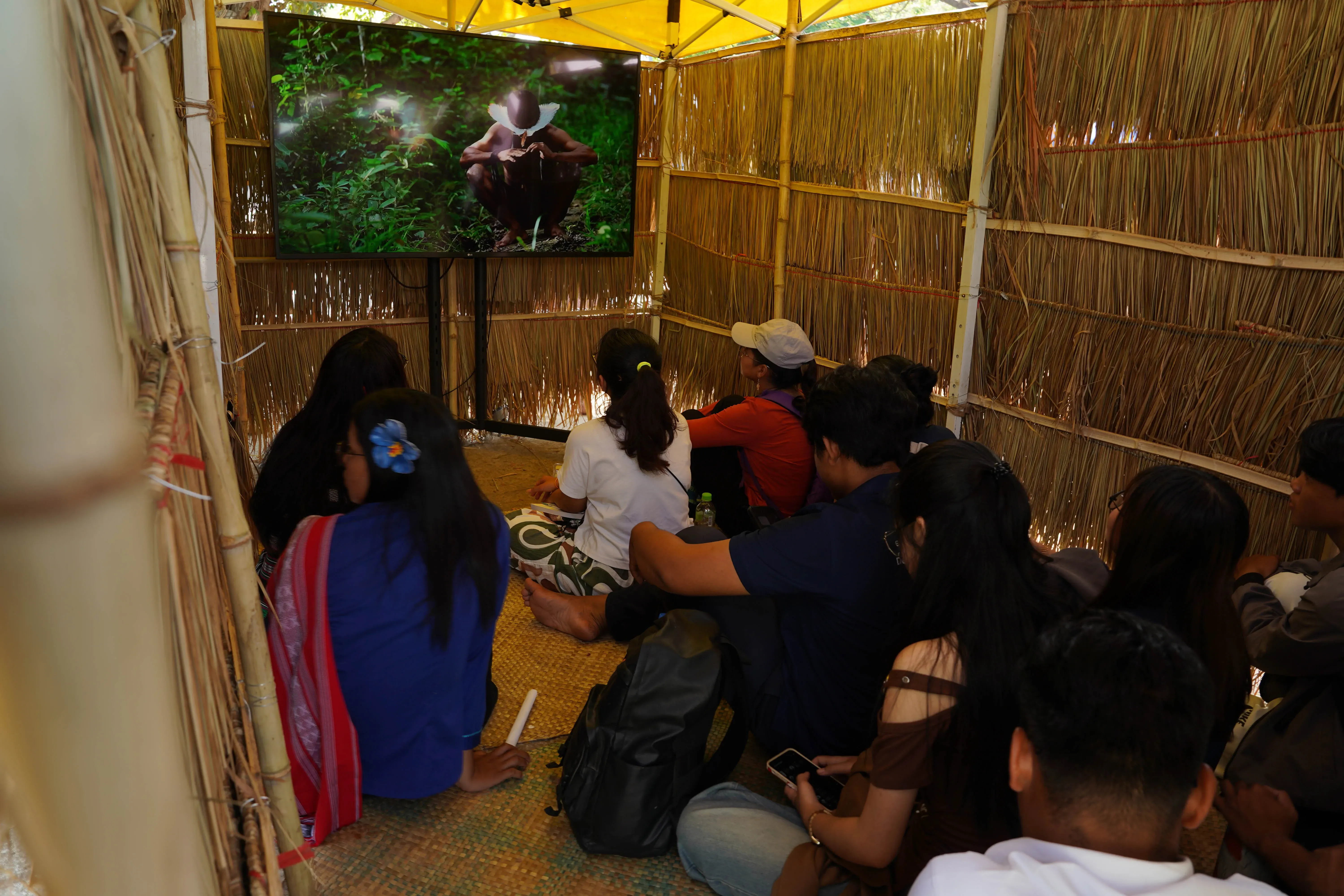
And then there was Payuun, a documentary about a Thai amateur conservationist who monitors a dugong, a marine mammal. The film follows the conservationist who works alongside scientists at Phuket Marine Biological Centre to track the mammals with his drone and restore their disappearing seagrass habitat.
I was informed that the moment the audience heard Thai language in the room, some of them walked out. It's disappointing to see that a geopolitical conflict seems to shape what people believe, and at the same time it shows the importance of open spaces for critical conversations and dialogue.
And yet, the dugongs don't know any of this. As Jeronimo noted, the same animals disappearing from Phuket are now resurfacing in Kep and Kampot on the Cambodian side. Nature knows no borders. Neither, ultimately, does a good story.
Everything that stayed behind
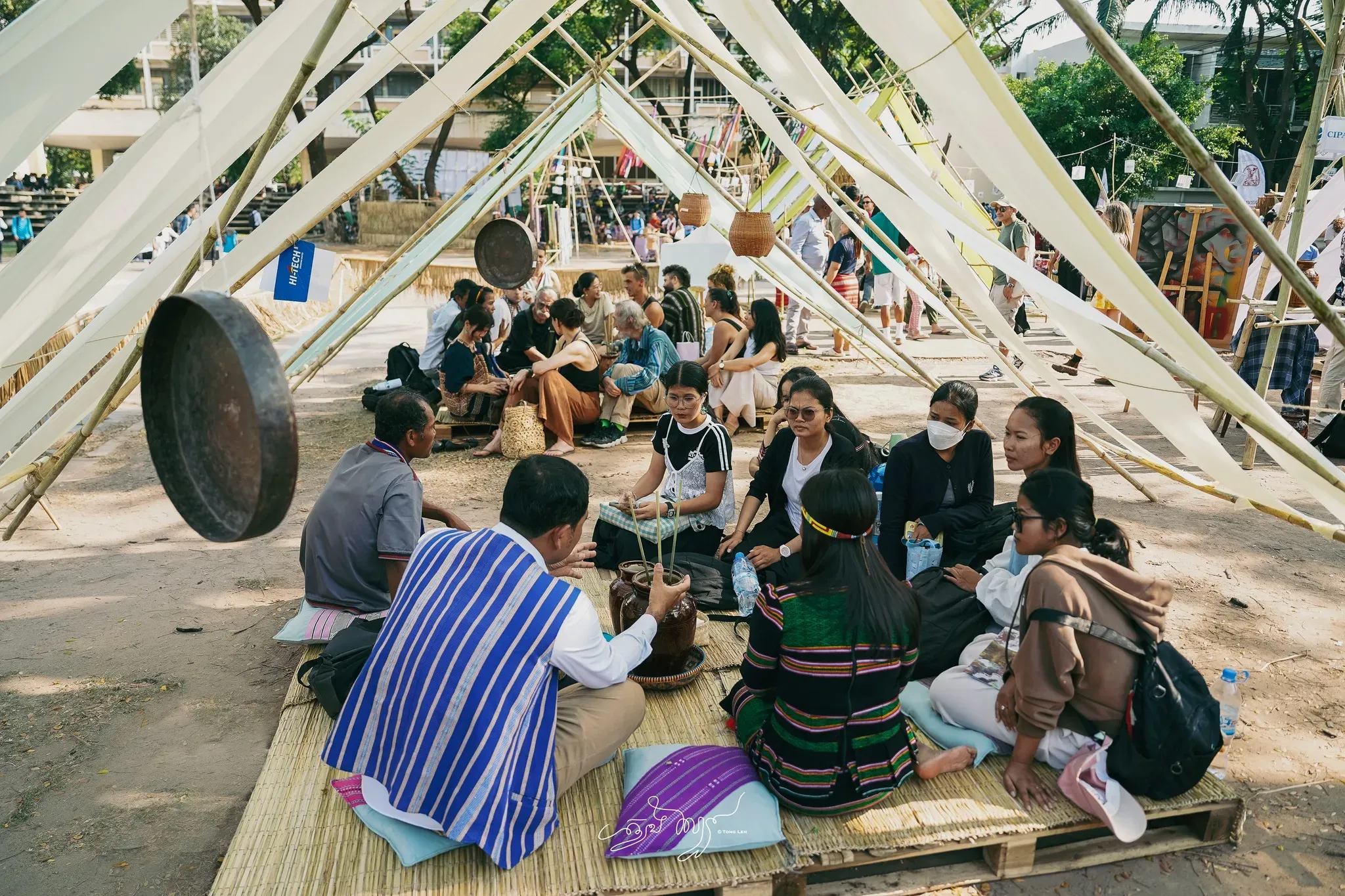
Rocham noted that there were many challenges, but seeing everything come together, the stories, the performances, the discussions, and the presence of Indigenous communities, made it deeply meaningful. “I learned a lot about leadership, how to listen to different voices, how to coordinate with diverse groups, and how to ensure that community perspectives are at the center. It strengthened my understanding of responsibility, collaboration, and the importance of representing our people with care and respect,” she said.
What stayed with me most, in the end, were the messages on paper leaves.
Attendees were invited to write their reflections on cards cut into the shapes of leaves and fish and hang them from a tree on a small island within the festival grounds. The cards came back in Khmer (the official language of Cambodia) and in various Indigenous languages. One visitor wrote a structured pledge — protect the forest, love the forest, preserve ancestral land, support each other. Another wrote: "Water is life. If we destroy the forest, we destroy ourselves."
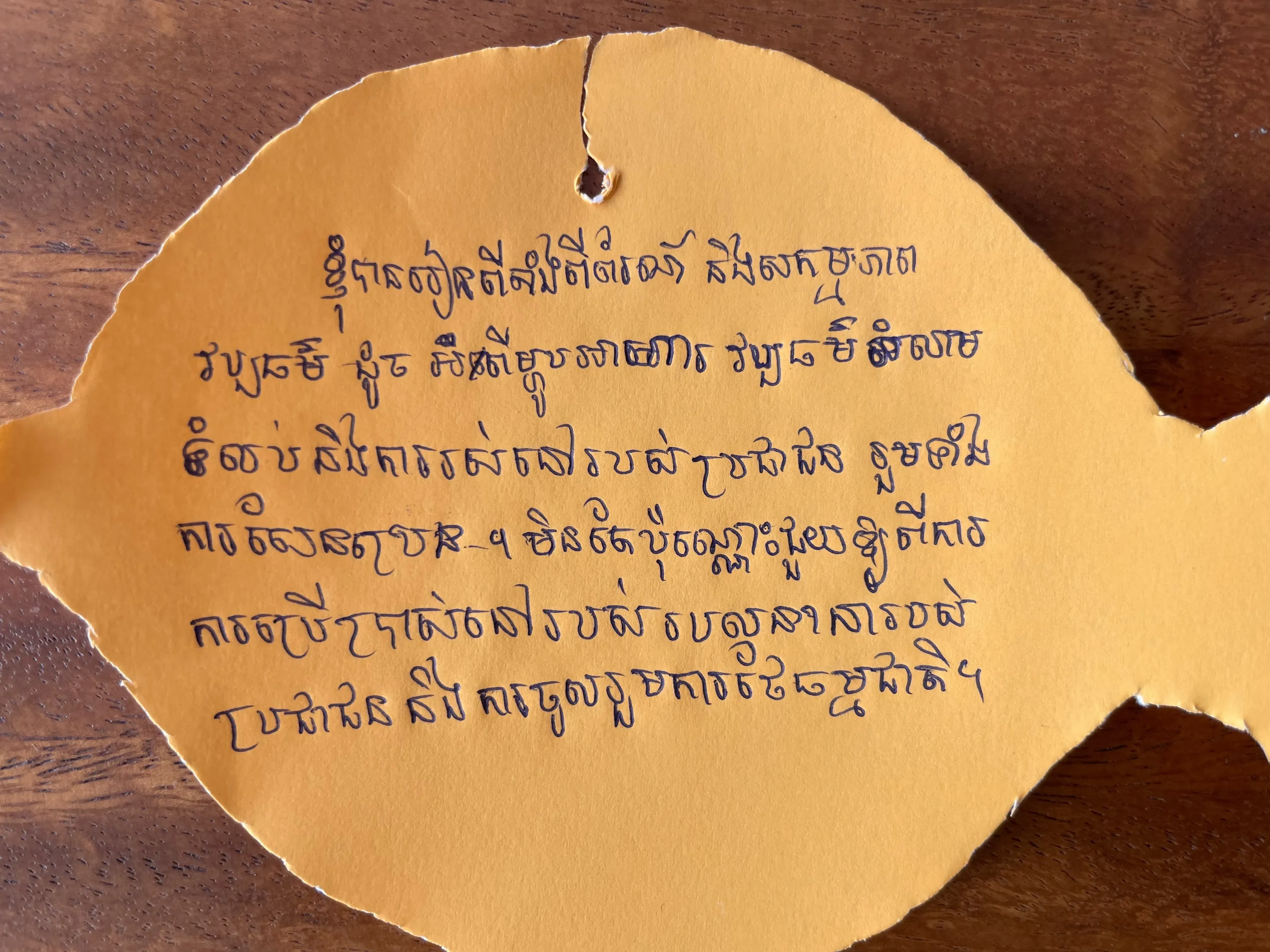
Reading those messages made my heart full. They affirmed to me that people need a platform like this — where the issues are brought directly to them, where they can face it, see it, hear it, and feel it. That has always been my vision with this event: to let attendees immerse themselves in the power of the story through their senses, not just their screens.
The day after the festival, a post by digital partner Sochenda Aok of ZeroW Cambodia received over 714,000 views. The video showcases some highlights and behind the scenes at the festival.
For Rochom the festival struck a chord and became a part of her personal journey.
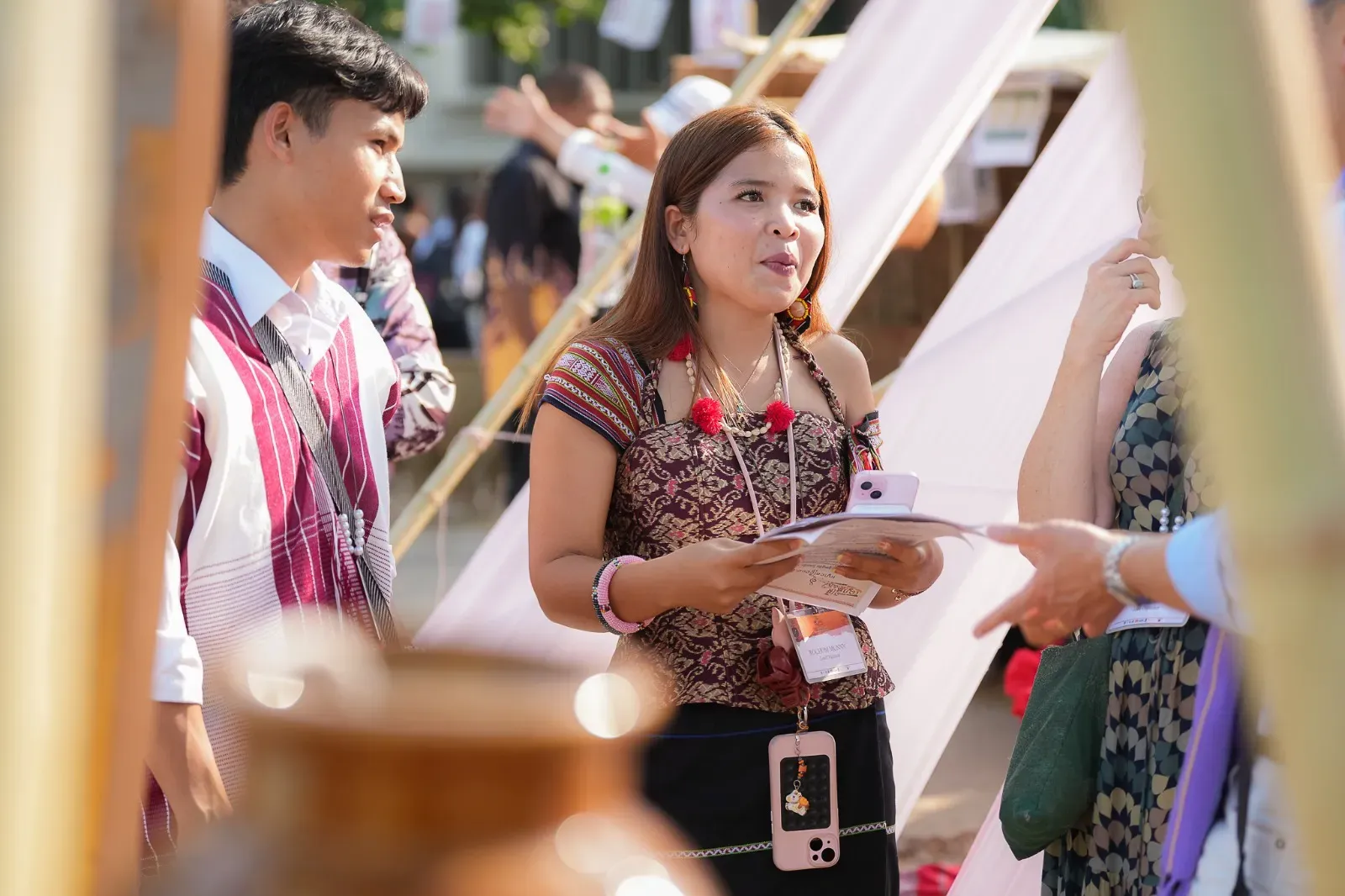
“For the Indigenous communities who joined, I hope they felt a strong sense of pride and belonging. I hope they saw that their knowledge and culture are valuable and recognized, not only within our communities, but also by a wider audience. I also hope they took away new connections, inspiration, and confidence to continue protecting their rights, their lands, and their identity,” Rochom said.
I may not have been in the room, but the room was full.