Pulitzer Center Update September 5, 2025
Illinois Students Connect Issues and Systems by Examining Cervical Cancer in India
Country:

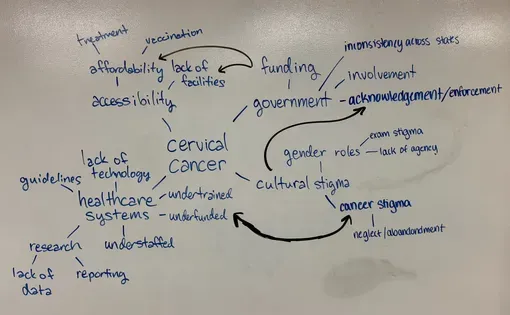
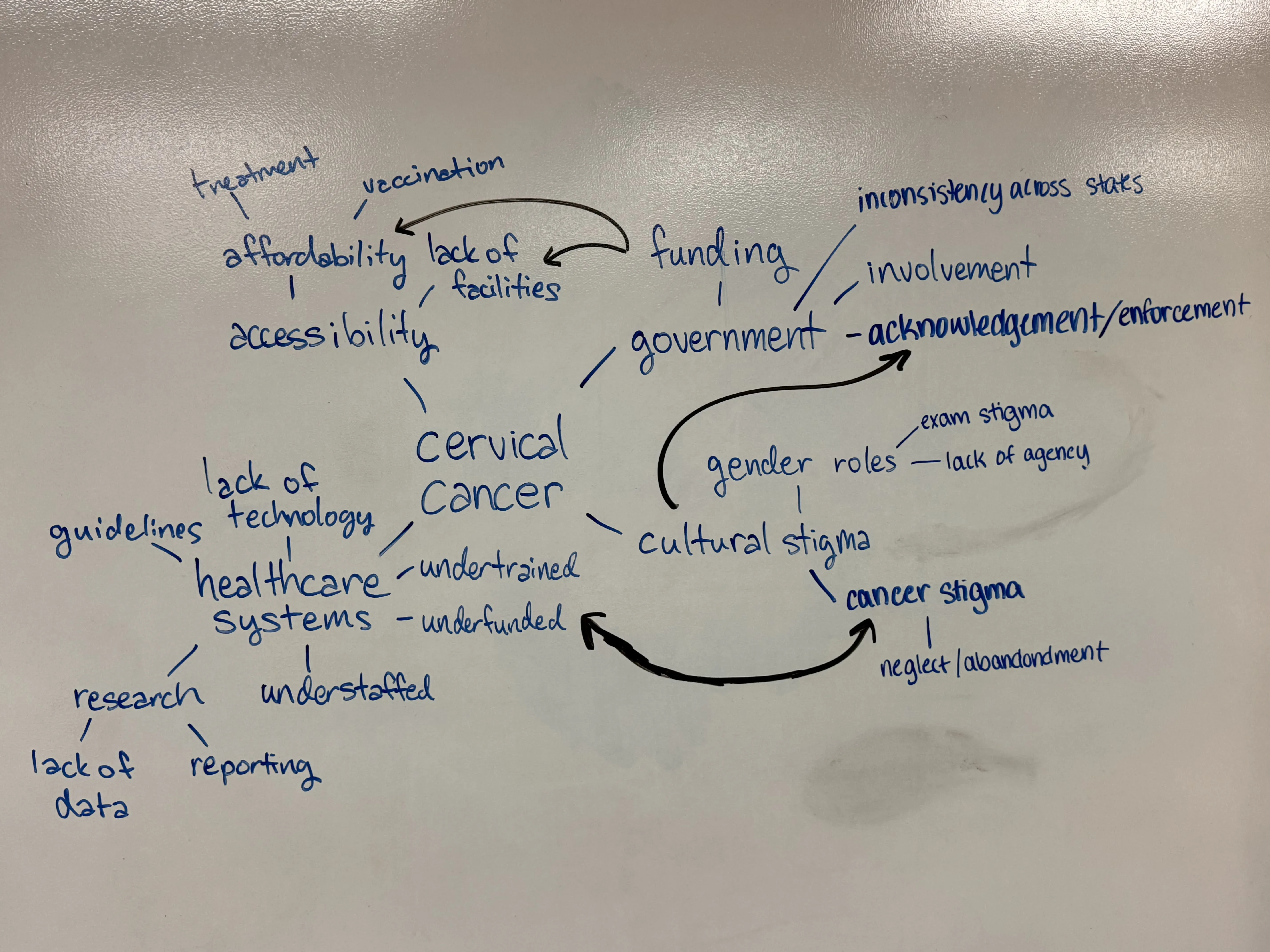
Students learn about cervical cancer in India as a problem and a system with many causal factors, including those associated with specific cultural and geographic contexts.
Seth Brady is a social studies teacher at Naperville Central High School in Naperville, IL. Brady created the lesson plan “Cervical Cancer in India Is Not a Problem, It’s a System” as part of the fall 2024 Pulitzer Center Teacher Fellowship program "Making Local Connections to Global Health Stories.” Click here to view his full lesson.
At the conclusion of the Fellowship, Brady shared the following reflections on his experience developing and teaching the lesson.
Tell us about you, your students, and your community.
One of the courses I teach is called Illinois, Global Scholar, Capstone. This course is for juniors and seniors. Each student must develop a question related to a global issue that is actionable, conduct comprehensive research on the issue, create an artifact to effect change, seek input from experts, and then deploy the artifact. A crucial aspect of conducting this research is understanding problems as systems. This means that they must understand the array of factors that contribute to a particular issue. For this reason, the article provided an outstanding example of a problem that has manufacturers nested in a complex system.
Tell us about your lesson.
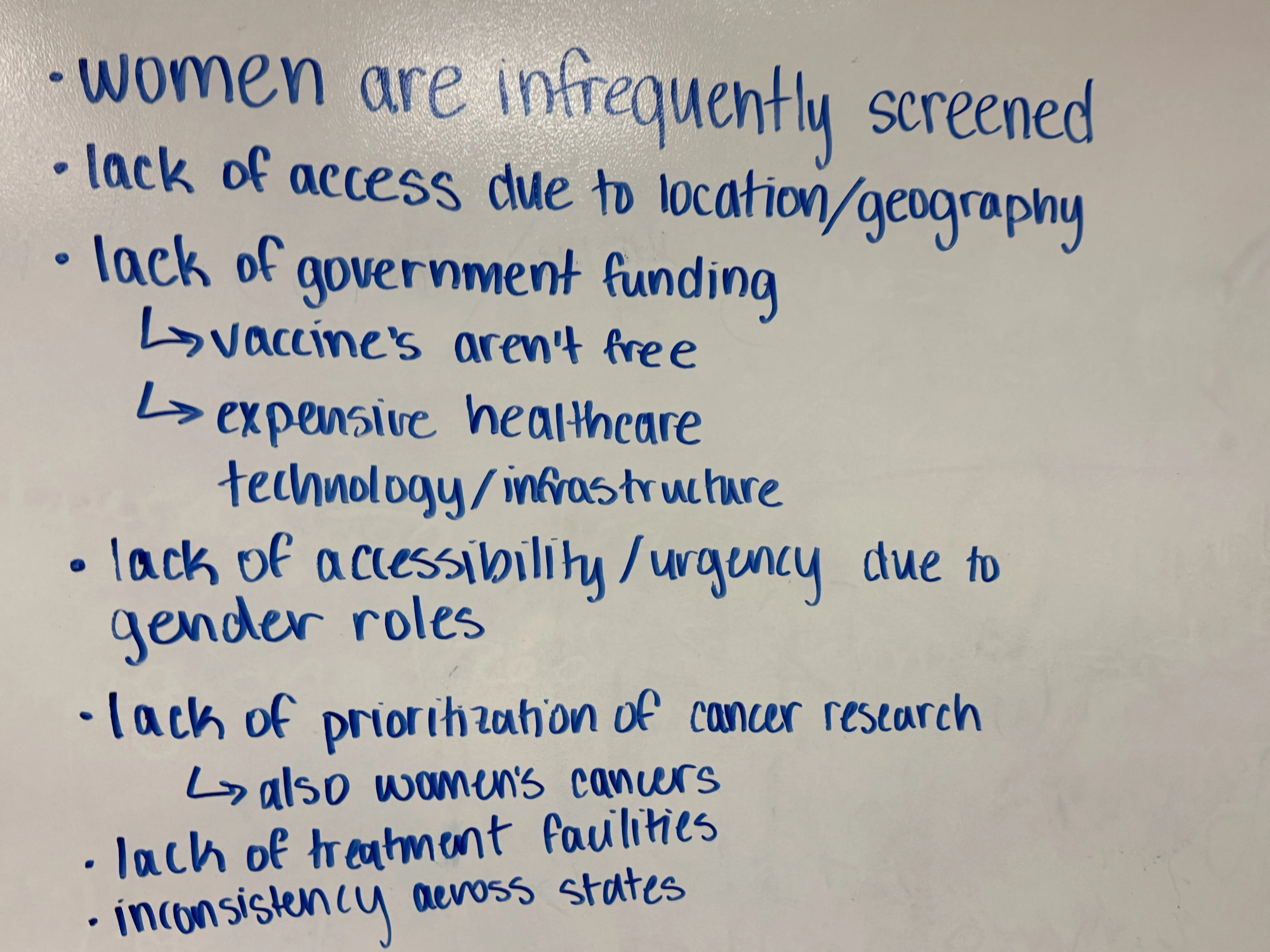
I chose this article to help students understand in a very short period of time the complexity of a global health issue, and how that issue could be profoundly different based on context. The focus of this particular lesson was cervical cancer, and it has dozens of factors within its context: India. The cervical cancer is essentially preventable. Vaccine access, significant gender bias, lack of healthcare infrastructure, failed political will, and a myriad of other factors contribute to a net failure in the world‘s highest rate of cervical cancer. Students assume that the reason has to do only with factors such as poverty, but that is not the case as India does not lack the resources, but rather the attention and desire to address the issue. This was extremely valuable to my students because it helped them see not only how complex and layered a problem can be, but how this complexity makes the problem persist.
Tell us about what your students learned while engaging with the lesson
As stated, students learn not only about cervical cancer but also about the complexity of the context in which cervical cancer exists. Yadavar’s reporting explores how [despite globally average rates of cervical and breast cancer,] more girls and women in India suffer with and die from preventable cancers largely because of a system rooted in patriarchy, and an unwillingness to prioritize women’s health issues.
One student said, “I think it’s a really interesting problem because lots of the issues are embedded in pre-existing systems. The government is male-dominated, and it’s already in the existing system that you’ll have to change and integrate things into, and there’s also the cultural stuff like women have a fear of abandonment, which is a much harder thing to tackle because it’s built into culture… It’s not just an outward issue that you can fix. “
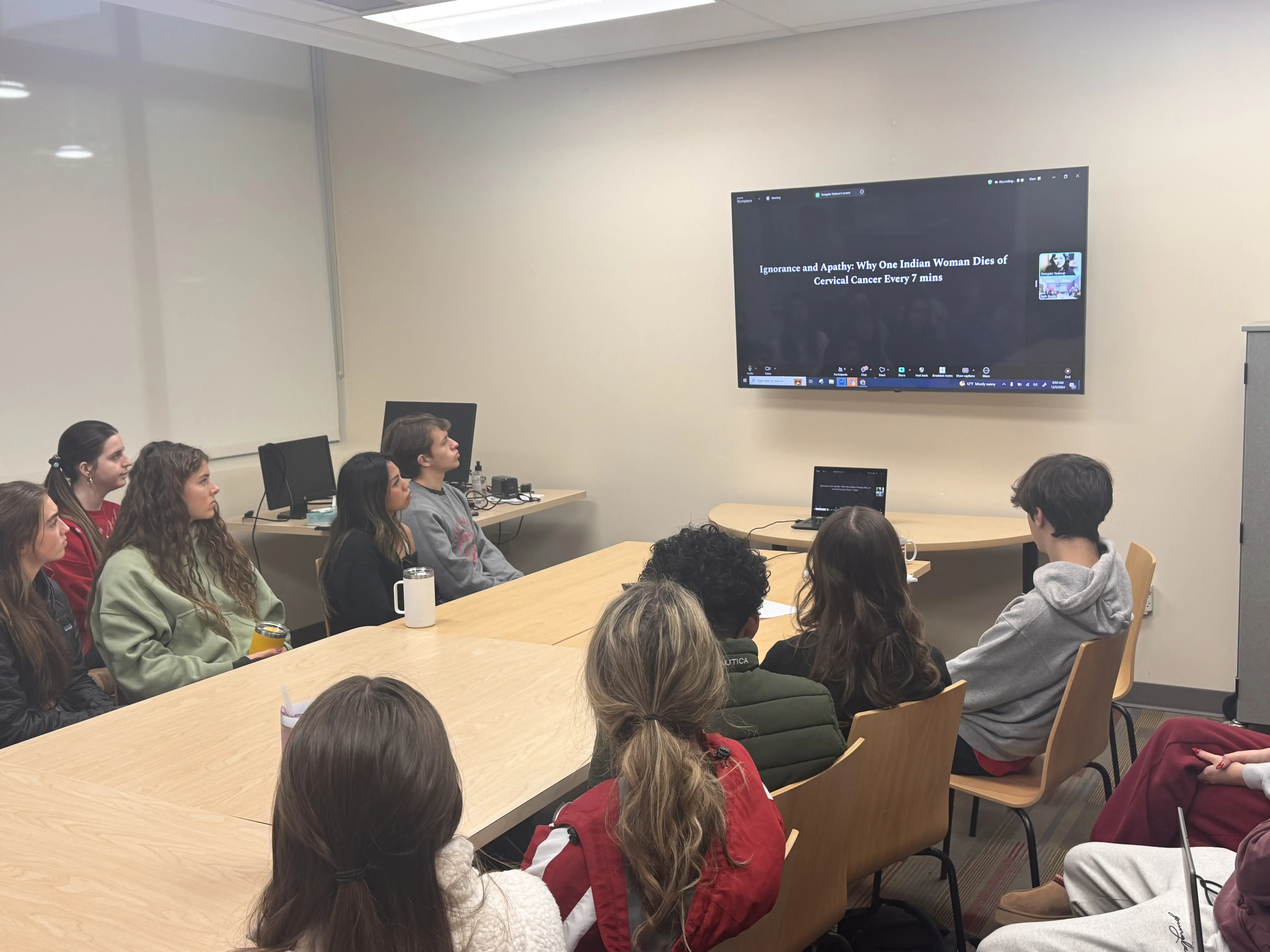
Following up this lesson with an opportunity to speak and interact with the author added a layer of knowledge and understanding as the journalist described how difficult it was even to get basic facts on cervical cancer, get interviews in hospitals, or even find someone who was suffering from cervical cancer. There is widespread social denial and stigma against not just screening, but the cancer itself.
Tell us about what you learned by creating and teaching this lesson.
One of the most important things I’ve learned is that students had virtually no awareness of what cervical cancer was, let alone that it was caused by HPV. Despite the wide availability of the vaccine in the United States, it seemed highly unlikely that students themselves had been vaccinated or knew of the dangers of HPV or cervical cancer.
To their credit, students did understand and naturally gravitate towards understanding problems and systems, and I’m guessing this led to insights into the issues they themselves were wrestling with in class, with various global issues. That said, I suspect in the beginning, if I had asked them why the rates were so high, they would say very general things like poverty or lack of awareness, but these types of answers actually reveal biases towards India rather than an understanding of India as a cultural system.
I want educators to know how valuable it is to understand problems in this way, and that doing so is a skill that can be developed in a fairly short period of time. Additionally, I’d like teachers to know that even though the focus of this lesson in terms of content is cervical cancer, what it really does is develop a skill that can be used to address any global issue, as it provides a new perspective on how to understand global issues within a specific cultural context.
As part of the fall 2024 fellowship, “Making Local Connections to Global Health Stories,” 14 educators from nine states created and taught lessons to engage their over 1,500 students in making local connections to global health news stories. Click here to learn more about the fellows and their collective impact.