Pulitzer Center Update January 26, 2026
On the Front Lines of the Immigration Crackdown
Country:

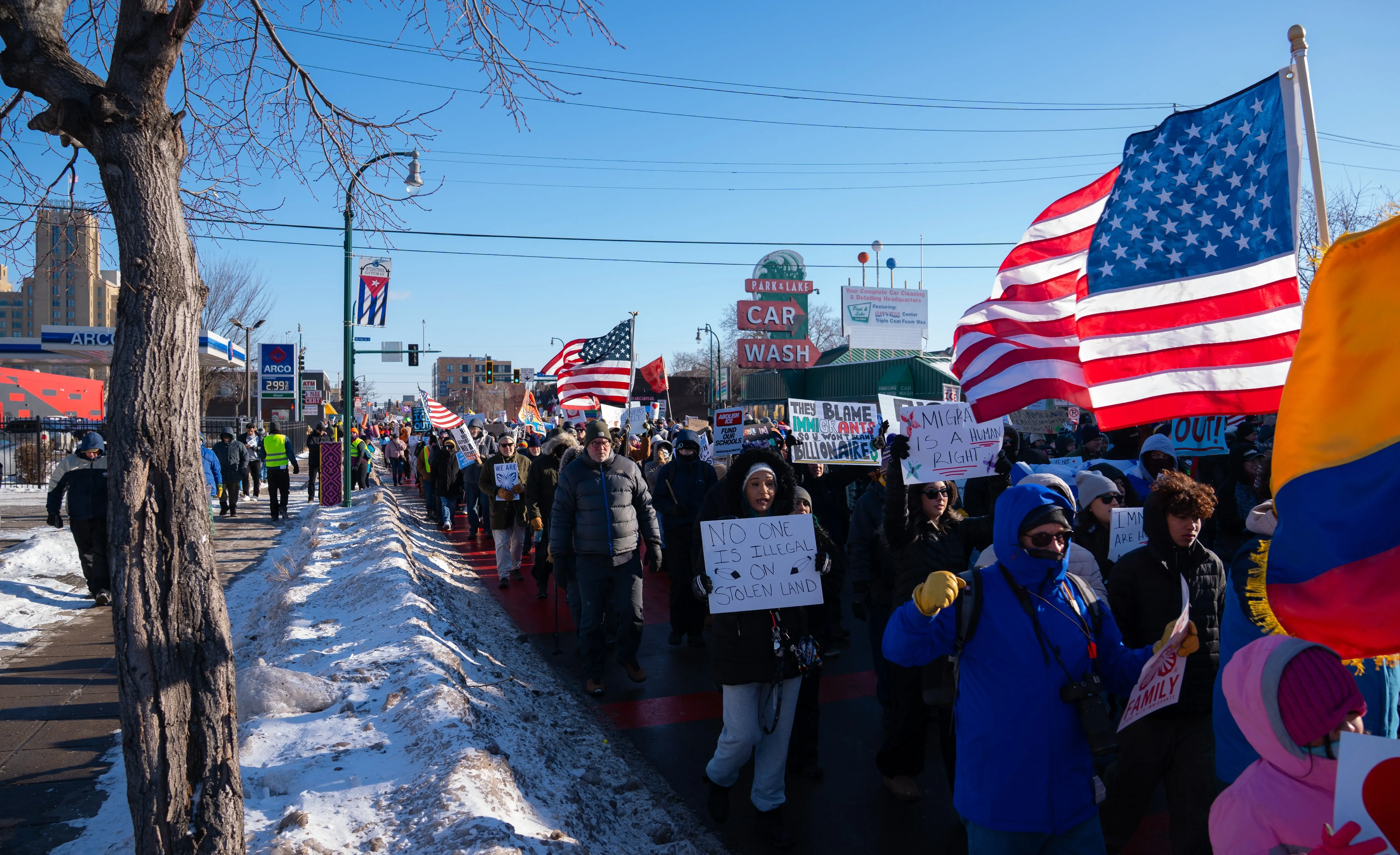
The city of Minneapolis is on edge, and outrage is growing across the USA. Yet another American citizen has been fatally shot by federal officers as the government continues to push President Trump's immigration enforcement.
On the morning of Saturday, January 24, nurse Alex Pretti, 37, was gunned down. His death came weeks after the fatal shooting of Renee Good, a 37-year-old Minneapolis mother of three who was shot dead by an immigration agent in the city.
In both cases, videos of the shootings have raised questions about federal officers' conduct and the government's handling of the narratives surrounding the killings.
Protesters and other critics across the U.S. are calling on Trump to pull Immigration and Customs Enforcement (ICE) out of Minneapolis, a city that has become ground zero for the president's crackdown on illegal immigration. On Sunday, January 25, the president blamed Democrats for the chaos, and he announced the next day that his border czar, Tom Homan, is headed to Minneapolis to replace Border Patrol chief Gregory Bovino.
In an exclusive interview with The Wall Street Journal, Trump said his administration is “reviewing everything” about the Pretti shooting and indicated that he could eventually withdraw ICE agents from Minneapolis—but he did not give a time frame for this.
Mass deportations of undocumented immigrants was a top campaign promise by the president, who vowed to focus on criminals in the United States illegally.
Related Reporting Supported by Pulitzer Center
The Pulitzer Center has long supported reporting that covers different angles of the immigration crisis in the U.S. Grantee photojournalists Tim Evans and Richard Tsong-Taatarii, both based in Minneapolis, are currently covering the immigration fallout in the city.
- For the Arizona Republic, grantee Daniel Gonzalez led reporting on reverse migration, in which Trump's immigration policies have led to many immigrants returning to Latin America, instead of migrating to the United States. "Travelers passing through these communities are heading south—dispirited, frustrated, and tired," according to the Pulitzer Center-supported project "Volviendo a Casa”: Migrants Returning Home.
- Grantee Adam Mahoney's reporting project for Capital B, The Return to Nowhere, explores how U.S. deportation policies are reshaping lives in the United States and Ghana. "Deportees—many long settled in the United States—return to a country they barely know, confronting stigma, displacement, and fractured families," Mahoney writes.
- Grantees Sophie Carson and Jovanny Hernandez's project, Life After Deportation in El Salvador, follows Yessenia Ruano, a mother and Milwaukee teacher's aide who returned home with her family after an unsuccessful campaign to stay in the United States.
- In the project The AI-Powered Eyes of Texas, AI Accountability Fellow Francesca D'Annunzio examines how technology has affected border enforcement in the Lone Star State. "Under Governor Greg Abbott's multi-billion-dollar border security bonanza, Operation Lone Star, the international boundary of the Rio Grande no longer holds back law enforcement efforts. The digital border reaches across Texas and beyond," D'Annunzio writes.
There is a lot more Pulitzer Center-supported reporting on immigration, not only in the U.S., but abroad, too. See "Migration and Refugees" coverage by clicking here.