Pulitzer Center Update April 28, 2026
Celebrating Journalism, First Amendment in the 'Birthplace' of the Pulitzer Center
Country:

Project
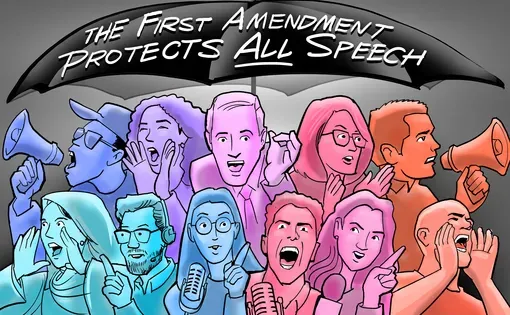
The Free Speech Files
In this project, student reporters and young journalists explore First Amendment disputes in...

Event in St. Louis explores the mounting pressure on freedom of expression
Audio recording of the event courtesy of Jim Heuer/St. Louis Public Radio
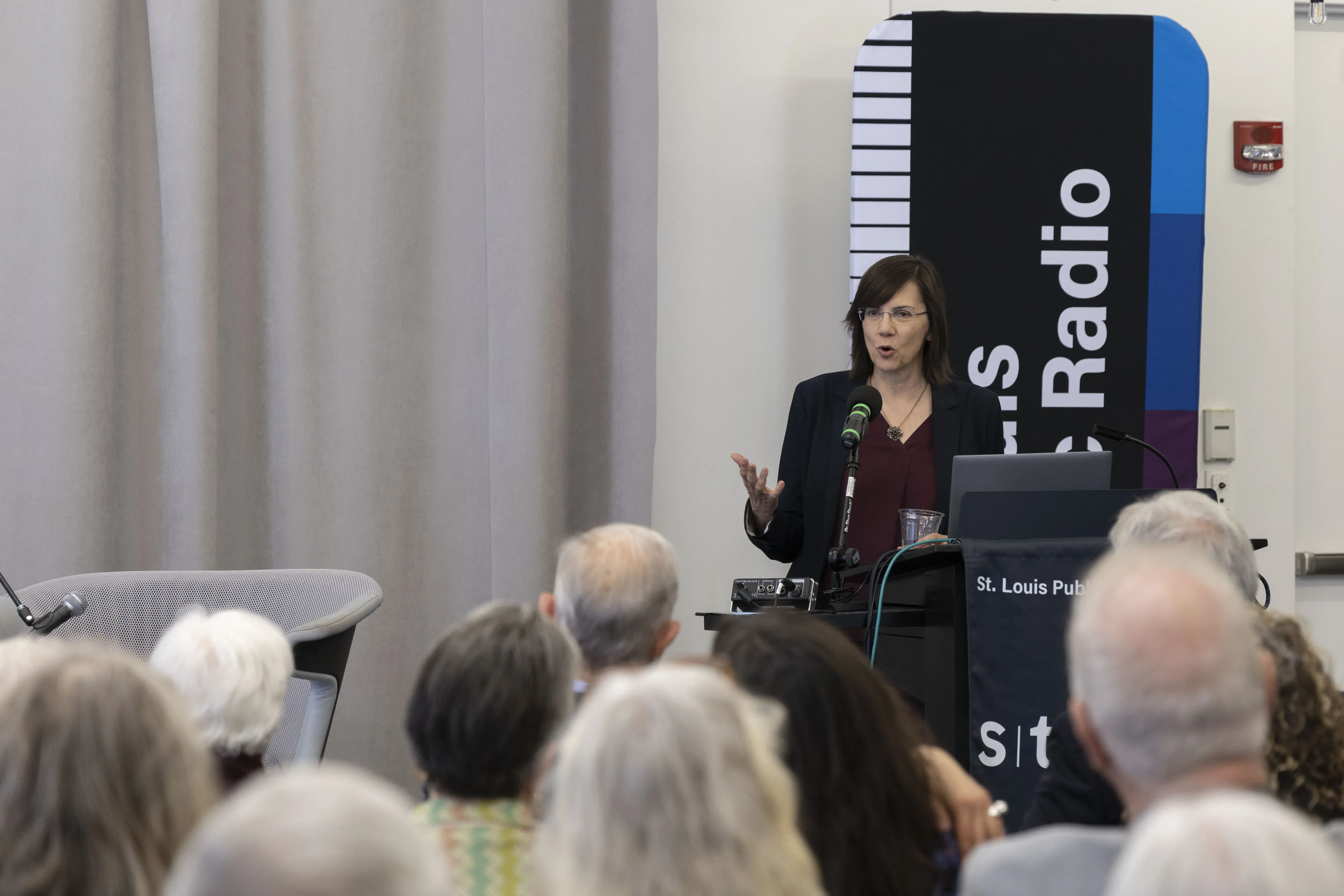
The Pulitzer Center kicked off our 20th anniversary event series in St. Louis, which CEO Lisa Gibbs called “the home and birthplace of the Pulitzer Center,” with an urgent conversation: the state of the First Amendment, and the vital role of journalism in strengthening it.
The event, held on April 22, 2026, at St. Louis Public Radio, brought together journalists, students, and First Amendment watchdogs on both sides of the political spectrum to explore mounting pressures on free expression in the United States. It also offered a clear demonstration of the Pulitzer Center’s approach: supporting rigorous reporting, and extending its impact through dialogue, education, and public engagement.
'The Free Speech Files'
The discussion grew out of a recent Gateway Journalism Review project on threats to free speech across the Midwest. Edited by William Freivogel, with support from the Pulitzer Center, The Free Speech Files captures a rapidly shifting landscape, where questions of free expression are playing out in classrooms, courtrooms, and communities across the region.
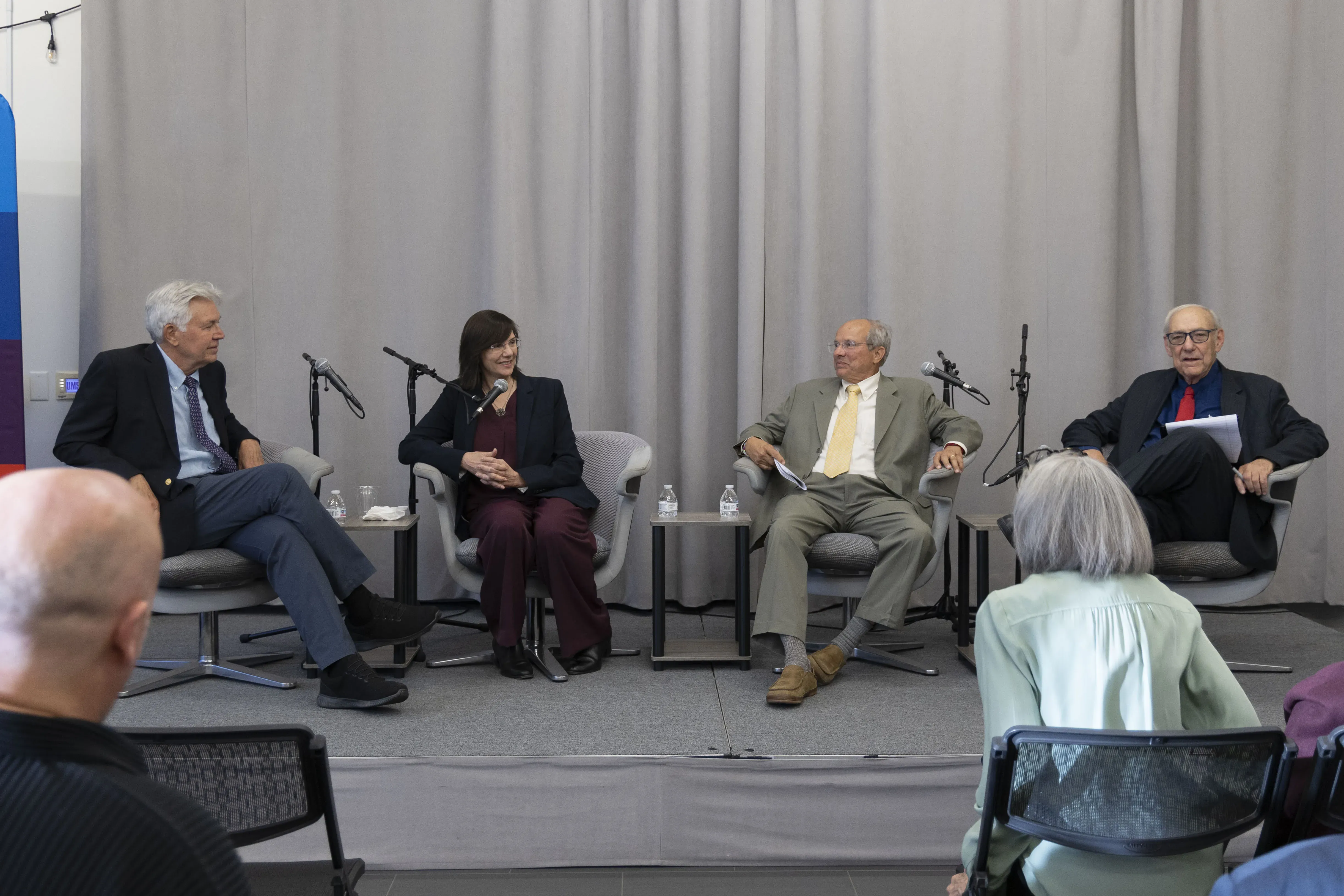
Freivogel led a discussion about the reporting, joined by former Pulitzer Center Reporting Fellows Kallie Cox and Brian Munoz, and Southern Illinois University-Carbondale student Carly Gist. Their work took them into immigration enforcement, campus speech, protest rights, and book bans—all raising a shared question about who gets to speak and who decides.
Related: The First Amendment Is at Risk, Experts Say at Pulitzer Center Forum
Sean Stevens, of the Foundation for Individual Rights and Expression (FIRE), shared data that showed rising levels of campus censorship and self-censorship, along with increasing pressure from government actors. Stevens noted that most colleges receive failing grades in FIRE’s free-speech rankings, with even the highest-ranked schools falling short.
Washington University in St. Louis legal scholar Gregory Magarian placed these developments in a longer historical context. While debates over campus speech have dominated recent years, Magarian noted, the most enduring threat to free expression remains government efforts to suppress dissent.
Why this work matters to us
To close the night, Gibbs and Pulitzer Center Founder Jon Sawyer joined Freivogel to talk about how the project and the event connect back to what the Pulitzer Center is trying to do.
From its founding, Sawyer noted, the Center has been driven by a recognition that journalism must do more than inform. It must surface diverse perspectives, deepen public understanding, and create space for meaningful debate.
Sawyer recalled reporting in the Middle East before the Iraq War, where he repeatedly heard warnings that an invasion would be a disaster, even as a broad consensus in the United States moved in the opposite direction. That disconnect shaped his belief that journalism must do more to bring forward a wider range of perspectives.
Related: 20 years of impact at the Pulitzer Center
“The lesson that I drew from that was that we, as journalists, needed to be a whole lot more proactive in pushing debate, and making sure that there were multiple points of view,” Sawyer said.
That philosophy has guided the Center’s growth over two decades, supporting thousands of reporting projects while building lasting partnerships with educators, universities, and communities.
Protecting free expression requires sustained investment in journalism and in the public conversations that bring it to life.
Gibbs emphasized that this work is even more critical today, as audiences navigate an increasingly fragmented information environment shaped by algorithm-driven platforms. In that context, a growing challenge is keeping pace with rapidly shifting media consumption habits to ensure vital stories are seen, understood, and engaged with.
“How are we making sure that the amazing journalism that is out there and that we support actually gets to the audiences that it needs to reach?” Gibbs said. “For me, and I know for you too, that has really become a very existential question.”
As the Pulitzer Center enters its third decade, the conversation in St. Louis underscored the central truth that protecting free expression requires sustained investment in journalism and in the public conversations that bring it to life. That work continues.