Pulitzer Center Update June 22, 2026
Brazilian Young People Rethink Socio-Environmental Issues Affecting Their Communities
Country:


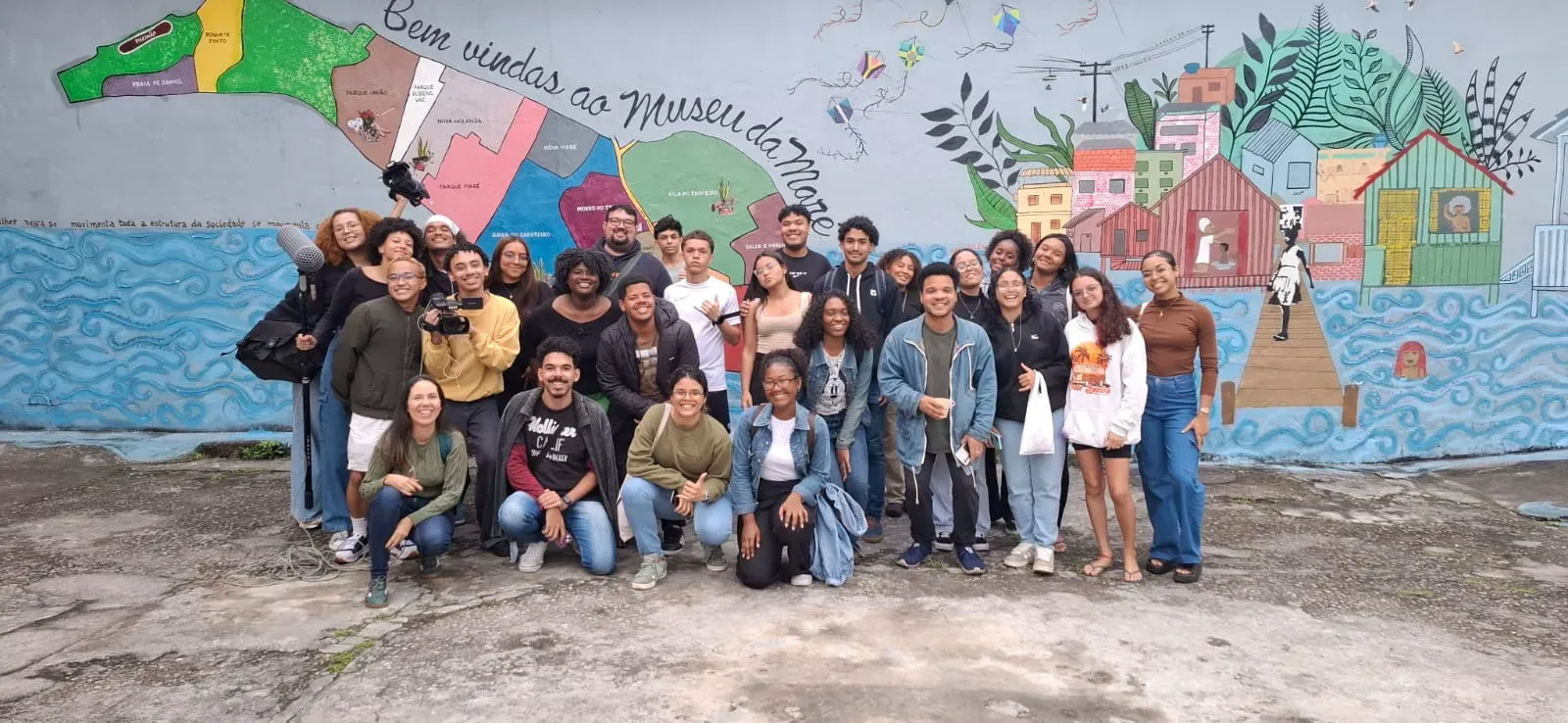
Projects supported by the Pulitzer Center’s Impact Seed Fund foster dialogue between journalism, academia, and community experiences, encouraging the transformation of knowledge into a tool for social participation.
Connected through championing local knowledge, two projects supported by the 2025 Impact Seed Fund encouraged residents of Brazilian communities to understand, name, and engage with socio-environmental issues affecting their territories. Both initiatives invested in dialogue between journalism, academia, and community experiences, promoting the transformation of knowledge into a tool for social participation and an opportunity to bring about actionable change.
One of the projects mobilized young people to recognize and narrate environmental racism through their own daily experiences in the Maré complex of favelas (impoverished neighborhoods) in Rio de Janeiro. The other brought together universities and traditional communities to discuss coastal and marine sociobiodiversity across four Brazilian states: Rio de Janeiro, Espírito Santo, Amapá, and Maranhão. These projects culminated in photographic exhibitions portraying these realities.
An initiative of the Pulitzer Center’s education program in Latin America, the Impact Seed Fund provides microgrants to support innovative educational projects aimed at broadening perspectives and debates on issues such as socio-environmental justice, the ocean, tropical forests, and climate change.
“We seek to inspire new perspectives and local action by sharing information and discussing important environmental issues based on reporting produced by Pulitzer Center grantees. Through critical education, these activities are seeds that can generate major transformations,” says Maria Rosa Darrigo, Pulitzer Center education program manager in Latin America.
Visibility and recognition
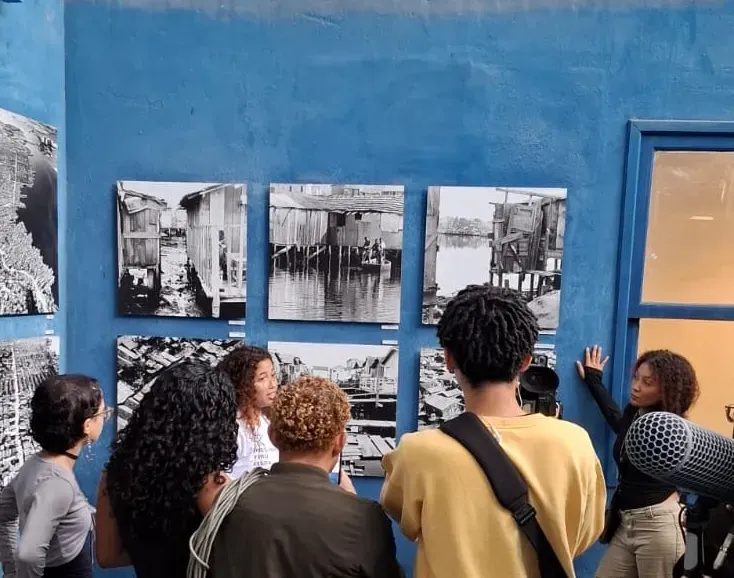
Over 16 meetings involving 25 young residents of Maré (ages 14 to 20) and 25 journalism students from Universidade Federal Fluminense (UFF), the project Maré é Mar (The Tide is the Sea) sought to give visibility to local experiences and knowledge.
The activities focused on the impacts of environmental racism on everyday life in Maré, one of the largest favela complexes in Brazil, home to around 136,000 residents across 16 communities, according to the Maré census. Established in the 1940s, the territory lies along Guanabara Bay, one of Rio de Janeiro’s iconic landmarks, but it also faces major environmental challenges, including pollution, sewage disposal, and waste accumulation.
Throughout 2025, the project integrated teaching, research, and outreach activities through the participation of the UFF group Media, Networks, and Youth, in partnership with the Center for Studies and Solidarity Actions of Maré (Ceasm), mobilizing 12 researchers. Young participants took part in workshops on journalistic language, photography, scriptwriting, and voice work, in addition to discussion circles on racial literacy, media literacy, and environmental racism.
AAAAThe activities were informed by Pulitzer Center-supported stories portraying communities near maritime regions facing various forms of pressure, including environmental racism. These included: “Sumatran Coastal Village Scrambles To Save Lost Livelihood, Disappearing Land,” published by The Jakarta Post; “Half of All Coral Reefs Are Dead. A Maui ‘Super Reef’ Offers Hope,” published by Honolulu Civil Beat; and “European Fishing Boats Hurt West Africa’s Future,” published by Follow the Money.
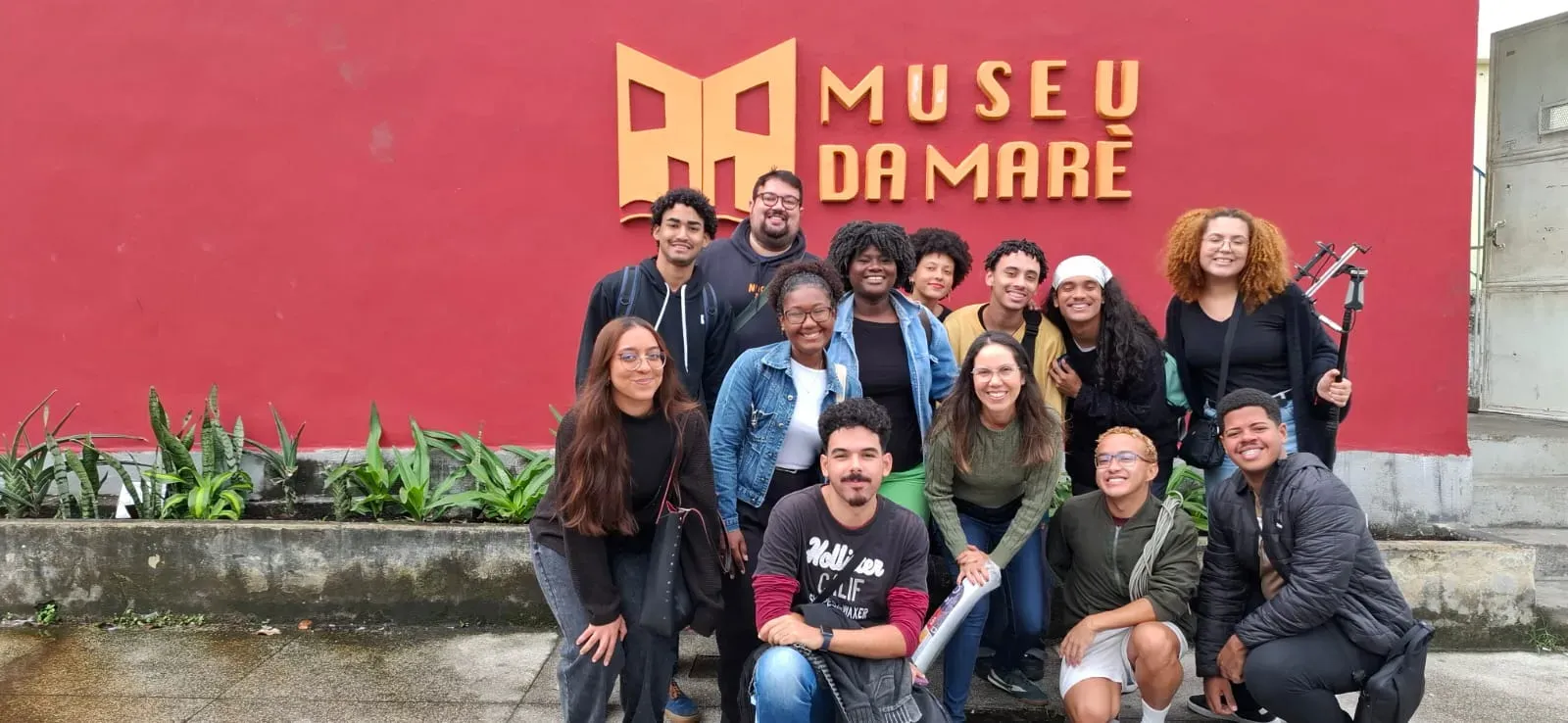
As a result of the project, the photography exhibition Maré é Mar, created by local residents during field visits, was displayed at the Gaia Art Gallery of the Institute of Art and Social Communication in November 2025, and later at the Museum of Maré.
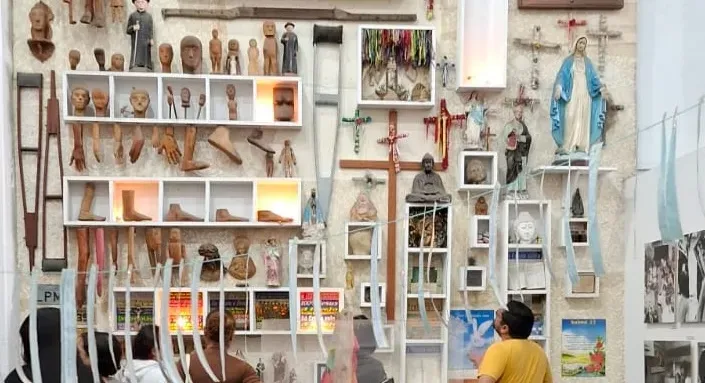
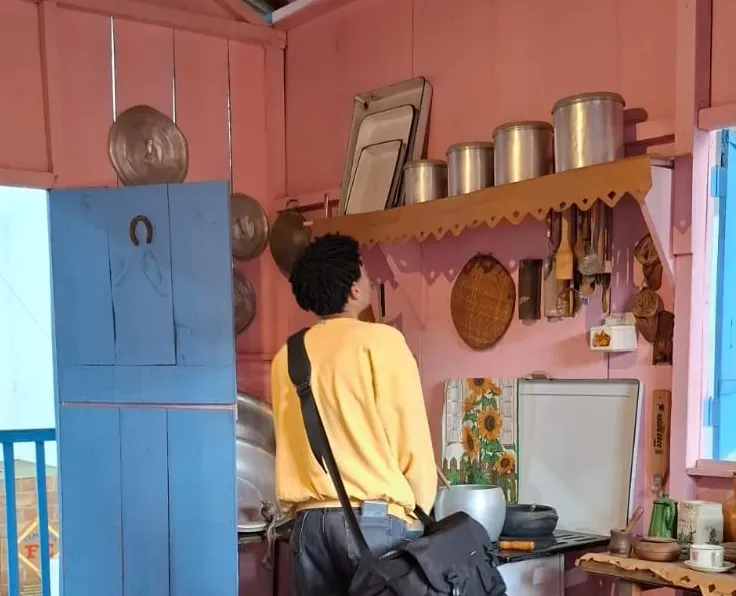
The first favela museum in Latin America, the institution houses objects related to the lives and histories of residents and the territory, divided into 12 sections or “times” (such as celebration and everyday life). Installed in the temporary exhibitions gallery, the Maré é Mar exhibit centered local communities’ experiences on environmental justice, engaging museum visitors to reflect on their own realities. The exhibition will now be part of the museum's permanent collection, recognizing the power of this journalism-inspired exhibition to spark critical conversations.
During the opening, the young artists, their families, and visitors retraced the exhibition’s narrative journey, which speaks both about neglect and resistance to environmental racism, and about the beauty that exists within the territory, captured through the residents’ own perspectives.
The project also produced a documentary and four podcast episodes, available via streaming here, in addition to the booklet “Environmental Racism.”
“Black and peripheral communities suffer more from the lack of sanitation, waste collection, pollution, and government neglect. In Maré, this is visible because we do not have the same infrastructure as other neighborhoods, which harms residents’ health. After participating in the Maré é Mar project, I started seeing my reality differently and understanding environmental racism. I now have more awareness, a stronger voice, and a greater desire to fight for improvements in our community,” said 17-year-old student Lara Gomes, who participated in the activities.
Neighborhoods in the region face deficits in sewage systems, green areas, and waste collection, among other forms of precarity. In one of the podcast episodes, the young participants discussed how climate change affects different areas unequally; for example, the impacts of heavy rains on businesses and workers in Morro do Timbau and Vila do João, who suffer more intensely due to environmental racism.
Born in the complex, Carla Baiense Felix, a professor in UFF’s Department of Social Communication and the coordinator of the project, highlights that although environmental racism is part of residents’ everyday lives, many people know little about the concept itself.
“When we introduced the concept during a discussion circle, it was interesting. At first, the young people found it unfamiliar. But later, they understood the concept and began recognizing environmental racism. It was something already present in their daily lives—something they perceived but did not name. From that moment on, they began identifying it more clearly,” says Baiense.
To facilitate dialogue and include the perspectives of the youth throughout the entire process, the project coordination also relied on the contribution of a local mobilizer. Raissa Araújo, a 22-year-old Communication student, served as a bridge between the youth from Maré and the UFF students.
Araújo mentioned that using journalism helps young people connect with complex concepts like environmental racism. She mentioned that stories including "Coastal Communities on the Frontline of the Climate Crisis — Hondeklip Bay, Northern Cape" helped students better understand all the challenges in relation to their realities.
At the same time stories like "Hawaiian Knowledge and Western Science: A Recipe for Reef Recovery?" helped highlight examples where local and territorial knowledge is valuable in contributing to fighting environmental racism.
“The proposal always included active listening. To engage with these young people, it is necessary to use accessible language and playful approaches connected to their everyday lives. One of these methods was the workshops that resulted in the photographs featured in the exhibition. We used technology to our advantage. They were also fascinated by the podcast workshop. We worked to raise awareness and mobilize them,” Araújo added.
The struggle for marine, coastal ecosystems
Seeking to foster a participatory dialogue of knowledge between academics and traditional communities about sociobiodiversity and threats to marine and coastal ecosystems, the project Threatened Sociobiodiversities involved more than 200 people from several Brazilian states.
Through an online extension course, the project included 32 members of traditional communities, including artisanal fishers, Quilombola communities, Indigenous peoples, and riverside populations, as well as representatives from 47 institutions—including state and federal universities, federal institutes, community associations, NGOs, and public agencies.
Five classes were held during the second semester of 2025 (videos available here), incorporating into the syllabus three Pulitzer Center-supported reports: “Defending the Ancestors Against Big Oil,” published by Al Jazeera; “Hawaiian Knowledge and Western Science: A Recipe for Reef Recovery?” from Honolulu Civil Beat; and “Coastal Communities on the Frontline of the Climate Crisis,” published by Daily Maverick.
“The engagement from participants was incredible — much greater than we expected. Participation during the classes was intense. We believe the topic deeply resonated with participants, especially the importance of incorporating the knowledge of traditional communities,” summarizes Raquel Giffoni, coordinator of the initiative and a professor in the Department of Geoenvironmental Analysis at UFF’s Institute of Geosciences.
This knowledge permeated all the classes, especially the session dedicated to the masters and knowledge keepers of coastal and marine communities, in which fisher Pedro Leite Costa, representative of the Quilombola Association of Degredo (Espírito Santo), recounted the community’s struggle to have its territory officially recognized.
“The process was sent to Brasília [Brazil’s capital and seat of the federal government] in 2007, and we only received the land title in 2016. After so much struggle and two failed attempts, we had almost lost hope. Then we finally achieved recognition. The official recognition of the territory helps us greatly. Without resistance, we would not still be here,” says Costa.
The course also addressed other issues, such as the challenges and threats facing artisanal fishing and the importance of communities' participation in coastal zoning decisions.
The expansion of the oil and gas port industry was also one of the issues discussed, particularly by participants from Rio de Janeiro and Espírito Santo. “We often see the interests of large companies and even the state in certain territories. [Through the course …] It was important to see that people can organize themselves, build bridges, and create dialogue,” biologist Victor Carvalho said at the end of the classes.
The project also promoted an in-person roundtable discussion in Rio with 50 participants, focusing on threats to marine ecosystems and Indigenous peoples in the state.
A discussion circle involving fishers, shellfish gatherers, photographers, environmental journalists, professors, and students marked the opening of the photography exhibition at the Center for Citizenship and Creative Economy (Macquinho), in Niterói (Rio de Janeiro). The exhibition featured photographs submitted by participants from the four states, as well as images provided by photographers partnered with the Pulitzer Center.
Located across three regions, these states represent the diversity of Brazilian biomes: the Amazon (Amapá), the Atlantic Forest (Rio de Janeiro and Espírito Santo), and a transitional area (Maranhão) that encompasses parts of the Caatinga and Cerrado stretching toward the Amazon rainforest.
“We contacted representatives from Amapá, Maranhão, Espírito Santo, and Rio de Janeiro to send photographs, and then we selected the final images. Participation was remarkable,” recalls Giffoni, who had previously coordinated (between 2024 and 2025), under the leadership of Professor Luiz Jardim Wanderley.
Organized in partnership with the Pulitzer Center, the initiative brought to UFF students accounts of life in Amazonian communities, using cinema and documentaries as a means of connection (read more here).


