Pulitzer Center Update May 15, 2026
Behind the Story: How 2 Reporters Uncovered Deep-Sea Mining Secrets
Country:

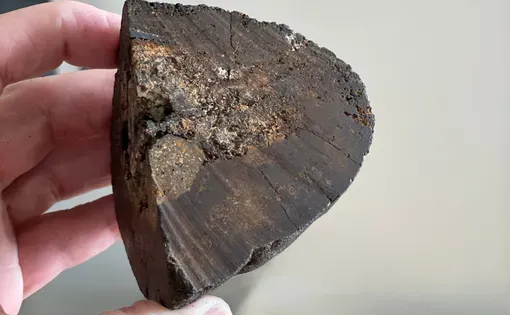
As companies and governments rush to mine the sea, geopolitical tensions rise and the ocean's future...


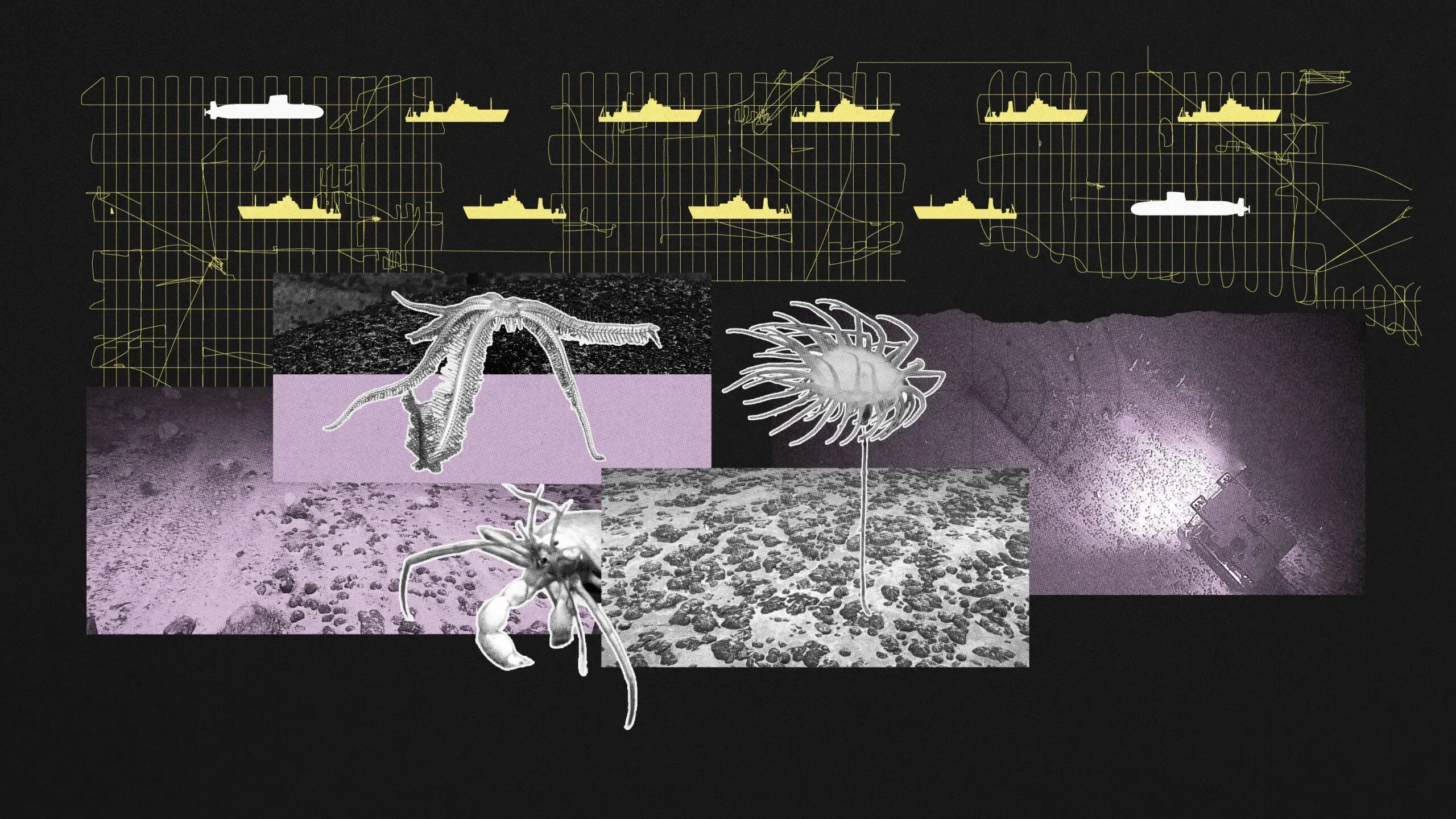
“It can feel like science fiction,” Pulitzer Center grantee Elizabeth Claire Alberts said. “The idea of sending this heavy machinery down to the very, very deep sea and extracting these minerals.”
Alberts, along with CNN Senior Reporter Kara Fox, followed the development of the nascent deep-sea mining industry and how it’s become intertwined with defense priorities in the U.S. and China.
In the past five years, Chinese vessels have spent the equivalent of 814 days in International Seabed Authority-designated deep-sea mining areas.
Leveraging a robust ship tracking methodology and interviews with military experts, Alberts and Fox detailed how Chinese vessels, intended for deep-sea mining, are also scouting strategic military sites while at sea.
“China has a very intense interest in deep-sea mining, but we actually found that they spent very little time in these areas [overall]. From all their sea time it was 6.4% of their time that they spent in deep-sea mining areas,” Alberts said.
Pulitzer Center Editorial Intern Ella Beiser spoke with Alberts about challenges of reporting about the sea floor, accountability, and the future of the deep-sea mining industry.
The following interview has been edited for length and clarity.
Ella Beiser speaks with journalist Elizabeth Alberts. Audio by Ella Beiser. Music licensed from Adobe Stock.
Ella Beiser: Introduce yourself and explain the type of journalism you do.
Elizabeth Claire Alberts: My name is Elizabeth Alberts, and I'm a senior staff writer on the Mongabay Ocean Desk. I've been there for six years now, and I've been covering a whole range of ocean issues for Mongabay, from fisheries or coral reef health and impacts of climate change. But I've gotten on the beat of deep-sea mining quite intensely.
I think my first piece was in 2020, when I began writing about the issue. A lot of my initial coverage was focused on the International Seabed Authority negotiations, but things have really heated up and really accelerated over the past year, I would say at the very least.
So, that timing coincided with when I started my Pulitzer Center Fellowship to undertake an investigation on deep-sea mining.
Beiser: What drew you to the topic of deep-sea mining?
Alberts: I consider myself someone who knows a lot about ocean issues, but I will say the first time I got a report about deep-sea mining, and it was a report released by two or three NGOs, I had never heard of this happening. This was completely new to me. So it was very surprising to learn that this was going to be happening in the near future. And I became really interested in the push for it, considering the lack of science and the lack of international regulations.
The Metals Company was a very interesting company because of the way they were putting forward, initially, this idea that they were pursuing deep-sea mining to help the environment, to fight climate change.
They were saying that we need to go down to the deep sea. We need to collect these minerals so we can build more green technologies like solar panels and car batteries and whatever else we need for the green transition. So, that was fascinating to me. And they were putting forward this argument and then NGOs were saying, actually, no, it's going to be incredibly damaging to go down there and mine.
So, of course, while I was a Fellow, this company, The Metals Company, changed their sales pitch when Trump was re-elected. So now they're pushing this national security angle.
Working with my co-writer, Kara Fox at CNN, we were looking into the geopolitics around deep-sea mining and how it's not just this rush for deep-sea minerals. But there also seem to be a lot of these military goals, geopolitical issues surrounding the industry, which is how we got into the investigation of China's deep-sea mining vessels.
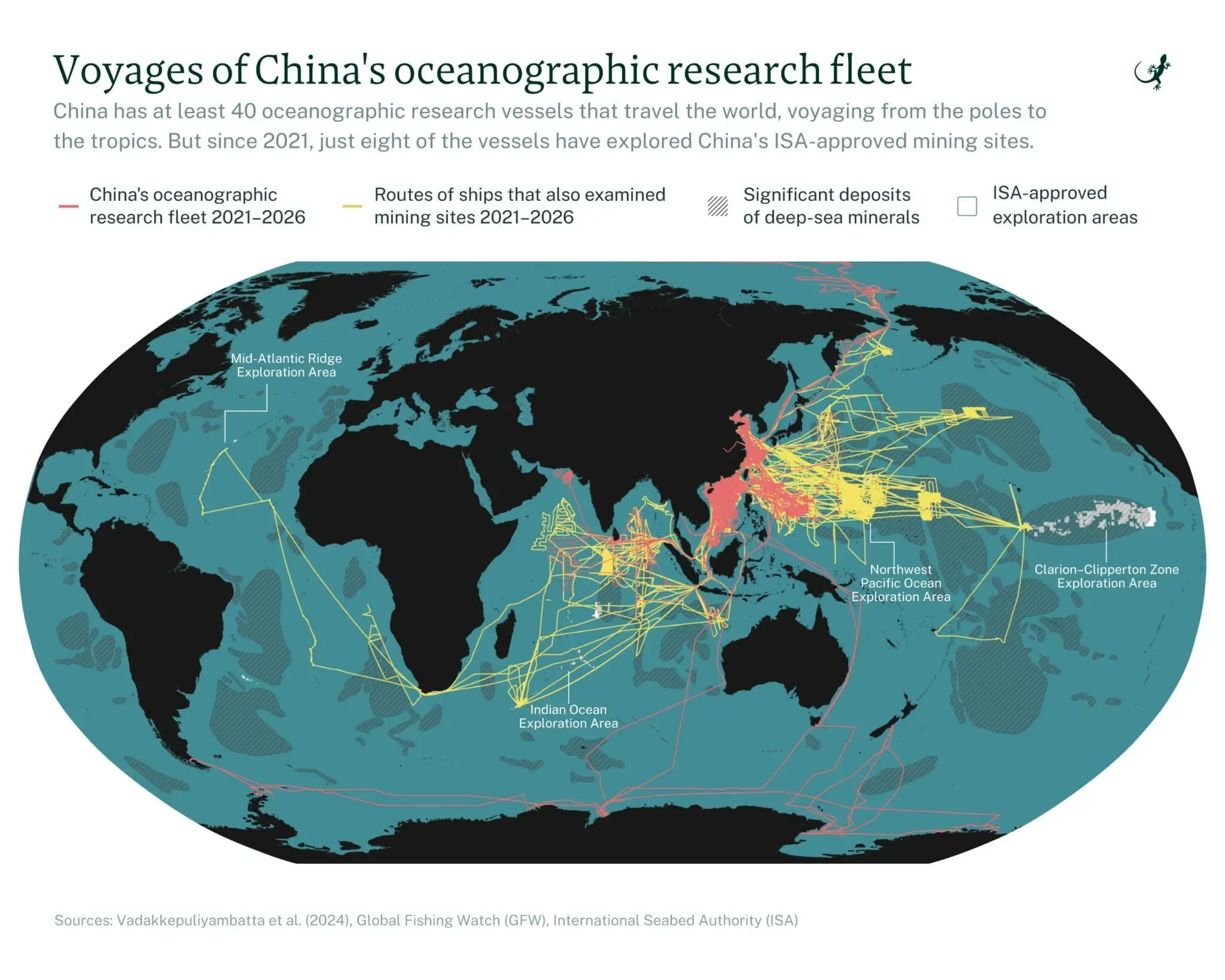
Beiser: Your most recent project (Deep-Sea Mining’s Race to the Bottom) talks about the dual-use of Chinese deep-sea mining vessels. Did you always know there was an intersection between defense and deep-sea mining missions or is that something you discovered over the course of your project?
Alberts: Kara and I didn't actually go out to investigate China's fleet initially, but as we were tracking what was happening in the deep-sea mining arena, we became really interested to see what was happening in the Cook Islands, in particular.
The Cook Islands are entertaining the idea of deep-sea mining. It has issued several exploration licenses to companies, including a couple with U.S. ties. But nothing had happened yet.
It was either just before or just after Trump took office (in 2025), China signed these [Memorandums of Understanding] with the Cook Islands, and it just seemed to suddenly come out of nowhere.
And that seemed to set off a whole series of events. Once that happened, the U.S. started to counter that by later signing their own agreements with the Cook Islands. And both countries sent in vessels to do research.
So we started to look at what was happening there. And we then were also looking at research that had been done by CSIS (Center for Strategic and International Studies) and it had tracked a lot of China's vessels, and a lot of its research focuses on how China's oceanographic vessels are dual-use. They're being used for both civilian and military purposes. They're research vessels that are not just doing research, but they're going to strategic areas.
So we started there, and we started to think, "Well, what about China's deep-sea mining vessels, or the ones that are being utilized for deep-sea mining?"
And we came up with a theory that perhaps China's vessels were also doing the same sort of thing like they would have dual uses and being used for both military and civilian purposes, and we got to work identifying the vessels that were used for deep-sea mining. We used vessel tracking, and then we talked to various experts, and did find out that, yes, they do have both things. But did we know? I mean, we had a theory, but we set out to see if it was right, and it appears that our theory was correct.
Beiser: Describe your shiptracking methodology.
Alberts: China has the largest oceanographic research fleet in the world. There's at least 40 vessels in the fleet. But we decided to look at the ones that were involved in deep-sea mining. We decided to create the metric that we look at the ones that were going to areas that were licensed to Chinese companies by the International Seabed Authority, the ISA areas. That's not to say that China isn't possibly doing deep-sea mining work in other areas outside of these zones.
For instance, I think in 2021, they did a mining test in disputed waters outside an ISA area. But information on that is really hard to find. So we stuck to what we knew, which were these International Seabed Authority areas.
We got the polygons of the ISA areas, and we started to look to see which vessels were going in. If they were just passing through or nearby, that doesn't seem like [the ships] did work. If they went in there, they loitered, they spent some time there then we thought, OK, you can say that they have done deep-sea mining work. And we decided to look at the last five years. There were a couple of vessels that had done work prior to five years. But we tried to keep things recent but also trying to look at a long period of time as well.
We looked at the tracks themselves, like if they’re going to areas that are known to be hot spots of conflict, or if they're going very close to Guam's EEZ, or to going into Micronesia near a U.S. base. And we were also spending a lot of time looking at news articles of what was happening. OK, so this vessel was spending a lot of time in the Philippine EEZ. Has anything been reported on this vessel, or Chinese vessels in general, during this time and very often? We would find that when one of these vessels were in these areas there might have been activities going on. So we made assessments that way. But we also talked to more than a dozen experts, naval and military experts, to get their thoughts on these different tracks.
We tried to find as wide of an array as we could. It wasn't just U.S.-based analysts, we talked to people from Asia and from Europe.
We focused a lot on what [the vessels] were doing when they were not doing deep-sea mining work, but we were also just getting the numbers on how much time they spent in the deep-sea mining areas. And it was still quite extensive. In the last five years, these vessels spent 814 days worth of time in these deep-sea mining exploration areas. So China has a very intense interest in deep-sea mining, but we actually found that they spent very little time in these areas [overall]. From all their sea time it was 6.4% of their time that they spent in deep-sea mining areas. For the remaining time they were off doing different things.
Beiser: Is accountability a goal of your reporting, and if so, does the fact that you are reporting on the ocean make it more difficult?
Alberts: As I go forward, I do want that to be a big part of my reporting. There are a lot of companies coming out of the woodwork suddenly, as the U.S. opens up for business for deep-sea mining. So it's not just The Metals Company anymore. They have been a front-runner in this race to mine the deep sea. But there's probably close to half a dozen to a dozen new companies that are trying to get a slice of the seabed.
I think it's going to be very important going forward to keep an eye on these companies and to hold them accountable. Deep-sea mining has not started yet. It can still feel like it's in the realm of science fiction. Because besides some tests and some exploration, it hasn't started yet on a commercial level, but if it does, I think there's going to be a lot to try to keep track of.
It's the high seas. It's very hard to see what is happening out on the high seas, let alone deep in the sea, on the seabed. Who's going to be watching from the deep seabed what's happening? So I think it is going to be extremely important going forward to keep these companies accountable, and to track how the environment is being taken into regard, as governments such as the U.S. are pushing forward with their own sets of rules.
Beiser: For someone who doesn’t know what deep-sea mining is, could you explain what the industry is?
Alberts: Deep-sea mining is an industry that has not started yet.
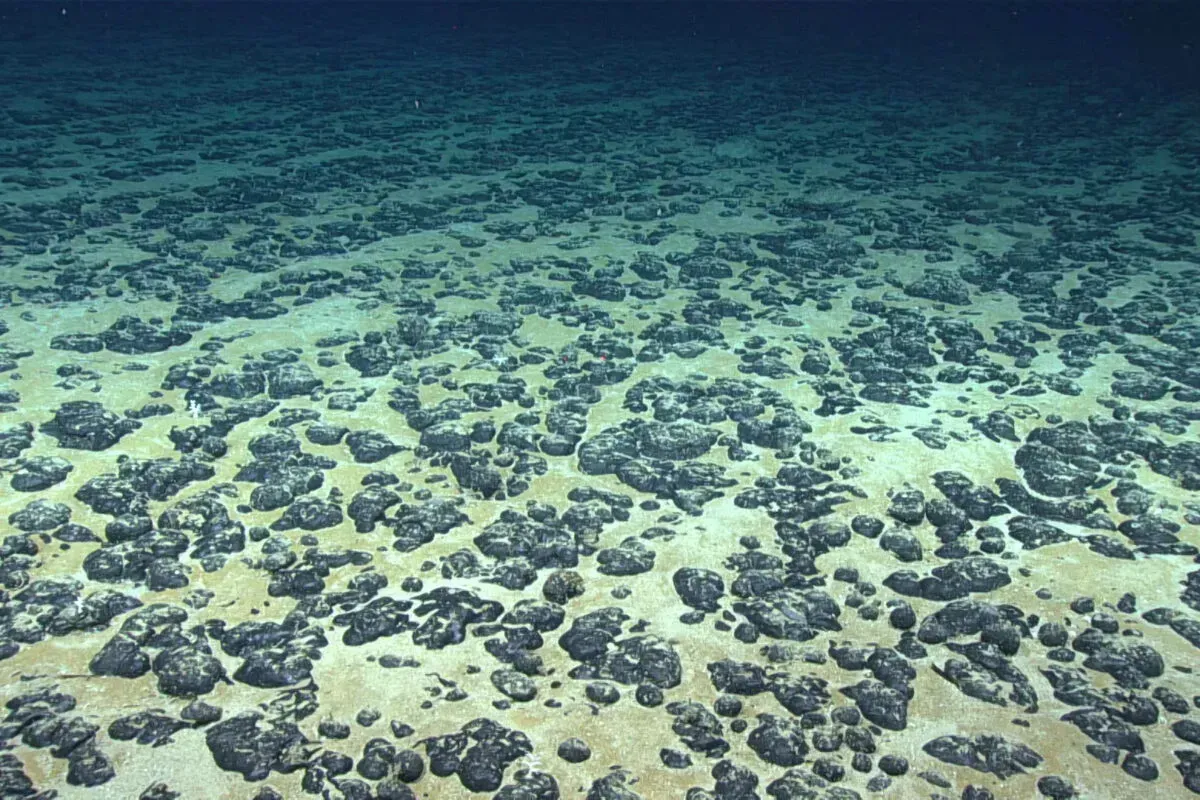
There are three types of minerals that companies want to target. There's the polymetallic nodules that are on these flat stretches of the ocean, the hydrothermal vents, sea mounts, and these crusts that are rich in minerals.
Deep-sea mining is a very broad term for many different types of proposed mining activities that would extract these minerals.
A lot of the technology for these extraction methods are still being developed. Probably the most attention has been placed on the polymetallic nodule mining, the most research. But it's still in its infancy.
As I said before, it can feel like science fiction, the idea of sending this heavy machinery down to the very, very deep sea and extracting these minerals. And that's just part of it. It's also getting up to the surface, and how to actually process these minerals into something useful. And that's another interesting part that a lot of people don't think about. It's one thing, getting minerals up out from the sea and moving it to land, but the processing is also in its infancy. Technology is still being developed to be able to turn these minerals into something useful.
It's like trying to run when they're still learning to walk. That said, a lot of companies will say, and I think quite fairly that there has been a lot of research put into it. There's been a lot of money put into mining research, whether it's testing the technology or testing the impacts of the mining activities, but there have been very few mining tests out there.
So do we know what deep-sea mining is? Well we know what the tests are. We know what it is to test a piece of mining equipment. But in some ways, I don't think we really know what deep-sea mining is in terms of it taking off commercially, because it just hasn't happened yet. I think if it does go forward, it's going to change the ocean as we know it.

