Pulitzer Center Update April 14, 2026
Behind the Story: Grantee Investigates the Bitter Side of the Cocoa Market in Africa


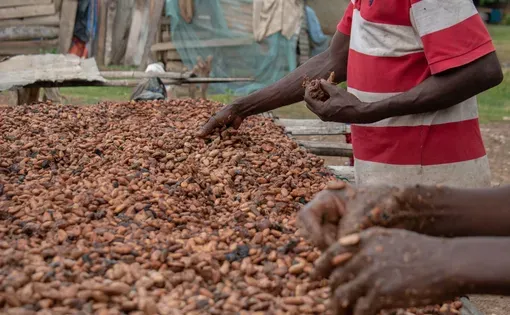
Age of Cocoa explores the intersection of cocoa, a crop Europeans to West Africa in the late 1800s...

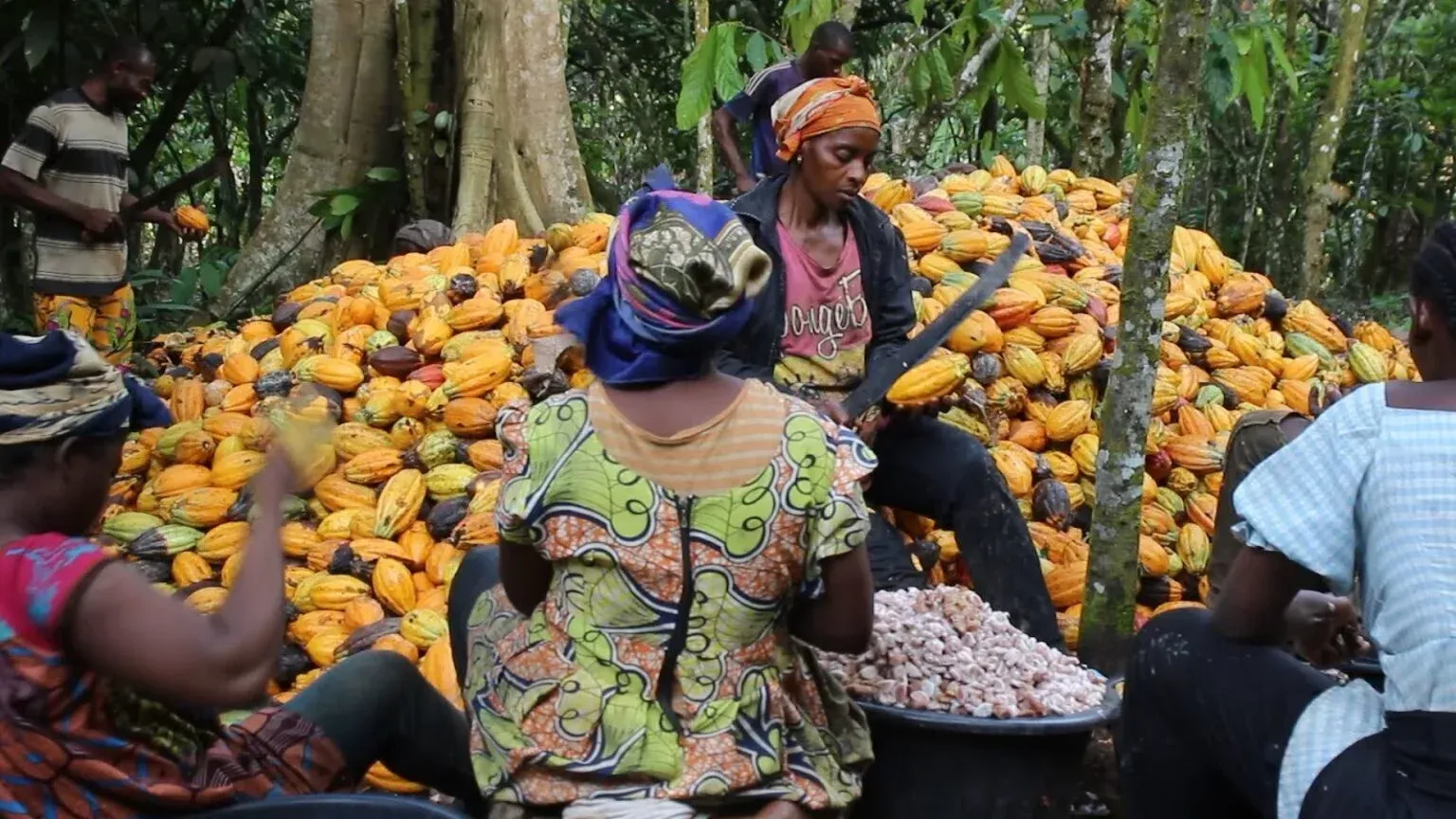
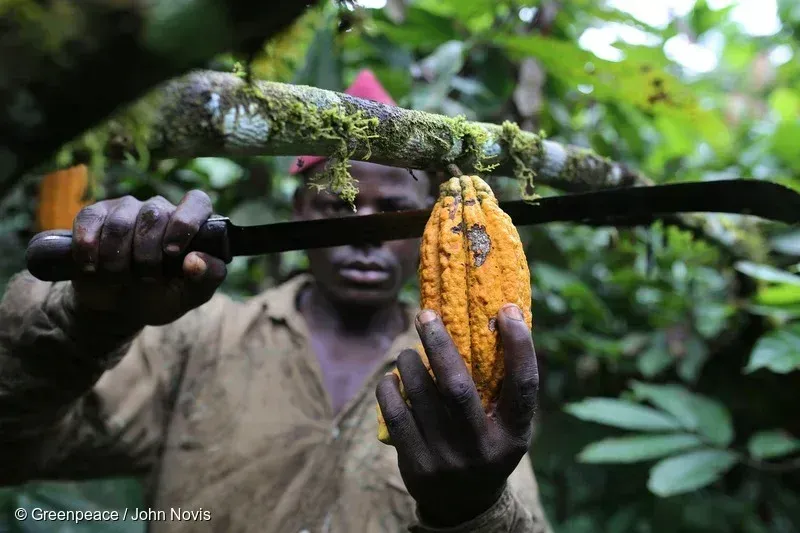
Pulitzer Center grantee Olatunji Olaigbe became interested in cocoa while riding in his uncle’s truck. His uncle trades various cash crops, including cocoa. Olaigbe recalls how the distinct smell of cocoa has been stuck in his mind.
“As I refined my journalism skill and experience over time, [cocoa] became something that I couldn't escape,” Olaigbe said.
Cocoa is a point of pride for many Nigerians, the journalist says, because revenue from the crop helped build the country when it was newly independent. Many Nigerians rely on cocoa as their source of income and at certain points in history Nigeria has been one of the world's largest exporters of cocoa.
But changes in the market make it a risky crop to cultivate. Over the course of Olaigbe's reporting project supported by the Pulitzer Center, the price of cocoa rose 200% to 300% in some places, and then a year later, it had dropped by 60%.
“This crop that we [Nigerians] think is ours is not ours because we do not control the economic and political affectations that decide how that crop is priced,” Olaigbe said. “We are not in control.”
Pulitzer Center Editorial Intern Ella Beiser spoke with Olaigbe about his reporting project.
The following interview has been edited for length and clarity.
Ella Beiser: Will you introduce yourself and the type of journalism you do?
Olatunji Olaigbe: I am a journalist based in West Africa. I typically report on food, environment, but then also outside of that, I report on technology and power in society.
Beiser: Describe the project that you completed for the Pulitzer Center.
Olaigbe: I recently completed my first multi-country project, which was tied to the age of cocoa. In 2020, the world was under [the COVID] lockdown, and I was working with my uncle, and I was in my first year at [university]. I was into journalism, but I was not really a serious journalist back then.
My uncle is a cocoa trader. And among other things, he traded cash crops, which include cashew, cocoa, palm nuts, and all those. His staple was cashew, but every now and then we'd have to take cocoa. It was very interesting, because cocoa is a very different crop from the other cash crops. It was much more expensive. You would see it in lesser quantities, and it has a smell; it almost has an aura to it.
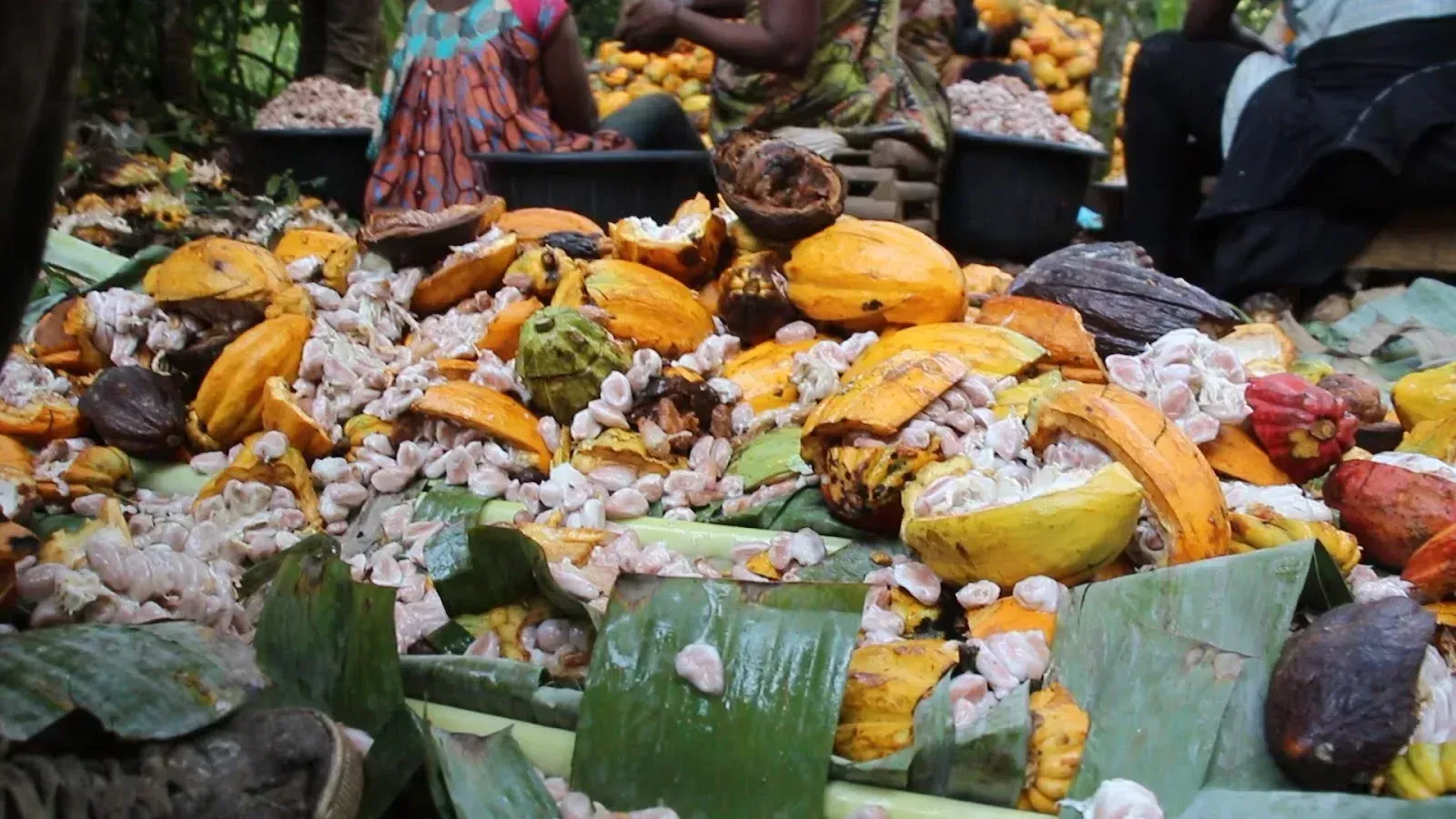
And that was when my first interest in [cocoa] happened. And obviously, as I refined my journalism skill and experience over time, it became something that I couldn't escape.
My thinking as an African was always led by the concept of decolonizing food systems. Cash crops essentially are manifestations of food colonization, apart from other things. But I would say they are the oldest form of food colonization, or of agricultural colonization, because they have a really dirty history of subversion in the places where they've grown.
For example, Africa produces maybe 60% of the world's cocoa supply. But also, unsurprisingly, I would say, Africa is also a big importer of food crops like rice, maize, and wheat, and all of that. Couldn't we grow this instead of cocoa?
And it's a theme. It's a very simplistic, almost naive theme, but it's a theme that keeps repeating in the project. It's looking at the economic, the political, and the cultural pegs of cocoa in African society.
Beiser: You have this personal connection to the topic of cocoa. When did you realize this was a compelling story you wanted to write?
Olaigbe: Before I applied for the Pulitzer grant, I did a story in Nigeria. I've always wanted to do the story, and I would take stabs at it while writing an opinion piece for an outlet. I did this piece on food colonization for Inkstick\. And I would sometimes take a stab at things like cocoa and coffee.
Nigeria was, at one point, the biggest producer of cocoa in Africa. My mom is from Oyo State, and the capital of Oyo is Ibadan. And Ibadan has something called the cocoa house, which is this big house that is built from cocoa money. And in Africa, cocoa is seen as almost a thing of culture, of pride. But when you start uncovering the nuance and the history behind it, a lot of it crumbles.
Cocoa was seen as a very important tool in independent Nigeria, because that's where a significant amount of the government revenue, which was then used to build the early country, came from.
The Russia-Ukraine war happened in 2022, which really affected fertilizer exports and importation in Africa. And then fertilizers became really expensive. The climate crisis in 2022-24 decimated almost 60% of the world’s cocoa production. Cocoa prices quadrupled in a single year, which is crazy.
It's interesting when you look at the map and see how there's this line where cocoa really, really thrives, and it goes across maybe five or six countries. This includes Ghana, Ivory Coast, Nigeria, Cameroon, and even parts of Togo and Benin.
Nigeria has a much different approach to cocoa than Ghana and the Ivory Coast. And so you start noticing this difference. Nigeria has what is called an “open market.” But in Ghana and Ivory Coast, the price is just something called the “farm gate market,” where the prices are decided by the government.
Farmers in Benin, farmers in Ghana, farmers in Ivory Coast would sometimes smuggle their cocoa to countries where there's an open market to sell for a higher price.
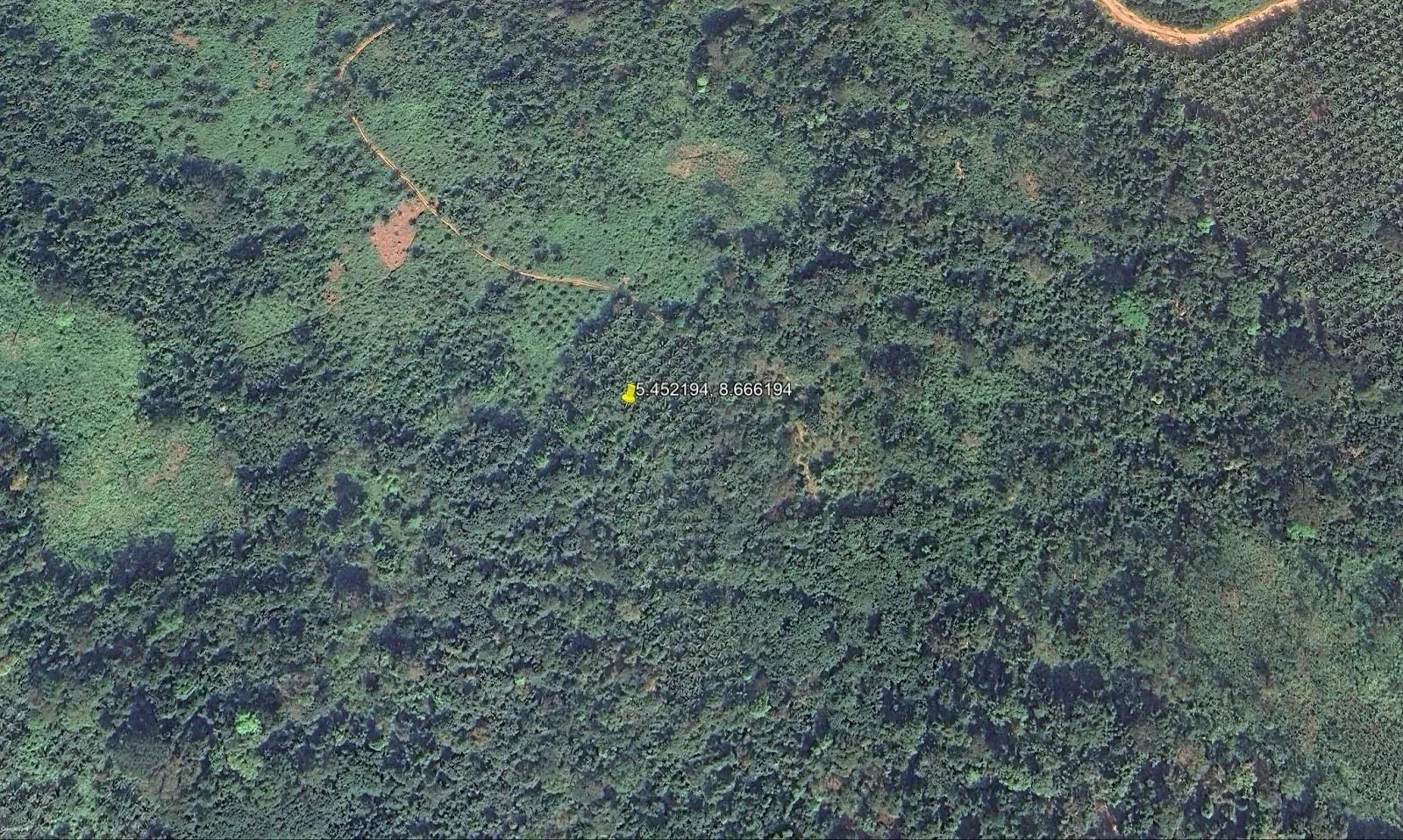
Cocoa is a very controversial crop. There's something called cocoa conflicts, which are conflicts literally fought over this crop. And also, most of the trees that have been cut down in the Ivory Coast in the past 10 or so years are solely because of cocoa farming.
Beiser: Were there challenges in reporting cross-border that you had to negotiate, or lessons that you want to share?
Olaigbe: I think the most important lesson was to network with other journalists. Having a really strong community helps. Even when you're applying for a Pulitzer grant, you really need the journalists you're going to be working with on board with you.
As a freelancer, that's much more complicated, because you need a level of trust. And I was able to fall back on this community of journalists I had around me in Nigeria who could connect me with someone who knew someone.
The second thing I would say is that you really cannot do it alone if you are working internationally. For example, my French is not that great, like I can survive in a French country, but not to the level where I can work on a story. So being able to have this journalist on the ground being able to say, “Oh, I think you should follow up with these things. I'm going to provide some form of guidance and lessons and tips while on the ground” really, really helped.
I'm really, really grateful for all the journalists who work with Romulus Dorval Kuessie, Elvis Gouza, Ibrahim Khalilulahi Usman in Ghana, Muhammed Bello in Nigeria. These journalists really, really helped bring a lot of depth.
Beiser: What are the advantages to being able to write the project over a long period of time?
Olaigbe: One of the key things I would note was in 2024, when the project started, we saw the price [of cocoa] triple or quadruple in some places. And then in 2025-26, when the project was ending, we're seeing cocoa prices down by 60%, and so there is this large difference between the first piece, which is saying cocoa is so expensive now, and then the last bit, which is saying cocoa used to be expensive. And so a lot of people rushed into it, and now people are stuck again.
This crop that we think is ours is not ours because we do not control the economic and political affectations that decide how that crop is priced. We are not in control.
The prices of cocoa are up because of a war and climate devastation, right? When cocoa prices are up, people are a bit happy, but also a lot of people are sad because forests are being destroyed. People who are wildlife conservationists see their work being ruined, and so on.
And then 2026, 2025, prices are down 60%; farmers are stuck again. There are stocks of cocoa in the Ivory Coast and Ghana that cannot be sold now because the prices and the demand are so low and everything is a mess.
It's a literal, actual commodity that is people's livelihood.
If you ask a child in school, “What do your parents do?” and he says, “Oh, my father is a cocoa farmer,” that child's livelihood is dependent on that crop, and that crop is so volatile.
I would also say that being able to have so much time to work on the project really also gave me a lot of freedom to explore the depths as much as I wanted. I was able to visit all these countries, and I was able to get what's happening on the ground.