Pulitzer Center Update March 1, 2026
2 Pulitzer Center-Supported Films Help Explain How Iran Crisis Led to War
Country:

Project
'A Move'
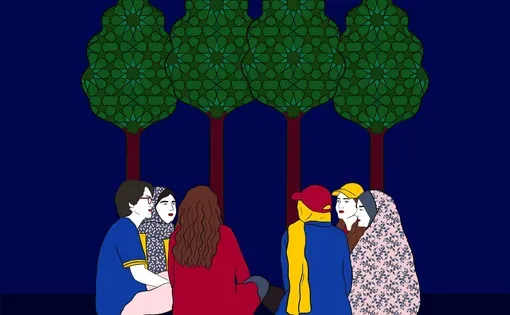
"A Move" follows an Iranian filmmaker who stopped wearing a hijab.


In a Facebook post on Sunday, President Trump updated Americans on the Iran strikes.
The United States and Israel launched a coordinated attack against Iran on Saturday, killing Iran's Supreme leader Ayatollah Ali Khamenei. Many security experts fear that this new Middle East conflict will not end well—for either side.
The U.S. has assembled a massive strike force in the region, but Gen. Dan Caine, chairman of the Joint Chiefs of Staff, warned last week that shortfalls in U.S. munitions stockpiles and a lack of support from allies would limit military options and risk American lives.
Iran’s despotic clerical regime’s grip on power is weak. But even after Khamenei's death, its grip on a formidable arsenal of missiles capable of hitting U.S. targets throughout the region is firm.
In an eight-minute video posted on social media Saturday, President Trump vowed to destroy Iran’s military, its nuclear program, and its missile industry. He invited the Iranian people to overthrow their much-loathed government, but he did not seek congressional approval for any of this.
Meanwhile, some human rights groups are now saying that the death toll from Iran’s crackdown on domestic protesters probably exceeds 30,000.
For an inside look at how the crisis reached this point, two short films supported by the Pulitzer Center are instructive. Iranian filmmaker Elahe Esmaili grew up in a conservative household in Mashhad, Iran’s second-largest city. In her 2024 New York Times documentary, A Move, she dissects a moment of family tension to explore how “the Iranian regime and other authoritarian leaders benefit from pitting religious and nonreligious people against each other, leading them to believe that peaceful coexistence is not possible.”
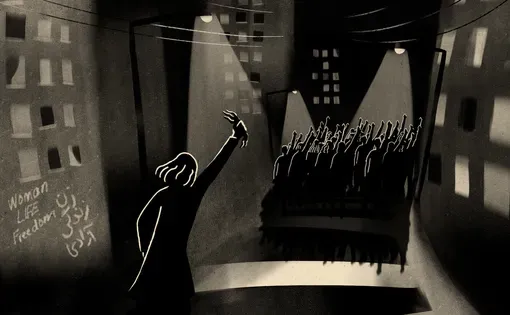
The documentary The Smallest Power was produced that same year for The New Yorker by Iranian-American filmmaker Andy Sarjahani. It follows an Iranian medical resident whose life is transformed when security police invade the intensive care unit of her hospital to arrest a fellow doctor who participated in the 2022 protests that roiled the country. The resident and her hospital colleagues stage a sit-in, blocking police from making the arrest. This dangerous gesture of protest works—the police give up and leave.
Individual gestures of this nature, multiplied by the thousands, grew into the mass protests that today have provoked the regime’s panicked massacre of its own citizens.
No one can say what comes next for Iran and its 90 million inhabitants. But these two documentaries—along with countless other pieces of courageous journalism from inside Iran—are part of the movement that has brought us to this moment.
For more Pulitzer Center-supported reporting related to war and conflict, click here, and for democracy and authoritarianism, click here.
Project
'The Smallest Power'
A film provides a window into an Iranian woman’s journey as the Islamic Republic faces a...